Committee advances Prop 123 tweak to let high-cost and rural communities use funds more flexibly
April 14, 2026 | 2026 Legislature CO, Colorado
This article was created by AI summarizing key points discussed. AI makes mistakes, so for full details and context, please refer to the video of the full meeting. Please report any errors so we can fix them. Report an error »
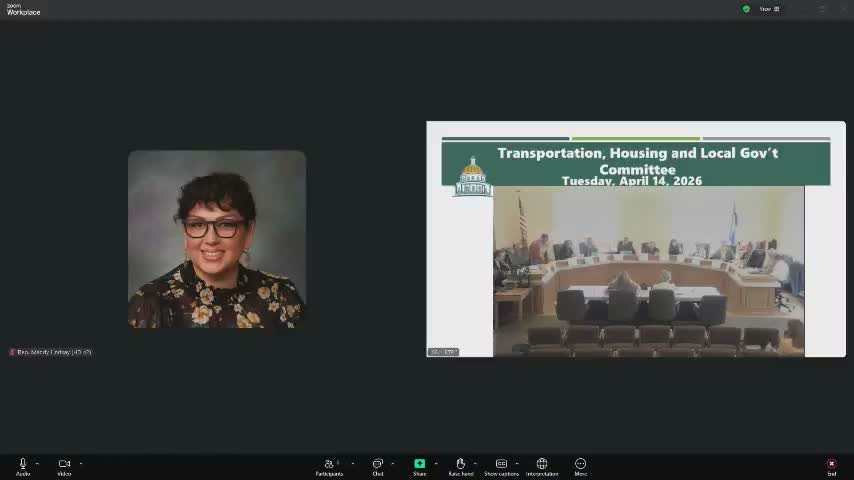
The committee advanced Senate Bill 40, a set of amendments intended to make Proposition 123 homeownership funds more usable in high-cost and rural markets.
Vice Chair Stewart and Representative Smith, sponsors of SB40, said the bill gives the Division of Housing more authority to permit flexibility — including raising the eligible income cap in certain circumstances and creating a waiver process — while preserving accountability for public investments. Smith said Prop 123 has produced about 2,500 affordable homes but that rising construction costs and rigid statutory rules have hindered projects in some markets.
Multiple witnesses detailed problems in mountain and rural communities. Emily Lashbrook of Pagosa Springs Community Development Corporation said her project secured $2.1 million in grant funding but still had to disqualify 37 families who missed the 100% AMI cutoff by small amounts; she said the greatest need is between 100–120% AMI in her community. Brian Rosberg of Housing Colorado and other housing advocates urged raising the cap to 120% AMI (statewide or local) and creating a waiver pathway for front-end ratio barriers and unsold units; they said allowing rental conversion for units unsold after adequate marketing would ensure public investments result in occupied housing.
Megan Yonke (DOLA Division of Housing) said the Division supports increasing eligibility to 120% AMI, creating a waiver process after six months of marketing, and a limited approach to rental conversion that maintains accountability. Sponsors also added an amendment (L14) to create a structure for tribes to access funds while protecting confidential tribal information. Committee members praised the collaborative process; the committee sent SB40 as amended to the Committee of the Whole with a favorable recommendation on a 10–3 vote.
What happens next: SB40 will proceed to the Committee of the Whole with sponsor-backed amendments that broaden flexibility for local markets while retaining program safeguards.
Vice Chair Stewart and Representative Smith, sponsors of SB40, said the bill gives the Division of Housing more authority to permit flexibility — including raising the eligible income cap in certain circumstances and creating a waiver process — while preserving accountability for public investments. Smith said Prop 123 has produced about 2,500 affordable homes but that rising construction costs and rigid statutory rules have hindered projects in some markets.
Multiple witnesses detailed problems in mountain and rural communities. Emily Lashbrook of Pagosa Springs Community Development Corporation said her project secured $2.1 million in grant funding but still had to disqualify 37 families who missed the 100% AMI cutoff by small amounts; she said the greatest need is between 100–120% AMI in her community. Brian Rosberg of Housing Colorado and other housing advocates urged raising the cap to 120% AMI (statewide or local) and creating a waiver pathway for front-end ratio barriers and unsold units; they said allowing rental conversion for units unsold after adequate marketing would ensure public investments result in occupied housing.
Megan Yonke (DOLA Division of Housing) said the Division supports increasing eligibility to 120% AMI, creating a waiver process after six months of marketing, and a limited approach to rental conversion that maintains accountability. Sponsors also added an amendment (L14) to create a structure for tribes to access funds while protecting confidential tribal information. Committee members praised the collaborative process; the committee sent SB40 as amended to the Committee of the Whole with a favorable recommendation on a 10–3 vote.
What happens next: SB40 will proceed to the Committee of the Whole with sponsor-backed amendments that broaden flexibility for local markets while retaining program safeguards.
Don't Miss a Word: See the Full Meeting!
Go beyond summaries. Unlock every video, transcript, and key insight with a Founder Membership.
✓
Get instant access to full meeting videos
✓
Search and clip any phrase from complete transcripts
✓
Receive AI-powered summaries & custom alerts
✓
Enjoy lifetime, unrestricted access to government data
30-day money-back guarantee
