House approves bill creating master development districts after heated debate over local control and lien powers
April 14, 2026 | 2026 Legislature OK, Oklahoma
This article was created by AI summarizing key points discussed. AI makes mistakes, so for full details and context, please refer to the video of the full meeting. Please report any errors so we can fix them. Report an error »
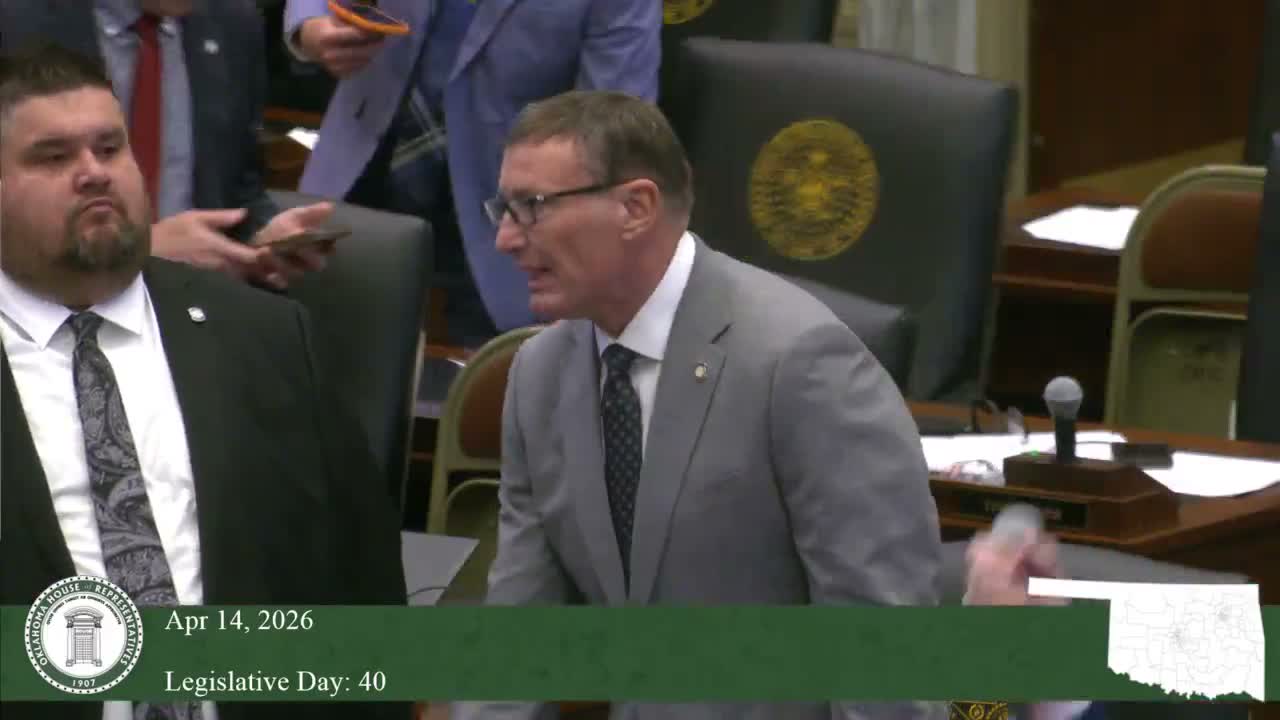
The Oklahoma House on the floor Thursday approved Senate Bill 2060, the 'Build Act,' a measure that creates a statutory framework for so‑called master development districts and an alternative way to finance infrastructure for new developments.
Sponsor Representative Peter Lawson said the bill is intended to give cities and counties another tool to finance upfront infrastructure costs so more housing and commercial projects can move forward. "This bill allows for alternative ways to finance infrastructure for mainly residential developments," Lawson said, adding later on the floor, "We either trust the people that elected you and me, trust the people that elect our city councils, or we don't."
Opponents pressed a suite of concerns during extensive questioning and floor debate, centering on whether the statute replicates elements of State Question 833 (defeated by voters in 2024) and whether it would insulate development interests from ordinary local oversight. Representative Gann said the measure amounts to "the same thing only different," arguing it creates "a new non‑elected quasi government" with senior lien powers that could outrank mortgages and bind future property owners. "The bill itself says it will be a body corporate and politic and a political subdivision of this state," Gann said, warning the structure could lock in development rights and limit later zoning changes.
Lawson and supporters pointed to key statutory distinctions and amendments added in committee. Sponsor Lawson said the bill is statutory (not constitutional), transfers debt liability to the district rather than the whole municipality, and includes a protest period and transition plan for district governance. He noted an amendment intended to preserve a city's ability to protect infrastructure, comprehensive planning and zoning: "Nothing in the improvement plan interferes with the city or county's ability to protect infrastructure, comprehensive planning, zoning, or any other requirements the city or county shall impose," Lawson said.
Several members sought detail on public access to improvements such as parks and libraries that might be financed by a district, asking if the measures could be limited to gated communities. The sponsor said local agreements can be written to require public access.
After roughly an hour and a half of discussion and debate on the House floor, the roll call produced 54 ayes and 40 nays and the clerk declared the bill passed by the House.
What happens next: With House passage, the bill heads back to the Senate for any concurrence on amendments or for the next steps under the Legislature's calendar.
Sponsor Representative Peter Lawson said the bill is intended to give cities and counties another tool to finance upfront infrastructure costs so more housing and commercial projects can move forward. "This bill allows for alternative ways to finance infrastructure for mainly residential developments," Lawson said, adding later on the floor, "We either trust the people that elected you and me, trust the people that elect our city councils, or we don't."
Opponents pressed a suite of concerns during extensive questioning and floor debate, centering on whether the statute replicates elements of State Question 833 (defeated by voters in 2024) and whether it would insulate development interests from ordinary local oversight. Representative Gann said the measure amounts to "the same thing only different," arguing it creates "a new non‑elected quasi government" with senior lien powers that could outrank mortgages and bind future property owners. "The bill itself says it will be a body corporate and politic and a political subdivision of this state," Gann said, warning the structure could lock in development rights and limit later zoning changes.
Lawson and supporters pointed to key statutory distinctions and amendments added in committee. Sponsor Lawson said the bill is statutory (not constitutional), transfers debt liability to the district rather than the whole municipality, and includes a protest period and transition plan for district governance. He noted an amendment intended to preserve a city's ability to protect infrastructure, comprehensive planning and zoning: "Nothing in the improvement plan interferes with the city or county's ability to protect infrastructure, comprehensive planning, zoning, or any other requirements the city or county shall impose," Lawson said.
Several members sought detail on public access to improvements such as parks and libraries that might be financed by a district, asking if the measures could be limited to gated communities. The sponsor said local agreements can be written to require public access.
After roughly an hour and a half of discussion and debate on the House floor, the roll call produced 54 ayes and 40 nays and the clerk declared the bill passed by the House.
What happens next: With House passage, the bill heads back to the Senate for any concurrence on amendments or for the next steps under the Legislature's calendar.
View the Full Meeting & All Its Details
This article offers just a summary. Unlock complete video, transcripts, and insights as a Founder Member.
✓
Watch full, unedited meeting videos
✓
Search every word spoken in unlimited transcripts
✓
AI summaries & real-time alerts (all government levels)
✓
Permanent access to expanding government content
30-day money-back guarantee
