Alameda County staff present FY25‑26 budget outlook, outline accelerated May/June schedule
March 16, 2026 | Alameda County, California
This article was created by AI summarizing key points discussed. AI makes mistakes, so for full details and context, please refer to the video of the full meeting. Please report any errors so we can fix them. Report an error »
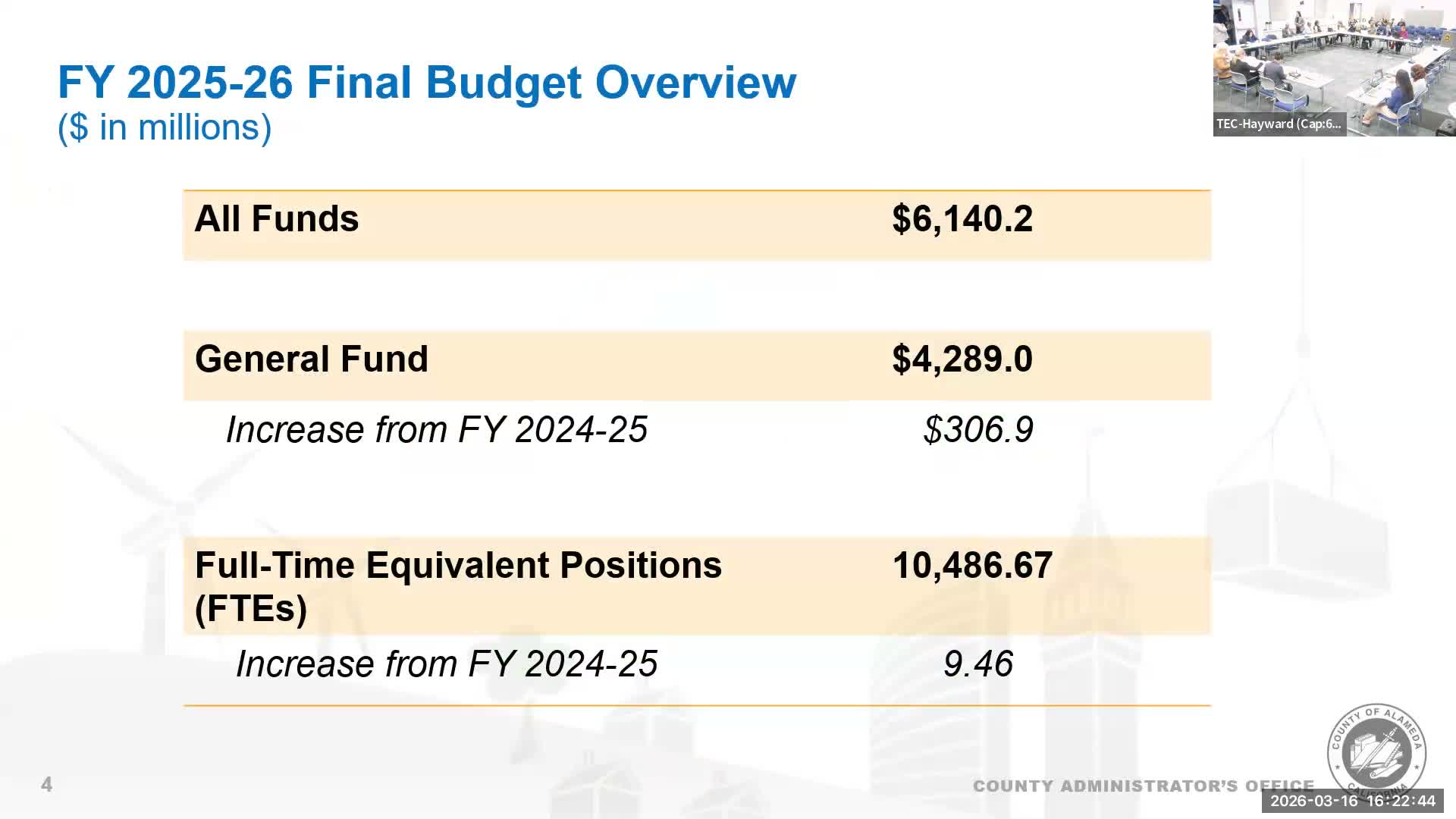
County staff provided the Board of Supervisors’ budget work group an internal update on March 16 showing current‑year fiscal figures and the schedule for adopting the FY25‑26 proposed budget.
Rosley Tadeo of the county administrator’s office reviewed key figures: an approved balanced budget of $6.1 billion for fiscal 2025–26, current general fund appropriations of $4.3 billion (an increase of approximately $300 million from the prior year), and about 10,500 full‑time equivalent staff supported by the budget. Staff emphasized that nearly two‑thirds of the general fund derives from state and federal sources and that discretionary revenue represents roughly 30% of the general fund, with about 75% of that discretionary revenue tied to property taxes (the county receives about 15¢ of every property‑tax dollar collected).
Tadeo walked the board through long‑term liabilities flagged in the presentation, including roughly $800 million in unfunded capital and major maintenance needs and ongoing pressures from litigation, insurance, labor negotiations and possible statewide initiatives that could shift property‑tax revenue.
Staff outlined next steps and an accelerated schedule: an early budget work session on April 14, a budget work group meeting the week of April 20 to review projected funding gaps, commitment to present a proposed budget to the board by May 28, and hearings and adoption in mid‑ to late‑June to meet the statutory June 30 deadline.
Public commenters urged the board to revisit costly obligations such as the Babu consent decree (which includes staffing requirements for county jail operations) and requested earlier online posting of presentation materials to improve transparency. Supervisors noted staff will add comparative revenue trend charts to show year‑over‑year changes in major revenue sources.
Why it matters: Staff said the county’s AAA credit rating and prudent policies position it well, but panelists and department heads warned the budget faces new state and federal cost shifts that could increase shortfalls and require difficult program tradeoffs. The county reiterated it will continue public engagement, including working with municipal advisory councils to reach unincorporated communities.
Rosley Tadeo of the county administrator’s office reviewed key figures: an approved balanced budget of $6.1 billion for fiscal 2025–26, current general fund appropriations of $4.3 billion (an increase of approximately $300 million from the prior year), and about 10,500 full‑time equivalent staff supported by the budget. Staff emphasized that nearly two‑thirds of the general fund derives from state and federal sources and that discretionary revenue represents roughly 30% of the general fund, with about 75% of that discretionary revenue tied to property taxes (the county receives about 15¢ of every property‑tax dollar collected).
Tadeo walked the board through long‑term liabilities flagged in the presentation, including roughly $800 million in unfunded capital and major maintenance needs and ongoing pressures from litigation, insurance, labor negotiations and possible statewide initiatives that could shift property‑tax revenue.
Staff outlined next steps and an accelerated schedule: an early budget work session on April 14, a budget work group meeting the week of April 20 to review projected funding gaps, commitment to present a proposed budget to the board by May 28, and hearings and adoption in mid‑ to late‑June to meet the statutory June 30 deadline.
Public commenters urged the board to revisit costly obligations such as the Babu consent decree (which includes staffing requirements for county jail operations) and requested earlier online posting of presentation materials to improve transparency. Supervisors noted staff will add comparative revenue trend charts to show year‑over‑year changes in major revenue sources.
Why it matters: Staff said the county’s AAA credit rating and prudent policies position it well, but panelists and department heads warned the budget faces new state and federal cost shifts that could increase shortfalls and require difficult program tradeoffs. The county reiterated it will continue public engagement, including working with municipal advisory councils to reach unincorporated communities.
Don't Miss a Word: See the Full Meeting!
Go beyond summaries. Unlock every video, transcript, and key insight with a Founder Membership.
✓
Get instant access to full meeting videos
✓
Search and clip any phrase from complete transcripts
✓
Receive AI-powered summaries & custom alerts
✓
Enjoy lifetime, unrestricted access to government data
30-day money-back guarantee
