Teton County directs universities to develop workshop on Grand Targhee expansion impacts
March 16, 2026 | Teton County, Wyoming
This article was created by AI summarizing key points discussed. AI makes mistakes, so for full details and context, please refer to the video of the full meeting. Please report any errors so we can fix them. Report an error »
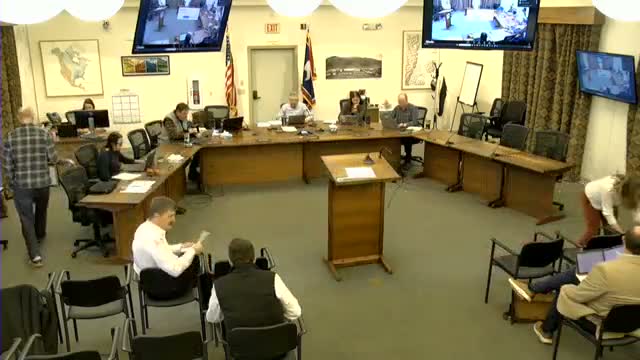
The Teton County Board of County Commissioners voted during a March 16 workshop to ask the Ruckelshaus Institute and the University of Idaho McClure Center to develop a formal prospectus and cost estimate for a facilitated workshop examining social and fiscal impacts of a proposed Grand Targhee Resort expansion.
Commissioner Probst, who introduced the idea, said the university partners could convene elected officials, resort representatives, Caribou‑Targhee National Forest leadership and neighboring jurisdictions to explore options for addressing shared infrastructure and service costs. “My vision for this…is that our staff would have no role whatsoever,” Probst said, adding the universities could gather background information independently and only ask county staff for limited, discrete support if necessary.
Commissioners stressed caveats: legal and political limits on using Wyoming taxpayer dollars to fund projects in Idaho, the need to coordinate with Teton County, Idaho and Driggs, and the importance of keeping county staff focused on existing work plans. Commissioner Carmen urged broad participation and cited a 2002 Idaho county position calling for a seat at the table and for impact‑sharing mechanisms; Commissioner Gardner asked whether voluntary agreements with the resort or intergovernmental contracts could accomplish mitigation.
Teton County, Idaho representatives listening by phone signaled interest but noted fundraising constraints; Administrator Sidway asked for sufficient advance notice to consider a county resolution and to secure budgeted funds if necessary. Commissioner Ron James (Teton County, Idaho) said his county absorbs many on‑the‑ground impacts and urged study of mechanisms ranging from impact fees to interstate compacts.
The board’s direction was to ask the universities to check staff availability, reach out to potential partners (including Grand Targhee Resort and federal agencies), and return with a written proposal that includes scope, deliverables and a price estimate for a one‑day facilitated workshop. The board emphasized that the university proposal should include a contingency that assumes county staff can provide limited background materials; if staff time is not available, the universities should budget for outside support.
Next steps: the county administrator and Commissioner Probst will work with Administrator Pond to outline procurement options and a possible request for qualifications. The universities will be asked to return with a proposed scope and cost estimate for the board to consider before any financial commitment.
Commissioner Probst, who introduced the idea, said the university partners could convene elected officials, resort representatives, Caribou‑Targhee National Forest leadership and neighboring jurisdictions to explore options for addressing shared infrastructure and service costs. “My vision for this…is that our staff would have no role whatsoever,” Probst said, adding the universities could gather background information independently and only ask county staff for limited, discrete support if necessary.
Commissioners stressed caveats: legal and political limits on using Wyoming taxpayer dollars to fund projects in Idaho, the need to coordinate with Teton County, Idaho and Driggs, and the importance of keeping county staff focused on existing work plans. Commissioner Carmen urged broad participation and cited a 2002 Idaho county position calling for a seat at the table and for impact‑sharing mechanisms; Commissioner Gardner asked whether voluntary agreements with the resort or intergovernmental contracts could accomplish mitigation.
Teton County, Idaho representatives listening by phone signaled interest but noted fundraising constraints; Administrator Sidway asked for sufficient advance notice to consider a county resolution and to secure budgeted funds if necessary. Commissioner Ron James (Teton County, Idaho) said his county absorbs many on‑the‑ground impacts and urged study of mechanisms ranging from impact fees to interstate compacts.
The board’s direction was to ask the universities to check staff availability, reach out to potential partners (including Grand Targhee Resort and federal agencies), and return with a written proposal that includes scope, deliverables and a price estimate for a one‑day facilitated workshop. The board emphasized that the university proposal should include a contingency that assumes county staff can provide limited background materials; if staff time is not available, the universities should budget for outside support.
Next steps: the county administrator and Commissioner Probst will work with Administrator Pond to outline procurement options and a possible request for qualifications. The universities will be asked to return with a proposed scope and cost estimate for the board to consider before any financial commitment.
View the Full Meeting & All Its Details
This article offers just a summary. Unlock complete video, transcripts, and insights as a Founder Member.
✓
Watch full, unedited meeting videos
✓
Search every word spoken in unlimited transcripts
✓
AI summaries & real-time alerts (all government levels)
✓
Permanent access to expanding government content
30-day money-back guarantee
