House adopts a package of bills, including 2‑1‑1 funding and Medicaid home‑care changes; votes at a glance
April 13, 2026 | 2026 Legislature OK, Oklahoma
This article was created by AI summarizing key points discussed. AI makes mistakes, so for full details and context, please refer to the video of the full meeting. Please report any errors so we can fix them. Report an error »
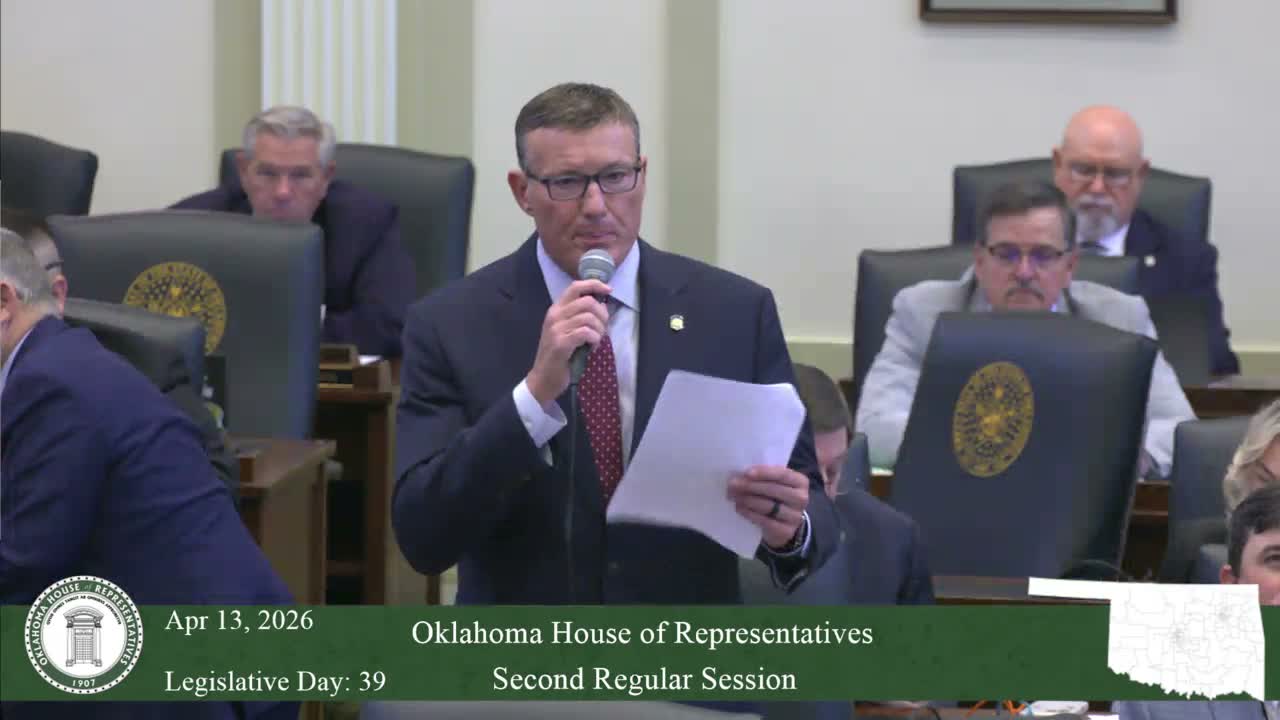
The Oklahoma House met on April 14 and moved a coordinated set of bills through final passage, including measures to strengthen the 2‑1‑1 hotline, expand Medicaid home‑and‑community‑based options and adjust state employee longevity pay.
Senate Bill 1290 — 2‑1‑1 services: Representative Norwood said the bill "strengthens the 211 hotline system, clarifies the oversight, and builds a platform for better funding and emergency responsiveness to all Oklahomans." Members asked whether the Legislature was restoring full funding or only part of prior support; Norwood said multiple organizations would continue to provide support while the state funds 2‑1‑1. The House passed SB 1290, roll call 82 aye, 5 nay, and later voted to declare an emergency (82–5).
Senate Bill 1847 — Medicaid home and community‑based services: Representative Moore told members SB 1847 "allows residents on advantage waiver to not have to move to nursing homes" and said that keeping residents in assisted living would save approximately $115 per day, or nearly $5 million annually to the state. The House approved the bill (78 aye, 10 nay) and declared the emergency (78–10).
Other bills passed (final readings and recorded vote tallies):
- SB 1530 (state government; incentives/research definitions): passed 58 aye, 27 nay.
- SB 169 (increase longevity pay for state employees): passed 85 aye, 4 nay; emergency declared.
- SB 1377 (foster‑care duffel bags, funding contingent): passed 88 aye, 4 nay; emergency declared.
- SB 1990 (Incentive Evaluation Commission reporting; mirror of HB 3942): passed 88 aye, 4 nay.
- SB 1991 (long‑range capital planning / OCAMP cleanup): passed 88 aye, 4 nay; emergency declared.
- SB 1778 (Strong Readers Act — statewide screeners and funding formula): passed 87 aye, 5 nay; emergency declared.
- SB 1579 (ad valorem taxpayer bill of rights): passed after extended debate, 85 aye, 4 nay; emergency declared.
- SB 1992 (income tax credit technical/definition changes): passed 65 aye, 24 nay.
Several of these measures included emergency declarations, meaning they took effect immediately upon the governor's signature (or as provided by law). Where members asked about fiscal impacts, sponsors either supplied estimates on the floor (for example the per‑day savings cited for SB 1847) or characterized the impact as small and manageable within agency budgets.
The session also included ceremonial business: a veteran of the week citation for Colonel William S. Hartzell, recognition of state high‑school and collegiate athletic champions, and a floor introduction honoring visitors from Taiwan in connection with House Resolution 1050.
The House adjourned its floor session after announcing committee meeting times and other routine business.
Senate Bill 1290 — 2‑1‑1 services: Representative Norwood said the bill "strengthens the 211 hotline system, clarifies the oversight, and builds a platform for better funding and emergency responsiveness to all Oklahomans." Members asked whether the Legislature was restoring full funding or only part of prior support; Norwood said multiple organizations would continue to provide support while the state funds 2‑1‑1. The House passed SB 1290, roll call 82 aye, 5 nay, and later voted to declare an emergency (82–5).
Senate Bill 1847 — Medicaid home and community‑based services: Representative Moore told members SB 1847 "allows residents on advantage waiver to not have to move to nursing homes" and said that keeping residents in assisted living would save approximately $115 per day, or nearly $5 million annually to the state. The House approved the bill (78 aye, 10 nay) and declared the emergency (78–10).
Other bills passed (final readings and recorded vote tallies):
- SB 1530 (state government; incentives/research definitions): passed 58 aye, 27 nay.
- SB 169 (increase longevity pay for state employees): passed 85 aye, 4 nay; emergency declared.
- SB 1377 (foster‑care duffel bags, funding contingent): passed 88 aye, 4 nay; emergency declared.
- SB 1990 (Incentive Evaluation Commission reporting; mirror of HB 3942): passed 88 aye, 4 nay.
- SB 1991 (long‑range capital planning / OCAMP cleanup): passed 88 aye, 4 nay; emergency declared.
- SB 1778 (Strong Readers Act — statewide screeners and funding formula): passed 87 aye, 5 nay; emergency declared.
- SB 1579 (ad valorem taxpayer bill of rights): passed after extended debate, 85 aye, 4 nay; emergency declared.
- SB 1992 (income tax credit technical/definition changes): passed 65 aye, 24 nay.
Several of these measures included emergency declarations, meaning they took effect immediately upon the governor's signature (or as provided by law). Where members asked about fiscal impacts, sponsors either supplied estimates on the floor (for example the per‑day savings cited for SB 1847) or characterized the impact as small and manageable within agency budgets.
The session also included ceremonial business: a veteran of the week citation for Colonel William S. Hartzell, recognition of state high‑school and collegiate athletic champions, and a floor introduction honoring visitors from Taiwan in connection with House Resolution 1050.
The House adjourned its floor session after announcing committee meeting times and other routine business.
View the Full Meeting & All Its Details
This article offers just a summary. Unlock complete video, transcripts, and insights as a Founder Member.
✓
Watch full, unedited meeting videos
✓
Search every word spoken in unlimited transcripts
✓
AI summaries & real-time alerts (all government levels)
✓
Permanent access to expanding government content
30-day money-back guarantee
