State pauses new PACE applications; CalPace urges short‑term staff funding to end enrollment delays
April 06, 2026 | California State Assembly, House, Legislative, California
This article was created by AI summarizing key points discussed. AI makes mistakes, so for full details and context, please refer to the video of the full meeting. Please report any errors so we can fix them. Report an error »
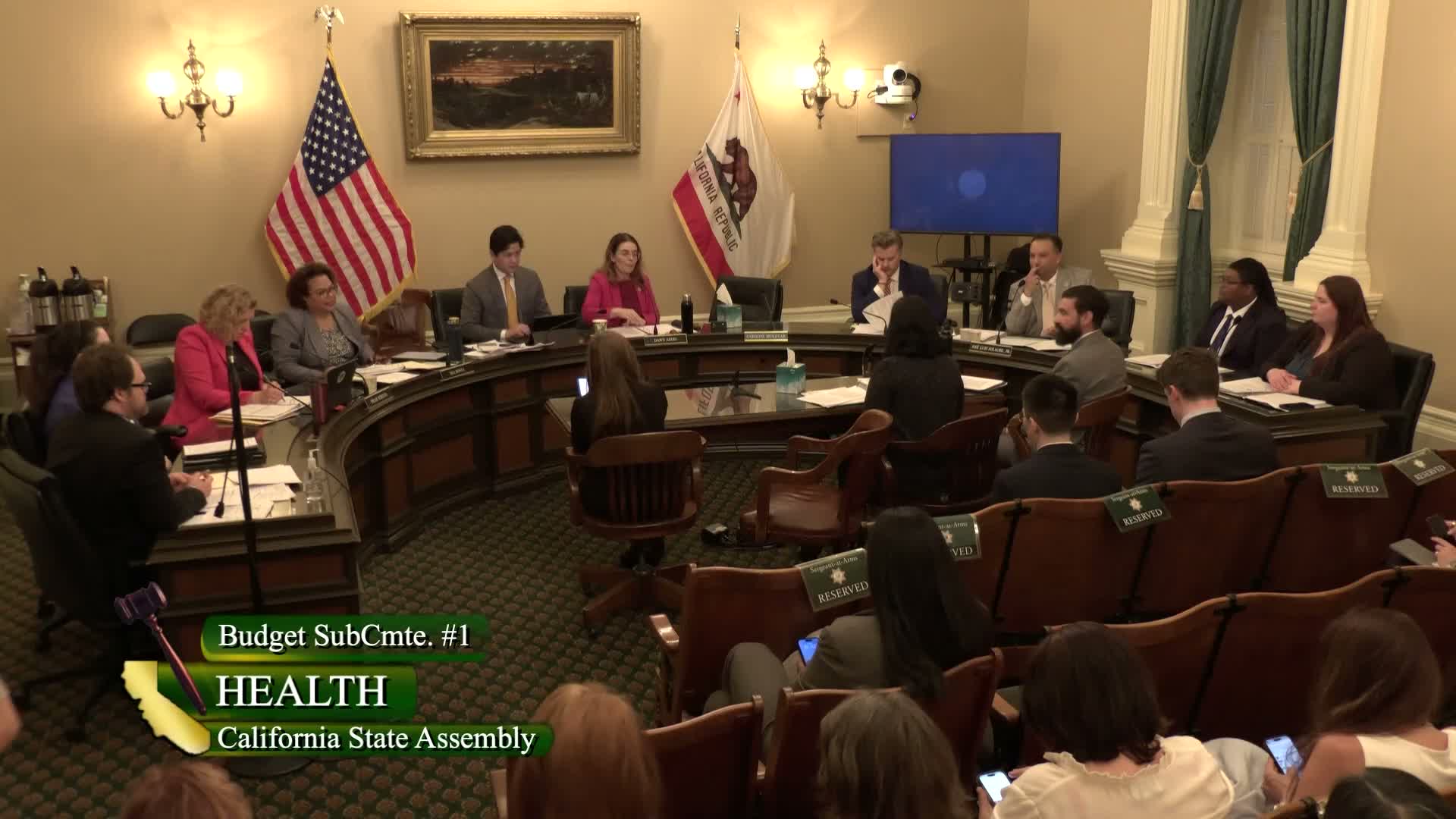
The Assembly subcommittee heard DHCS and CalPace on the department’s temporary pause of new PACE applications and a targeted funding request to clear backlogs.
DHCS testified that it issued a pause on new PACE applications for a minimum of two years to allow time for strategic planning, oversight realignment and stakeholder engagement. "We issued a pause on new PACE applications, for a minimum of 2 years," the agency said, noting the pause does not affect existing PACE organizations or participants.
Maria Zamora, president and CEO of the Center for Elders Independence and chair of CalPace, said the association supports the pause but urged the department and legislature to avoid creating access delays. CalPace requested funding for four additional state nurse positions to process level‑of‑care determinations and reduce enrollment timelines; Zamora said that targeted help would reduce delays that can lead to increased emergency care or premature institutional placements.
Members asked how DHCS would engage stakeholders during the moratorium and whether the department could create expedited tracks for existing applicants; DHCS said it would initiate stakeholder engagement later in the summer or fall and is seeking philanthropic support for a consultant to guide the process.
Why it matters: PACE is an integrated model for older adults who otherwise would require nursing‑home care; delays in determinations can meaningfully worsen outcomes for frail older adults. CalPace stressed that targeted, short‑term resources (four nurse evaluators) represent a narrowly tailored solution to a defined operational bottleneck.
Next steps: DHCS plans to convene stakeholders and refine the metrics that would lift the pause; CalPace and others asked the committee to consider the limited fiscal request to add evaluator positions to improve access.
DHCS testified that it issued a pause on new PACE applications for a minimum of two years to allow time for strategic planning, oversight realignment and stakeholder engagement. "We issued a pause on new PACE applications, for a minimum of 2 years," the agency said, noting the pause does not affect existing PACE organizations or participants.
Maria Zamora, president and CEO of the Center for Elders Independence and chair of CalPace, said the association supports the pause but urged the department and legislature to avoid creating access delays. CalPace requested funding for four additional state nurse positions to process level‑of‑care determinations and reduce enrollment timelines; Zamora said that targeted help would reduce delays that can lead to increased emergency care or premature institutional placements.
Members asked how DHCS would engage stakeholders during the moratorium and whether the department could create expedited tracks for existing applicants; DHCS said it would initiate stakeholder engagement later in the summer or fall and is seeking philanthropic support for a consultant to guide the process.
Why it matters: PACE is an integrated model for older adults who otherwise would require nursing‑home care; delays in determinations can meaningfully worsen outcomes for frail older adults. CalPace stressed that targeted, short‑term resources (four nurse evaluators) represent a narrowly tailored solution to a defined operational bottleneck.
Next steps: DHCS plans to convene stakeholders and refine the metrics that would lift the pause; CalPace and others asked the committee to consider the limited fiscal request to add evaluator positions to improve access.
Don't Miss a Word: See the Full Meeting!
Go beyond summaries. Unlock every video, transcript, and key insight with a Founder Membership.
✓
Get instant access to full meeting videos
✓
Search and clip any phrase from complete transcripts
✓
Receive AI-powered summaries & custom alerts
✓
Enjoy lifetime, unrestricted access to government data
30-day money-back guarantee
