Elijah's General Store asks Dorchester County to consider tiered licensing or hardship waiver to ease $2,500 fee
March 30, 2026 | Dorchester County, Maryland
This article was created by AI summarizing key points discussed. AI makes mistakes, so for full details and context, please refer to the video of the full meeting. Please report any errors so we can fix them. Report an error »
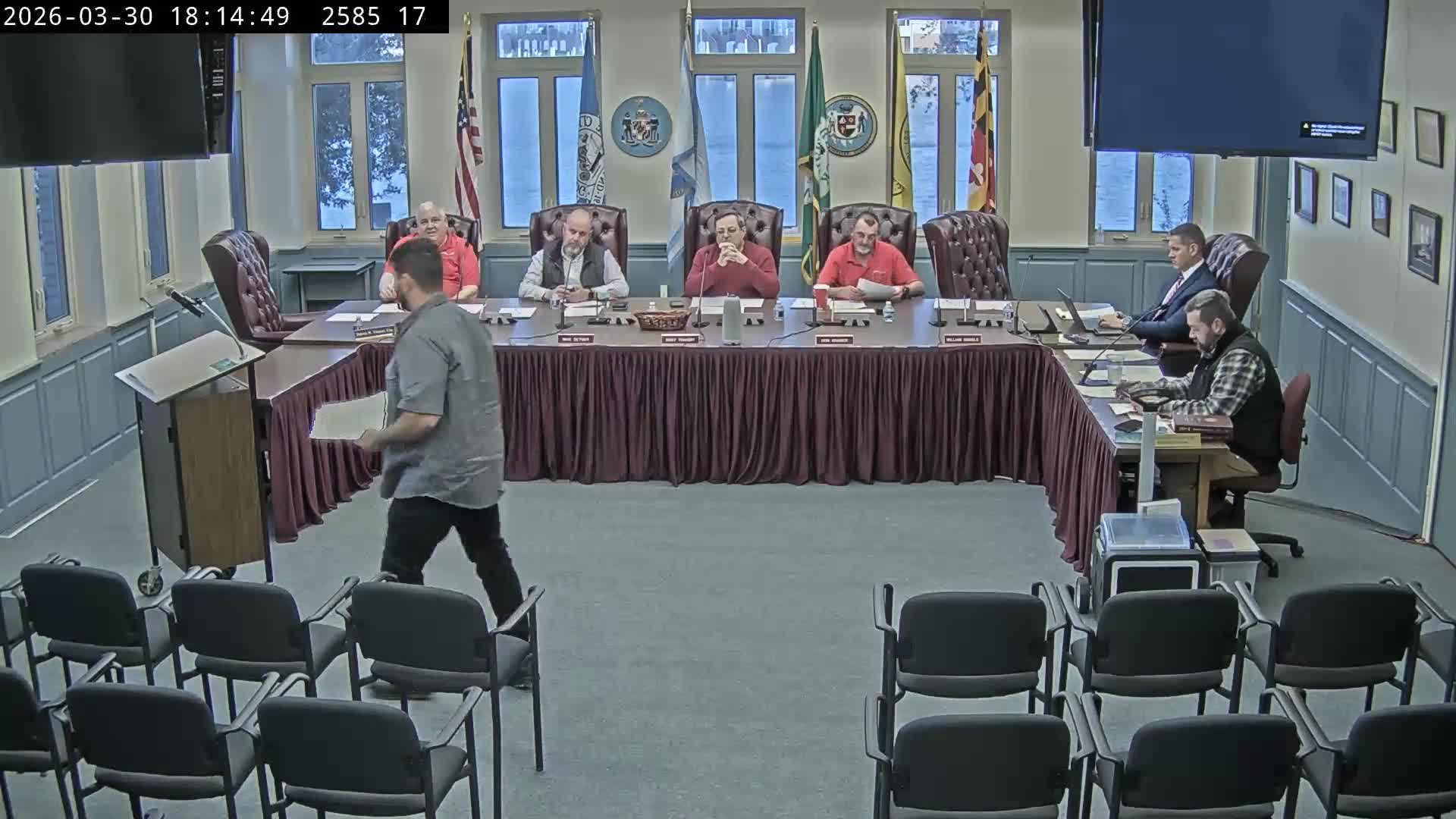
A presenter identified a financial hardship for Elijah's General Store in Toddville and asked the board to consider reducing the county's flat $2,500 annual liquor-license fee or to create a tiered or hardship exemption for small, low-volume establishments.
"As a general store, we provide essential goods and services to local residents," the presenter said, and asked the board to consider either reducing the Class A fee in his case or allowing a payment plan. The written proposal submitted to the board described a tiered model that would scale fees to estimated alcohol-sales revenue; the presenter said an example band of $0–$250,000 in annual alcohol sales would reduce a Class A fee to about $1,250, while revenue near $2,000,000 would raise the fee in that example to about $3,125.
Licensing staff cautioned that the county's current alcohol code contains no mechanism for payment plans or the proposed micro-tiering. "We don't have anything outlining that in our code," the staff member said, adding that implementing a tiered-fee or hardship system "would have to make a major change to our alcohol code." Staff also noted state definitions of hardship typically relate to health issues, and expanding the hardship definition to include business size or sales would require explicit code language.
Board members discussed the policy trade-offs: several acknowledged the financial strain on rural stores, while others cautioned that liquor licenses impose higher public-safety and enforcement costs. One staff presentation said higher levels of liquor sales are associated with greater calls for police, EMS and other services, which factor into licensing costs and enforcement workload.
The board did not change the code at the meeting. Members asked the presenter to provide examples from other jurisdictions and asked staff to circulate comparative research; the board said it could consider the issue as a future legislative priority, but that any change would require code amendments and likely review by county counsel and the state.
"As a general store, we provide essential goods and services to local residents," the presenter said, and asked the board to consider either reducing the Class A fee in his case or allowing a payment plan. The written proposal submitted to the board described a tiered model that would scale fees to estimated alcohol-sales revenue; the presenter said an example band of $0–$250,000 in annual alcohol sales would reduce a Class A fee to about $1,250, while revenue near $2,000,000 would raise the fee in that example to about $3,125.
Licensing staff cautioned that the county's current alcohol code contains no mechanism for payment plans or the proposed micro-tiering. "We don't have anything outlining that in our code," the staff member said, adding that implementing a tiered-fee or hardship system "would have to make a major change to our alcohol code." Staff also noted state definitions of hardship typically relate to health issues, and expanding the hardship definition to include business size or sales would require explicit code language.
Board members discussed the policy trade-offs: several acknowledged the financial strain on rural stores, while others cautioned that liquor licenses impose higher public-safety and enforcement costs. One staff presentation said higher levels of liquor sales are associated with greater calls for police, EMS and other services, which factor into licensing costs and enforcement workload.
The board did not change the code at the meeting. Members asked the presenter to provide examples from other jurisdictions and asked staff to circulate comparative research; the board said it could consider the issue as a future legislative priority, but that any change would require code amendments and likely review by county counsel and the state.
Don't Miss a Word: See the Full Meeting!
Go beyond summaries. Unlock every video, transcript, and key insight with a Founder Membership.
✓
Get instant access to full meeting videos
✓
Search and clip any phrase from complete transcripts
✓
Receive AI-powered summaries & custom alerts
✓
Enjoy lifetime, unrestricted access to government data
30-day money-back guarantee
