Experts: Arizona tracks with national averages but struggles with congregate care and staffing
April 06, 2026 | 2026 Legislature Arizona, Arizona
This article was created by AI summarizing key points discussed. AI makes mistakes, so for full details and context, please refer to the video of the full meeting. Please report any errors so we can fix them. Report an error »
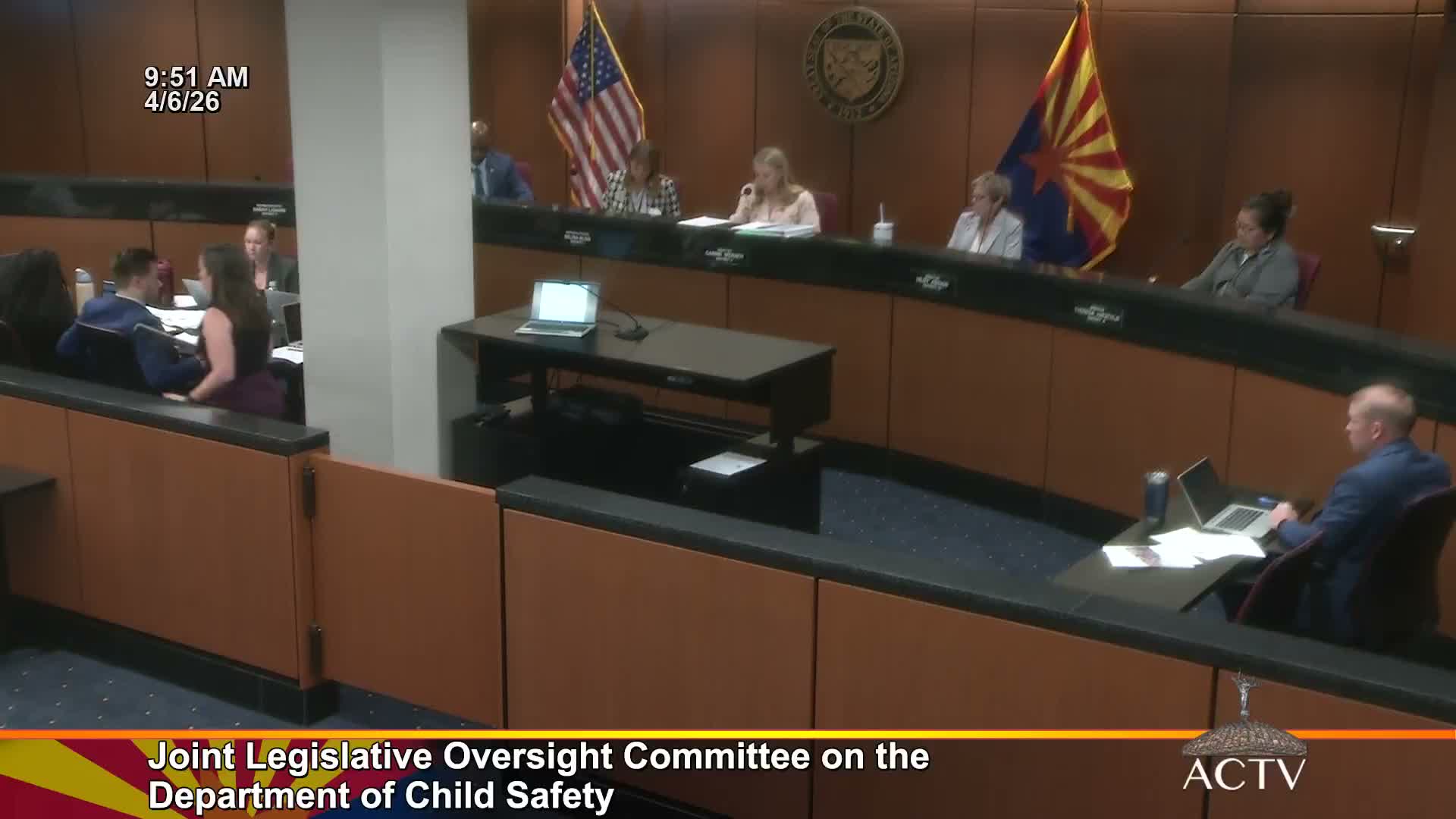
Two outside presenters told the oversight committee that Arizona's child‑welfare system performs near national averages on many measures but has distinct challenges in congregate care and workforce stability.
Malcolm Hightower of Casey Family Programs said Arizona is "pretty much in the middle of the pack" on overall child‑welfare metrics. He highlighted Arizona's success in kin‑first placements — roughly 54% of placements in 2024 versus about 41% nationally — while noting the state places a larger share of children in congregate care (about 21% in Arizona versus 11% nationally). "Congregate care is probably one of the worst outcomes for youth and it costs the most for taxpayers," Hightower said, urging targeted community services to prevent unnecessary entry to care.
Hightower described how data were compiled from state reporting to the federal AFCARS system and that Casey uses those sources for state‑by‑state comparisons. Committee members asked about statutory definitions of neglect and whether Arizona should follow other states in narrowing neglect definitions that otherwise reflect poverty.
Casey Melsic of Collaborative Safety presented the safety‑science approach used in systemic critical‑incident reviews. Melsic described moving away from blame toward systems accountability, drawing lessons from aviation and healthcare about learning from near misses, and said Arizona has used safety‑science reviews since about 2016. "When we move towards more systems accountability, we account for all layers of the system," Melsic said, adding that the method reduced turnover where it has been implemented and improves organizational learning.
Committee members discussed whether safety‑science methods and after‑action reviews could be applied across state agencies, including corrections and healthcare; presenters agreed the approach is broadly applicable. Members said they welcome further data and follow‑ups from the presenters and DCS.
Malcolm Hightower of Casey Family Programs said Arizona is "pretty much in the middle of the pack" on overall child‑welfare metrics. He highlighted Arizona's success in kin‑first placements — roughly 54% of placements in 2024 versus about 41% nationally — while noting the state places a larger share of children in congregate care (about 21% in Arizona versus 11% nationally). "Congregate care is probably one of the worst outcomes for youth and it costs the most for taxpayers," Hightower said, urging targeted community services to prevent unnecessary entry to care.
Hightower described how data were compiled from state reporting to the federal AFCARS system and that Casey uses those sources for state‑by‑state comparisons. Committee members asked about statutory definitions of neglect and whether Arizona should follow other states in narrowing neglect definitions that otherwise reflect poverty.
Casey Melsic of Collaborative Safety presented the safety‑science approach used in systemic critical‑incident reviews. Melsic described moving away from blame toward systems accountability, drawing lessons from aviation and healthcare about learning from near misses, and said Arizona has used safety‑science reviews since about 2016. "When we move towards more systems accountability, we account for all layers of the system," Melsic said, adding that the method reduced turnover where it has been implemented and improves organizational learning.
Committee members discussed whether safety‑science methods and after‑action reviews could be applied across state agencies, including corrections and healthcare; presenters agreed the approach is broadly applicable. Members said they welcome further data and follow‑ups from the presenters and DCS.
Don't Miss a Word: See the Full Meeting!
Go beyond summaries. Unlock every video, transcript, and key insight with a Founder Membership.
✓
Get instant access to full meeting videos
✓
Search and clip any phrase from complete transcripts
✓
Receive AI-powered summaries & custom alerts
✓
Enjoy lifetime, unrestricted access to government data
30-day money-back guarantee
