District presents assessment gains and intervention plans amid rising enrollment
October 30, 2024 | Edison Township School District, School Districts, New Jersey
This article was created by AI summarizing key points discussed. AI makes mistakes, so for full details and context, please refer to the video of the full meeting. Please report any errors so we can fix them. Report an error »
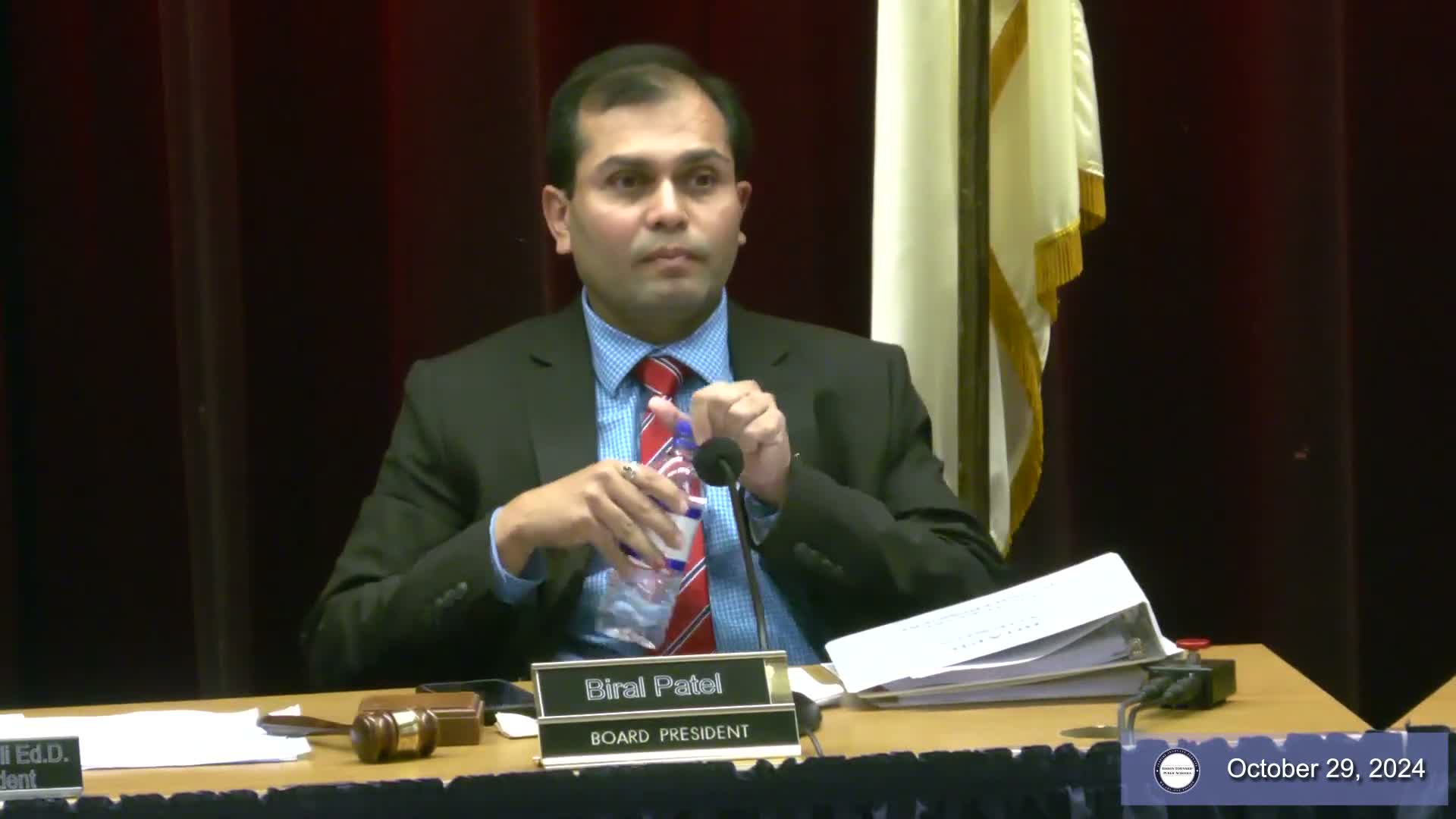
District officials presented updated assessment results and instructional plans during the Oct. 29 Edison Township Board of Education meeting.
The assessment presentation noted that district enrollment increased by about 500 students in one year and that economically disadvantaged students increased by roughly 5 percent (about 1,000 students). The presenters described high student mobility — about 2,000 students moving in or out of the district annually — and said this transience affects cohort-level comparisons.
Despite those challenges, district presenters highlighted steady post-pandemic gains. Elementary English language arts performance was reported as 16.8 percentage points over the state average for meet-and-exceed metrics, and district-level math results were described as roughly 18 percentage points higher than the state at certain grade spans. Presenters credited interventions such as expanded small-group instruction, phonics cohorts (including Phonics First training for third-grade teachers), and a state grant for high-intensity tutoring.
At the secondary level, the district reported modest increases in NJSLA and NJGPA participation and performance. Officials noted a roughly 15 percent increase in NJGPA rates over two years after the assessment began counting toward graduation, and described expanded use of data tools — LinkIt at the high school and an adaptive tool at the middle school — to identify and intervene with struggling students.
Special-education assessment (DLM) results showed increases attributed in part to staff training on assessment-aligned instruction. District staff said they will post detailed subgroup and longitudinal data on the district website and make slide decks available via the live feed.
Superintendent Dr. Aldarelli also summarized nonacademic items including transportation updates (subscription busing increased by about 475 students in early October and roughly 248 students remain on a waiting list), internship partnerships with local businesses, and a planned November rollout of a public strategic-plan dashboard showing progress on five pillars and related artifacts.
District officials recommended continued implementation of multi-tiered intervention systems, expanded tier-2 interventions, and training for teachers in data-driven instruction. They said the district will continue to monitor subgroup performance, refine scheduling to accommodate hands-on science experiences, and use the live dashboard to improve transparency.
The assessment presentation noted that district enrollment increased by about 500 students in one year and that economically disadvantaged students increased by roughly 5 percent (about 1,000 students). The presenters described high student mobility — about 2,000 students moving in or out of the district annually — and said this transience affects cohort-level comparisons.
Despite those challenges, district presenters highlighted steady post-pandemic gains. Elementary English language arts performance was reported as 16.8 percentage points over the state average for meet-and-exceed metrics, and district-level math results were described as roughly 18 percentage points higher than the state at certain grade spans. Presenters credited interventions such as expanded small-group instruction, phonics cohorts (including Phonics First training for third-grade teachers), and a state grant for high-intensity tutoring.
At the secondary level, the district reported modest increases in NJSLA and NJGPA participation and performance. Officials noted a roughly 15 percent increase in NJGPA rates over two years after the assessment began counting toward graduation, and described expanded use of data tools — LinkIt at the high school and an adaptive tool at the middle school — to identify and intervene with struggling students.
Special-education assessment (DLM) results showed increases attributed in part to staff training on assessment-aligned instruction. District staff said they will post detailed subgroup and longitudinal data on the district website and make slide decks available via the live feed.
Superintendent Dr. Aldarelli also summarized nonacademic items including transportation updates (subscription busing increased by about 475 students in early October and roughly 248 students remain on a waiting list), internship partnerships with local businesses, and a planned November rollout of a public strategic-plan dashboard showing progress on five pillars and related artifacts.
District officials recommended continued implementation of multi-tiered intervention systems, expanded tier-2 interventions, and training for teachers in data-driven instruction. They said the district will continue to monitor subgroup performance, refine scheduling to accommodate hands-on science experiences, and use the live dashboard to improve transparency.
View the Full Meeting & All Its Details
This article offers just a summary. Unlock complete video, transcripts, and insights as a Founder Member.
✓
Watch full, unedited meeting videos
✓
Search every word spoken in unlimited transcripts
✓
AI summaries & real-time alerts (all government levels)
✓
Permanent access to expanding government content
30-day money-back guarantee
