Assembly advances rezoning for Salmon Falls resort parcel, denies rezone for two residential lots
March 16, 2026 | Ketchikan Gateway Borough, Alaska
This article was created by AI summarizing key points discussed. AI makes mistakes, so for full details and context, please refer to the video of the full meeting. Please report any errors so we can fix them. Report an error »
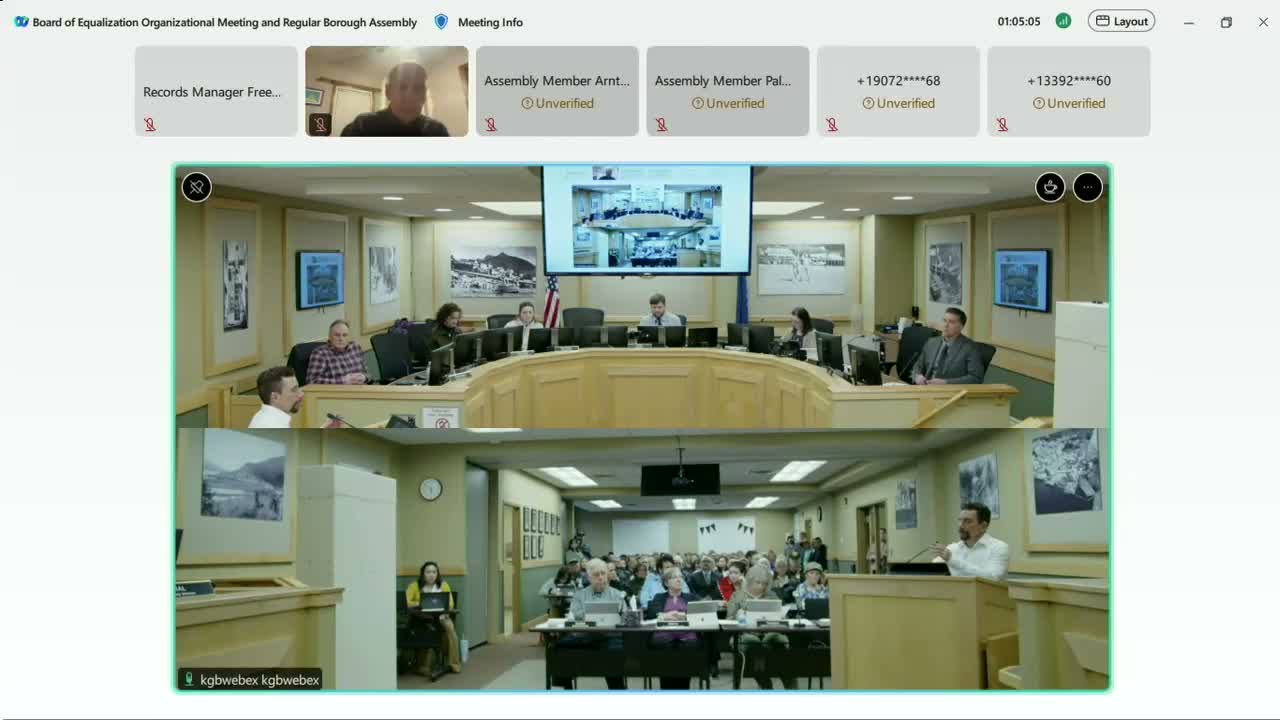
The Ketchikan Gateway Borough Assembly on March 16, 2026, voted to introduce a substituted ordinance that would rezone the main Salmon Falls campus parcel (ATS 502, Tract C) from Future Development to General Commercial while recommending denial of rezone requests for two smaller, adjacent residential lots (Lot 2 and Lot 3A).
The substitute ordinance (Ordinance 21‑06, as amended) passed on a roll‑call vote recorded in the meeting: Palmer, Matson, Bowling and Ortez voted yes; Dial and Arntzen voted no; Cortez was recorded as absent. The ordinance was set for a second public hearing on April 6, 2026.
The rezone request was filed by the Ketchikan Indian Community (KIC), which says it purchased the former Salmon Falls Resort to develop a tribal healing and wellness campus with residential treatment, workforce training and cultural programs. KIC representatives told the assembly that the property historically operated as a commercial resort and that re‑zoning would bring the site into alignment with its long‑standing commercial character while enabling integrated services. “Approving the rezone does not immediately create a treatment facility tomorrow,” a KIC presenter said, noting additional licensing, permitting and accreditation steps that would follow a rezoning decision.
Residents from the Waterfall Creek subdivision and other nearby property owners urged the assembly to deny or table the rezone for the two residential lots. Neighbors cited subdivision covenants they said restrict those parcels to single‑family use, the rural location roughly 16–20 miles from the city, limited emergency response and narrow roads, and the potential for large‑scale commercial development under a General Commercial designation. One resident asked the assembly to consider the potential for “spot zoning” that could change neighborhood character.
Planning Director Frank Maloney reviewed the staff and Planning Commission recommendations. The Planning Commission recommended denial of a full rezoning for all parcels and suggested that the wellness center use could be permitted in the Future Development zone through a conditional use permit (CUP). Borough planning staff recommended rezoning the three Future Development parcels to General Commercial while opposing changes to the two lots zoned RL (low‑density residential) because of restrictive covenants and concerns about compatibility.
Assembly debate focused on balancing recognition of the property’s historic commercial operations against neighbors’ concerns about long‑term, open‑ended commercial uses. An amendment that would have rezoned the parcels but required any uses not previously permitted under FD to first obtain a CUP — thereby triggering public review for new uses — was proposed and defeated before the substitute that limits rezoning to Tract C was adopted.
Public testimony was extensive: the assembly chair reported more than 40 people signed up to speak. Supporters included tribal leaders, healthcare professionals, KIC staff and former clients who said the region lacks culturally grounded, local residential treatment options. Opponents included many nearby homeowners who warned of infrastructure limits, public‑safety risks and conflicts with long‑standing subdivision covenants. Regional organizations including Sealaska and the Tsimshian Tribal Association offered public letters or spoken support for the proposal.
The assembly’s action at introduction does not itself authorize construction or operation of a treatment facility. If the rezoning is later adopted following requisite hearings, KIC would still need to obtain zoning permits, any required conditional use approvals, building permits, state health licensing for residential treatment, and other agency approvals and accreditations.
The ordinance was introduced and will be the subject of a second public hearing at the assembly meeting on April 6, 2026. The assembly recessed the remainder of its agenda and will reconvene portions of the meeting on March 30, 2026, at 5:30 p.m.
Ending: The assembly left the matter open for additional public comment and technical follow‑up; a second hearing will allow the borough to collect more written evidence and for the parties to address outstanding questions about permitted uses, enforcement and infrastructure.
The substitute ordinance (Ordinance 21‑06, as amended) passed on a roll‑call vote recorded in the meeting: Palmer, Matson, Bowling and Ortez voted yes; Dial and Arntzen voted no; Cortez was recorded as absent. The ordinance was set for a second public hearing on April 6, 2026.
The rezone request was filed by the Ketchikan Indian Community (KIC), which says it purchased the former Salmon Falls Resort to develop a tribal healing and wellness campus with residential treatment, workforce training and cultural programs. KIC representatives told the assembly that the property historically operated as a commercial resort and that re‑zoning would bring the site into alignment with its long‑standing commercial character while enabling integrated services. “Approving the rezone does not immediately create a treatment facility tomorrow,” a KIC presenter said, noting additional licensing, permitting and accreditation steps that would follow a rezoning decision.
Residents from the Waterfall Creek subdivision and other nearby property owners urged the assembly to deny or table the rezone for the two residential lots. Neighbors cited subdivision covenants they said restrict those parcels to single‑family use, the rural location roughly 16–20 miles from the city, limited emergency response and narrow roads, and the potential for large‑scale commercial development under a General Commercial designation. One resident asked the assembly to consider the potential for “spot zoning” that could change neighborhood character.
Planning Director Frank Maloney reviewed the staff and Planning Commission recommendations. The Planning Commission recommended denial of a full rezoning for all parcels and suggested that the wellness center use could be permitted in the Future Development zone through a conditional use permit (CUP). Borough planning staff recommended rezoning the three Future Development parcels to General Commercial while opposing changes to the two lots zoned RL (low‑density residential) because of restrictive covenants and concerns about compatibility.
Assembly debate focused on balancing recognition of the property’s historic commercial operations against neighbors’ concerns about long‑term, open‑ended commercial uses. An amendment that would have rezoned the parcels but required any uses not previously permitted under FD to first obtain a CUP — thereby triggering public review for new uses — was proposed and defeated before the substitute that limits rezoning to Tract C was adopted.
Public testimony was extensive: the assembly chair reported more than 40 people signed up to speak. Supporters included tribal leaders, healthcare professionals, KIC staff and former clients who said the region lacks culturally grounded, local residential treatment options. Opponents included many nearby homeowners who warned of infrastructure limits, public‑safety risks and conflicts with long‑standing subdivision covenants. Regional organizations including Sealaska and the Tsimshian Tribal Association offered public letters or spoken support for the proposal.
The assembly’s action at introduction does not itself authorize construction or operation of a treatment facility. If the rezoning is later adopted following requisite hearings, KIC would still need to obtain zoning permits, any required conditional use approvals, building permits, state health licensing for residential treatment, and other agency approvals and accreditations.
The ordinance was introduced and will be the subject of a second public hearing at the assembly meeting on April 6, 2026. The assembly recessed the remainder of its agenda and will reconvene portions of the meeting on March 30, 2026, at 5:30 p.m.
Ending: The assembly left the matter open for additional public comment and technical follow‑up; a second hearing will allow the borough to collect more written evidence and for the parties to address outstanding questions about permitted uses, enforcement and infrastructure.
Don't Miss a Word: See the Full Meeting!
Go beyond summaries. Unlock every video, transcript, and key insight with a Founder Membership.
✓
Get instant access to full meeting videos
✓
Search and clip any phrase from complete transcripts
✓
Receive AI-powered summaries & custom alerts
✓
Enjoy lifetime, unrestricted access to government data
30-day money-back guarantee
