Washington awarded $181 million in CMS rural health grant; $32 million earmarked for rural workforce incentives
April 09, 2026 | Board Council Commission Agencies , Executive, Washington
This article was created by AI summarizing key points discussed. AI makes mistakes, so for full details and context, please refer to the video of the full meeting. Please report any errors so we can fix them. Report an error »
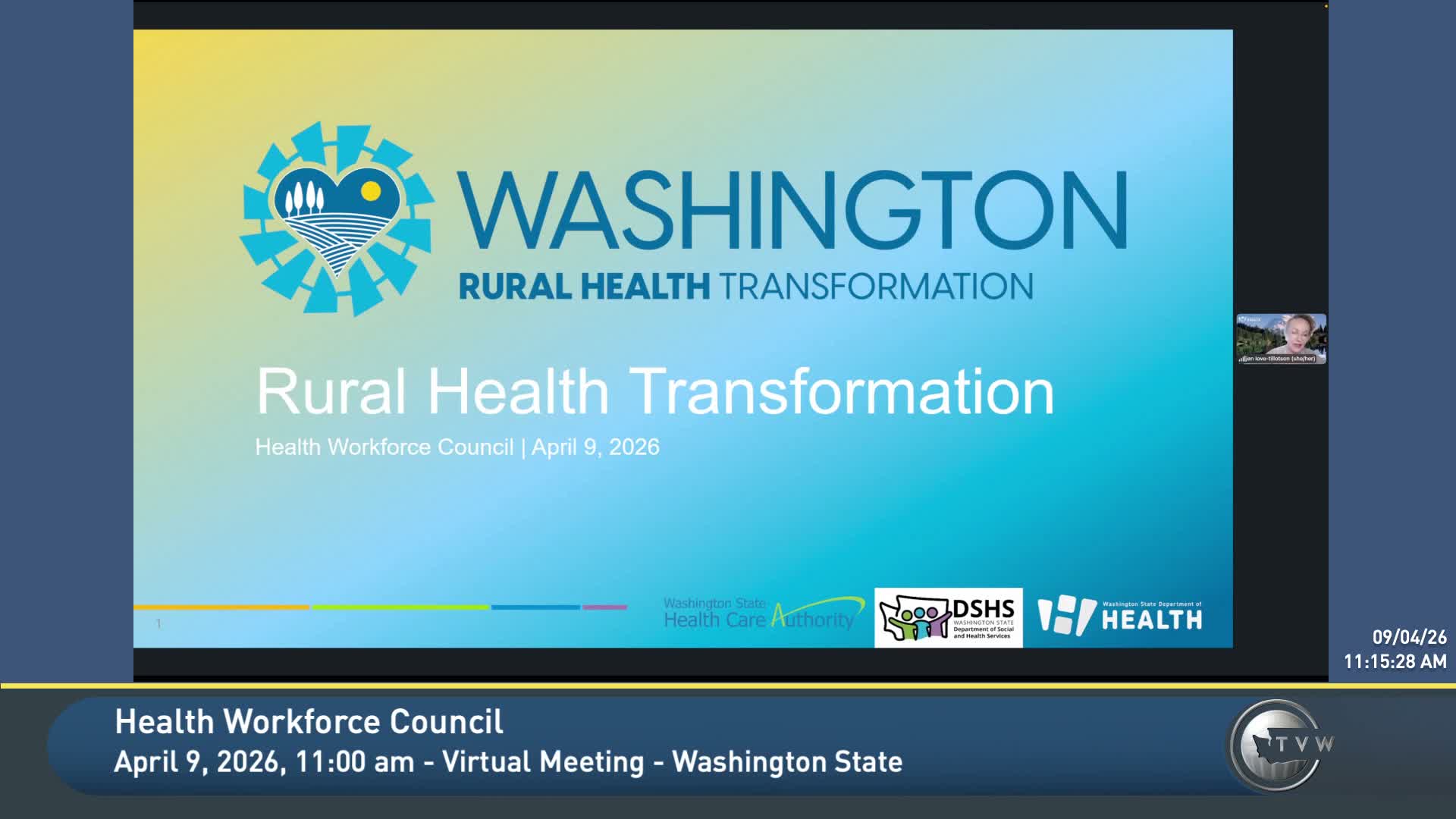
Washington has secured a large federal investment to shore up rural health systems and build a stronger rural health workforce, state officials told the Health Workforce Council during its April meeting.
Jen Love, director of the State Office of Rural Health at the Washington State Department of Health, said the state’s Rural Health Transformation Program (RHTP) is a five-year cooperative agreement administered by the Centers for Medicare and Medicaid Services. “CMS approved our state plan and awarded Washington State over $181,000,000 for budget year 1,” Love said, calling RHTP “one of the largest rural health investments Washington has ever received.”
Why it matters: Love said initiative number 5 of Washington’s RHTP application focuses specifically on workforce, with roughly $32,000,000 intended to grow and retain clinicians who serve rural communities. The initiative targets nurses, primary-care and maternity providers, dental hygienists, long-term care workers and community-based care professionals, emphasizing locally based training and retention pathways such as rural residencies and the ARNEP nursing program.
Design and accountability: Love described the program as a coordinated, multi-agency effort led by the Department of Health together with the Health Care Authority and the Department of Social and Health Services. She said CMS holds the state accountable for the program commitments in the approved application and noted that funding decisions will aim to prioritize areas of greatest need, including health professional shortage areas and communities facing maternity, housing and child-care deserts.
Incentives and selection: Love said year-one workforce incentives will include 50 to 100 awards ranging from $15,000 to $100,000, awarded with service commitments designed to encourage retention in rural settings. “Year 1 will award 50 to 100 incentives ranging from $15,000 to a $100,000, prioritizing areas with the greatest need,” she said.
Advisory committee and deadlines: The RHTP advisory committee will include 18 members drawn from state agencies, tribal representatives, rural community members and health-sector partners; its first meeting is anticipated in June. Love told the council that application materials and guidance are posted on the HCA RHT program web page and that the advisory-committee application deadline is April 24.
Council reaction and next steps: Members praised the plan but raised questions about program design, student-loan interactions and how incentives will be administered in light of federal constraints. Love said several program details remain under active development and that the RHTP project team is coordinating across agencies and with the governor’s office.
The council asked staff to circulate posted materials and to monitor the advisory-committee formation; the advisory committee is expected to meet quarterly as the state moves from planning into implementation.
Jen Love, director of the State Office of Rural Health at the Washington State Department of Health, said the state’s Rural Health Transformation Program (RHTP) is a five-year cooperative agreement administered by the Centers for Medicare and Medicaid Services. “CMS approved our state plan and awarded Washington State over $181,000,000 for budget year 1,” Love said, calling RHTP “one of the largest rural health investments Washington has ever received.”
Why it matters: Love said initiative number 5 of Washington’s RHTP application focuses specifically on workforce, with roughly $32,000,000 intended to grow and retain clinicians who serve rural communities. The initiative targets nurses, primary-care and maternity providers, dental hygienists, long-term care workers and community-based care professionals, emphasizing locally based training and retention pathways such as rural residencies and the ARNEP nursing program.
Design and accountability: Love described the program as a coordinated, multi-agency effort led by the Department of Health together with the Health Care Authority and the Department of Social and Health Services. She said CMS holds the state accountable for the program commitments in the approved application and noted that funding decisions will aim to prioritize areas of greatest need, including health professional shortage areas and communities facing maternity, housing and child-care deserts.
Incentives and selection: Love said year-one workforce incentives will include 50 to 100 awards ranging from $15,000 to $100,000, awarded with service commitments designed to encourage retention in rural settings. “Year 1 will award 50 to 100 incentives ranging from $15,000 to a $100,000, prioritizing areas with the greatest need,” she said.
Advisory committee and deadlines: The RHTP advisory committee will include 18 members drawn from state agencies, tribal representatives, rural community members and health-sector partners; its first meeting is anticipated in June. Love told the council that application materials and guidance are posted on the HCA RHT program web page and that the advisory-committee application deadline is April 24.
Council reaction and next steps: Members praised the plan but raised questions about program design, student-loan interactions and how incentives will be administered in light of federal constraints. Love said several program details remain under active development and that the RHTP project team is coordinating across agencies and with the governor’s office.
The council asked staff to circulate posted materials and to monitor the advisory-committee formation; the advisory committee is expected to meet quarterly as the state moves from planning into implementation.
View the Full Meeting & All Its Details
This article offers just a summary. Unlock complete video, transcripts, and insights as a Founder Member.
✓
Watch full, unedited meeting videos
✓
Search every word spoken in unlimited transcripts
✓
AI summaries & real-time alerts (all government levels)
✓
Permanent access to expanding government content
30-day money-back guarantee
