House passes bill to clarify oil-and-gas taxation, sponsor says it prevents double taxation
April 08, 2026 | 2026 Legislature OK, Oklahoma
This article was created by AI summarizing key points discussed. AI makes mistakes, so for full details and context, please refer to the video of the full meeting. Please report any errors so we can fix them. Report an error »
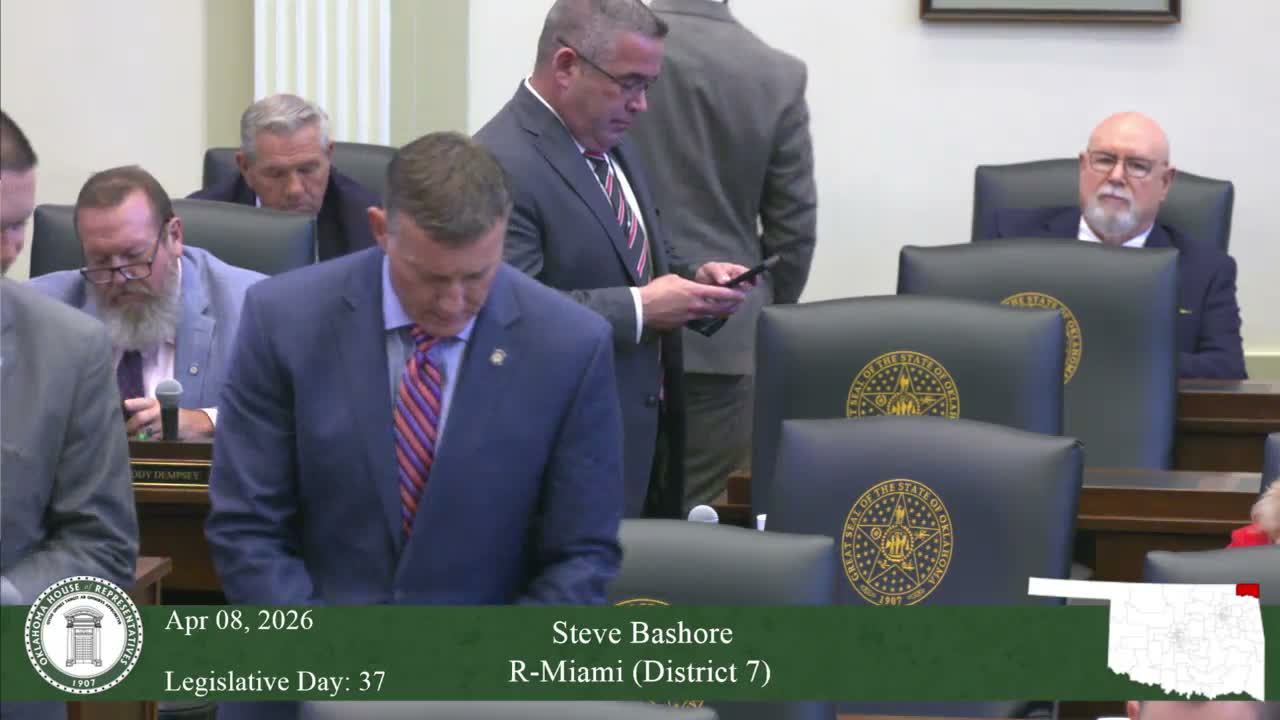
The Oklahoma House moved and passed Senate Bill 227, aimed at clarifying taxation of oil and gas production equipment and preventing what the bill’s sponsor described as unlawful double taxation.
Pro Tem Tim Moore, presenting the bill, told members the measure "removes ambiguity and creates clarity and prevents double taxation on the oil and gas industry." He argued that some county assessors have been charging ad valorem on pipeline and flow-line equipment that the industry pays gross production tax to the state to cover. "We are double taxing wrongfully," Moore said during floor debate.
Several members pressed the sponsor for fiscal analysis. One representative cited a fiscal-impact estimate that suggested larger income-tax effects in 2026 and 2027, and others said assessments in several Western Oklahoma counties could reduce local revenue, potentially affecting school funding. Moore responded that the bill is limited to ad valorem/property classification and "has nothing to do with income tax," and he said the larger fiscal concern is the state’s exposure to lawsuits, back pay, interest and attorney fees if unlawful assessments continue.
During the exchange, members asked whether the bill exempts flow lines and gathering lines from the wellhead to first purchase and whether disposal wells are included. The sponsor said the language clarifies that initial flow lines attached to production are part of the production process and thus taxed in lieu of ad valorem; other gathering systems remain subject to ad valorem where appropriate.
The House called the roll and the bill passed by recorded vote: 76 aye, 14 nay. The Speaker declared the bill passed. The sponsor urged prompt implementation to avoid continued assessments and potential litigation.
The bill’s passage was procedural on the House floor; members seeking precise fiscal impacts and county-level effects discussed follow-up and implementation details rather than blocking final passage.
Pro Tem Tim Moore, presenting the bill, told members the measure "removes ambiguity and creates clarity and prevents double taxation on the oil and gas industry." He argued that some county assessors have been charging ad valorem on pipeline and flow-line equipment that the industry pays gross production tax to the state to cover. "We are double taxing wrongfully," Moore said during floor debate.
Several members pressed the sponsor for fiscal analysis. One representative cited a fiscal-impact estimate that suggested larger income-tax effects in 2026 and 2027, and others said assessments in several Western Oklahoma counties could reduce local revenue, potentially affecting school funding. Moore responded that the bill is limited to ad valorem/property classification and "has nothing to do with income tax," and he said the larger fiscal concern is the state’s exposure to lawsuits, back pay, interest and attorney fees if unlawful assessments continue.
During the exchange, members asked whether the bill exempts flow lines and gathering lines from the wellhead to first purchase and whether disposal wells are included. The sponsor said the language clarifies that initial flow lines attached to production are part of the production process and thus taxed in lieu of ad valorem; other gathering systems remain subject to ad valorem where appropriate.
The House called the roll and the bill passed by recorded vote: 76 aye, 14 nay. The Speaker declared the bill passed. The sponsor urged prompt implementation to avoid continued assessments and potential litigation.
The bill’s passage was procedural on the House floor; members seeking precise fiscal impacts and county-level effects discussed follow-up and implementation details rather than blocking final passage.
Don't Miss a Word: See the Full Meeting!
Go beyond summaries. Unlock every video, transcript, and key insight with a Founder Membership.
✓
Get instant access to full meeting videos
✓
Search and clip any phrase from complete transcripts
✓
Receive AI-powered summaries & custom alerts
✓
Enjoy lifetime, unrestricted access to government data
30-day money-back guarantee
