Commissioners review draft burn‑ban and property‑maintenance code; debate definitions and enforcement
April 07, 2026 | Caroline County, Maryland
This article was created by AI summarizing key points discussed. AI makes mistakes, so for full details and context, please refer to the video of the full meeting. Please report any errors so we can fix them. Report an error »
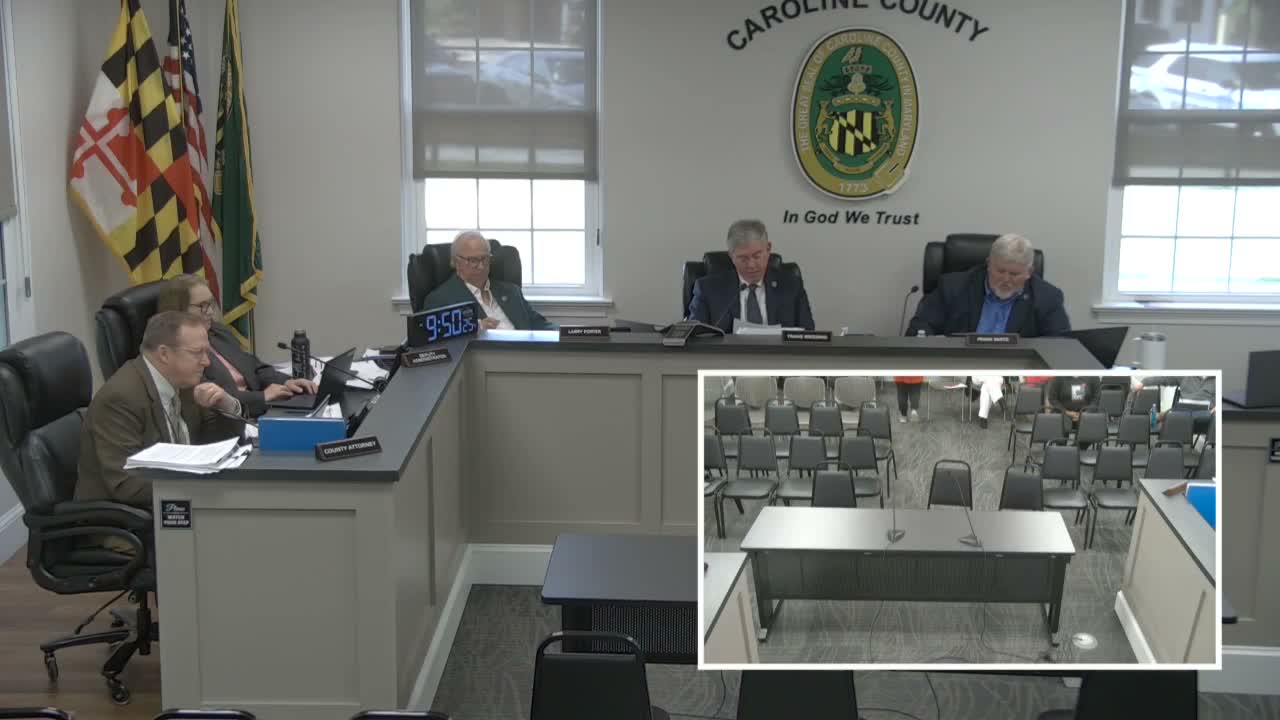
The board reviewed two related draft code changes: a narrowly drawn open‑air burning ordinance authorizing the county to declare an emergency burn ban during drought conditions and a new property‑maintenance chapter adapted from the International Property Maintenance Code covering rubbish, garbage containers and enforcement timelines.
County counsel and staff outlined three articles in the burn‑ban draft: (1) prohibition on open‑air burning of garbage and rubbish, (2) authority for the commission to adopt a countywide burn ban during specified drought conditions upon recommendation of the director of emergency services (with consultation of the Fire Chiefs Association), and (3) judicial enforcement and civil penalties. Commissioners discussed whether the definition of "rubbish" should explicitly exempt clean wood, tree branches and yard trimmings and proposed replacing those items with narrower language such as "treated wood" or "processed lumber." One commissioner argued the code should not prevent ordinary yard‑waste burning; others cautioned about public‑safety and air‑quality risks.
On enforcement of property‑maintenance violations, staff proposed a first‑offense notice with 10 calendar days to correct a violation (one discretionary extension up to 10 additional days), and stiffer penalties for repeats within a 3‑year window: a $1,000 civil citation and a $500 per‑day cap. Commissioners agreed to set a maximum short extension and to treat repeat offenses within three years as repeat violations with expedited remediation (72 hours) and higher fines.
Why it matters: The proposals give the county explicit authority to respond quickly to drought‑related fire risk and to address persistent property‑maintenance problems through a structured enforcement process. Board members asked staff and counsel to refine statutory references, clarify who is responsible for public notice, and ensure consistent definitions before introducing formal legislation for public hearing.
County counsel and staff outlined three articles in the burn‑ban draft: (1) prohibition on open‑air burning of garbage and rubbish, (2) authority for the commission to adopt a countywide burn ban during specified drought conditions upon recommendation of the director of emergency services (with consultation of the Fire Chiefs Association), and (3) judicial enforcement and civil penalties. Commissioners discussed whether the definition of "rubbish" should explicitly exempt clean wood, tree branches and yard trimmings and proposed replacing those items with narrower language such as "treated wood" or "processed lumber." One commissioner argued the code should not prevent ordinary yard‑waste burning; others cautioned about public‑safety and air‑quality risks.
On enforcement of property‑maintenance violations, staff proposed a first‑offense notice with 10 calendar days to correct a violation (one discretionary extension up to 10 additional days), and stiffer penalties for repeats within a 3‑year window: a $1,000 civil citation and a $500 per‑day cap. Commissioners agreed to set a maximum short extension and to treat repeat offenses within three years as repeat violations with expedited remediation (72 hours) and higher fines.
Why it matters: The proposals give the county explicit authority to respond quickly to drought‑related fire risk and to address persistent property‑maintenance problems through a structured enforcement process. Board members asked staff and counsel to refine statutory references, clarify who is responsible for public notice, and ensure consistent definitions before introducing formal legislation for public hearing.
View the Full Meeting & All Its Details
This article offers just a summary. Unlock complete video, transcripts, and insights as a Founder Member.
✓
Watch full, unedited meeting videos
✓
Search every word spoken in unlimited transcripts
✓
AI summaries & real-time alerts (all government levels)
✓
Permanent access to expanding government content
30-day money-back guarantee
