Idaho Falls planning commission approves updated impact-fee study with revised fee categories and implementation date
April 08, 2026 | Idaho Falls, Bonneville County, Idaho
This article was created by AI summarizing key points discussed. AI makes mistakes, so for full details and context, please refer to the video of the full meeting. Please report any errors so we can fix them. Report an error »
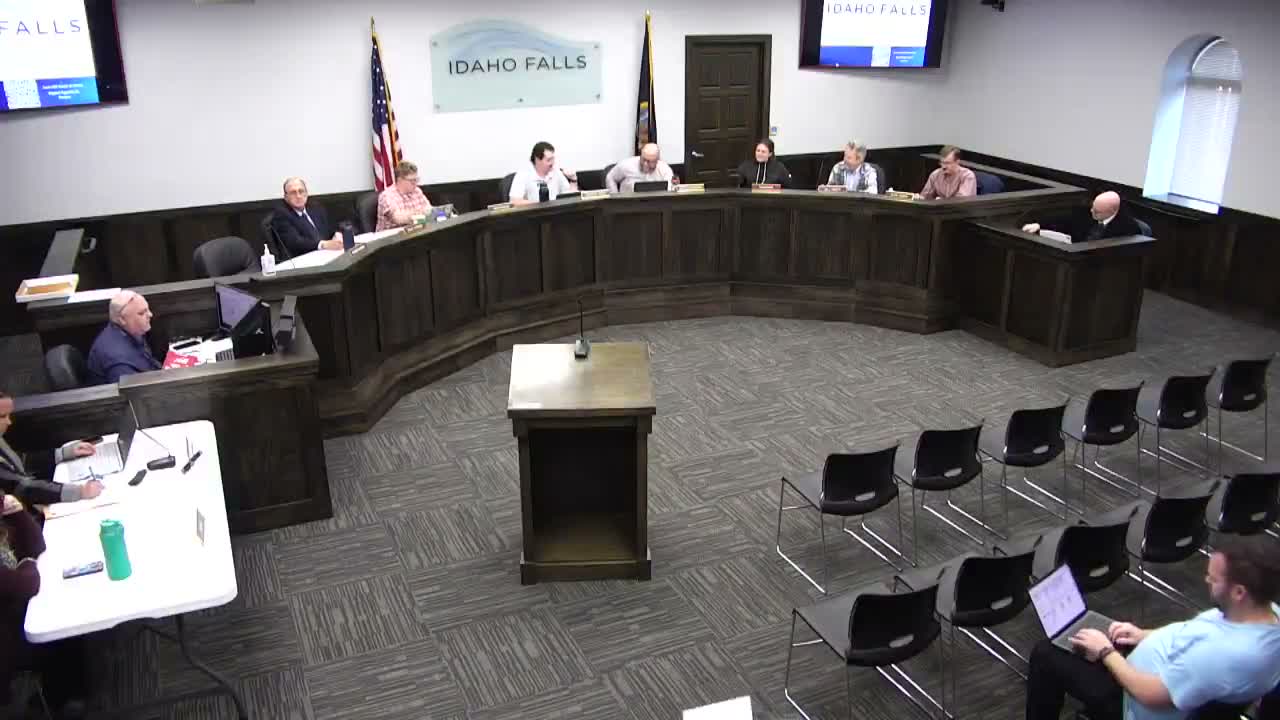
The Idaho Falls Planning and Zoning Commission voted to accept an updated capital improvements plan and development impact fee study, moving the proposal to City Council for a public hearing on April 23, 2026 and targeting an effective date of Monday, June 1.
Pam Alexander, municipal services director and the city’s impact-fee administrator, presented a draft dated March 26 that staff described as a more accessible, red-lined version of a roughly 103-page document prepared with consultant input. "We put minor edits in to help walk the viewer through who doesn't understand impact fees," Alexander said, describing outreach with the impact fee advisory committee, developers and a council work session on March 30.
Key changes the commission noted included a parks plan update (staff and the consultant added a second sheet of ice after community feedback), a reduction of residential dwelling-size categories from 10 to three (under 1,500; 1,500–2,999; 3,000+ square feet), and removal of police vehicles from the fee calculation. Alexander said the impact-fee advisory committee and council concluded police vehicles could not be reliably held to a 10-year service life and therefore were excluded from the study.
Alexander also told commissioners that the city council opted to keep unfinished basement square footage in the fee calculations despite the advisory committee’s recommendation to exclude it. "Council president Francis was very clear that the impact fee should be a one-time fee," Alexander said, adding the council wanted to avoid a situation in which homeowners would later pay an additional permit fee to finish basements.
Commissioners questioned the study’s methodology and service-unit assumptions. Colin, the consultant from Tishler Vice, described how fees are allocated: transportation fees rely on trip-generation rates per thousand square feet and fire fees reflect call volumes to specific land uses. "We look at what we call demand factors or service units that come from those different development types," he said.
The commission opened the item for public comment and closed the hearing after no members of the public spoke. Commissioners praised the changes and the outreach process; several said the revised residential classifications and clearer parks commitments made the document easier to review.
A commissioner moved that the Planning and Zoning Commission accept the capital improvements plan and development impact fee study "as amended and updated." The motion was seconded and carried on a roll-call vote.
Next steps: staff will publish the study and ordinance/fee resolution for the City Council public hearing on April 23, 2026, and the proposed implementation date is June 1. Additional council work sessions and developer outreach preceded that hearing, and staff said it will continue to brief the commission as ordinance language is prepared.
Action recorded: The commission recommended acceptance of the updated capital improvements plan and development impact fee study and forwarded the item to City Council for public hearing and final action.
Pam Alexander, municipal services director and the city’s impact-fee administrator, presented a draft dated March 26 that staff described as a more accessible, red-lined version of a roughly 103-page document prepared with consultant input. "We put minor edits in to help walk the viewer through who doesn't understand impact fees," Alexander said, describing outreach with the impact fee advisory committee, developers and a council work session on March 30.
Key changes the commission noted included a parks plan update (staff and the consultant added a second sheet of ice after community feedback), a reduction of residential dwelling-size categories from 10 to three (under 1,500; 1,500–2,999; 3,000+ square feet), and removal of police vehicles from the fee calculation. Alexander said the impact-fee advisory committee and council concluded police vehicles could not be reliably held to a 10-year service life and therefore were excluded from the study.
Alexander also told commissioners that the city council opted to keep unfinished basement square footage in the fee calculations despite the advisory committee’s recommendation to exclude it. "Council president Francis was very clear that the impact fee should be a one-time fee," Alexander said, adding the council wanted to avoid a situation in which homeowners would later pay an additional permit fee to finish basements.
Commissioners questioned the study’s methodology and service-unit assumptions. Colin, the consultant from Tishler Vice, described how fees are allocated: transportation fees rely on trip-generation rates per thousand square feet and fire fees reflect call volumes to specific land uses. "We look at what we call demand factors or service units that come from those different development types," he said.
The commission opened the item for public comment and closed the hearing after no members of the public spoke. Commissioners praised the changes and the outreach process; several said the revised residential classifications and clearer parks commitments made the document easier to review.
A commissioner moved that the Planning and Zoning Commission accept the capital improvements plan and development impact fee study "as amended and updated." The motion was seconded and carried on a roll-call vote.
Next steps: staff will publish the study and ordinance/fee resolution for the City Council public hearing on April 23, 2026, and the proposed implementation date is June 1. Additional council work sessions and developer outreach preceded that hearing, and staff said it will continue to brief the commission as ordinance language is prepared.
Action recorded: The commission recommended acceptance of the updated capital improvements plan and development impact fee study and forwarded the item to City Council for public hearing and final action.
View the Full Meeting & All Its Details
This article offers just a summary. Unlock complete video, transcripts, and insights as a Founder Member.
✓
Watch full, unedited meeting videos
✓
Search every word spoken in unlimited transcripts
✓
AI summaries & real-time alerts (all government levels)
✓
Permanent access to expanding government content
30-day money-back guarantee
