Harvest Solutions pitches ozone-based medical-waste facility in Kingston; council schedules decision after written comments
April 07, 2026 | Birmingham City, Jefferson County, Alabama
This article was created by AI summarizing key points discussed. AI makes mistakes, so for full details and context, please refer to the video of the full meeting. Please report any errors so we can fix them. Report an error »
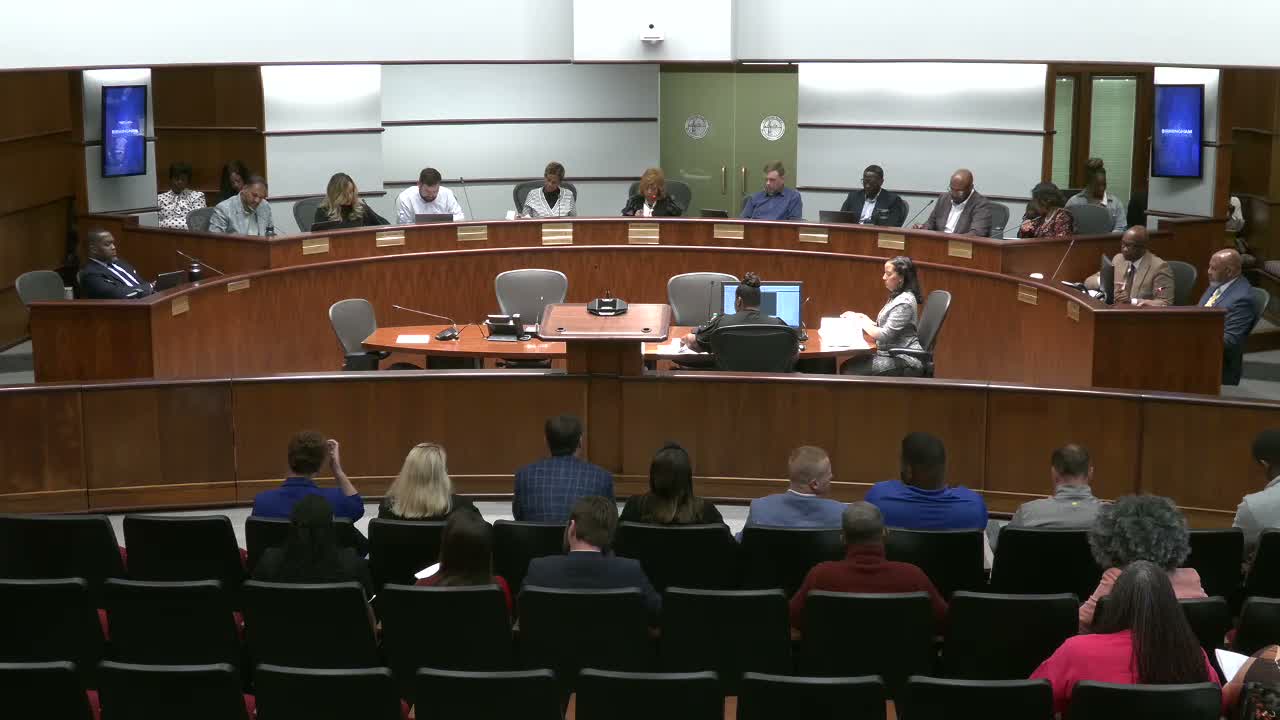
David Dyer, founder and CEO of Harvest Solutions LLC, told the Birmingham City Council on April 7 that his company intends to treat nonhazardous medical waste inside a sealed facility in the Kingston neighborhood using ozone-based equipment and to “hire locally” and invest in the surrounding community.
The council convened the hearing under Alabama Code §22-27-48.1, which requires local officials to hold a public hearing and weigh six statutory criteria before deciding whether to permit new solid-waste facilities. Assistant City Attorney Julie Bernard summarized the process and the criteria, including compatibility with local solid-waste plans, transportation access, service costs, impacts on public health and social or economic effects on the neighborhood.
Dyer described the site as a formerly heavy-industrial lot the company would clean up and landscape, said the technology is already licensed in 45 states and that the ozone process produces no smoke, no wastewater, and “no odor.” He added that all incoming material would be sealed in puncture‑proof containers, that hazardous wastes (including narcotics and human remains) would not be accepted, and that Harvest plans voluntary air-quality testing and local hiring programs.
Kelly Pirkle, CEO of Clean Waste Systems — the manufacturer of the ozone machines Harvest plans to use — described the equipment as enclosed, sealed and designed to revert ozone back to oxygen, saying the system has operated near residences and businesses elsewhere and that, in her experience, short-term air-quality monitoring showed no elevated ozone readings.
Residents and local leaders who spoke at the podium offered a mix of cautious support and guarded concern. Brenda Hollyfield, president of the Kingston Neighborhood Association, said Harvest had engaged with neighbors and that, based on information from Harvest and independent research, the company “could possibly operate safely in Kingston” provided operations stop if issues arise. Several local business and clergy leaders also spoke in favor, citing economic opportunity and the company’s community outreach.
Council members asked about job numbers, training, community benefits agreements and enforceability. Mayor Randall L. Woodfin and council members noted the company’s offers to build community amenities and to enter into agreements, and the mayor confirmed the city can negotiate community benefits agreements with private firms.
Because the statute allows the council 30 days after the hearing to decide and because written comments may still be submitted, the council did not vote on the application that day. Council president Alexander said the item will return for decision on April 14 after staff review of any written submissions.
Next steps: the council will accept written comments through the close of the hearing record, staff will compile any submissions, and the council will consider a decision at its next meeting on April 14.
The council convened the hearing under Alabama Code §22-27-48.1, which requires local officials to hold a public hearing and weigh six statutory criteria before deciding whether to permit new solid-waste facilities. Assistant City Attorney Julie Bernard summarized the process and the criteria, including compatibility with local solid-waste plans, transportation access, service costs, impacts on public health and social or economic effects on the neighborhood.
Dyer described the site as a formerly heavy-industrial lot the company would clean up and landscape, said the technology is already licensed in 45 states and that the ozone process produces no smoke, no wastewater, and “no odor.” He added that all incoming material would be sealed in puncture‑proof containers, that hazardous wastes (including narcotics and human remains) would not be accepted, and that Harvest plans voluntary air-quality testing and local hiring programs.
Kelly Pirkle, CEO of Clean Waste Systems — the manufacturer of the ozone machines Harvest plans to use — described the equipment as enclosed, sealed and designed to revert ozone back to oxygen, saying the system has operated near residences and businesses elsewhere and that, in her experience, short-term air-quality monitoring showed no elevated ozone readings.
Residents and local leaders who spoke at the podium offered a mix of cautious support and guarded concern. Brenda Hollyfield, president of the Kingston Neighborhood Association, said Harvest had engaged with neighbors and that, based on information from Harvest and independent research, the company “could possibly operate safely in Kingston” provided operations stop if issues arise. Several local business and clergy leaders also spoke in favor, citing economic opportunity and the company’s community outreach.
Council members asked about job numbers, training, community benefits agreements and enforceability. Mayor Randall L. Woodfin and council members noted the company’s offers to build community amenities and to enter into agreements, and the mayor confirmed the city can negotiate community benefits agreements with private firms.
Because the statute allows the council 30 days after the hearing to decide and because written comments may still be submitted, the council did not vote on the application that day. Council president Alexander said the item will return for decision on April 14 after staff review of any written submissions.
Next steps: the council will accept written comments through the close of the hearing record, staff will compile any submissions, and the council will consider a decision at its next meeting on April 14.
View the Full Meeting & All Its Details
This article offers just a summary. Unlock complete video, transcripts, and insights as a Founder Member.
✓
Watch full, unedited meeting videos
✓
Search every word spoken in unlimited transcripts
✓
AI summaries & real-time alerts (all government levels)
✓
Permanent access to expanding government content
30-day money-back guarantee
