APD training academy outlines reforms, flags facility and instructor staffing gaps
April 06, 2026 | Austin, Travis County, Texas
This article was created by AI summarizing key points discussed. AI makes mistakes, so for full details and context, please refer to the video of the full meeting. Please report any errors so we can fix them. Report an error »
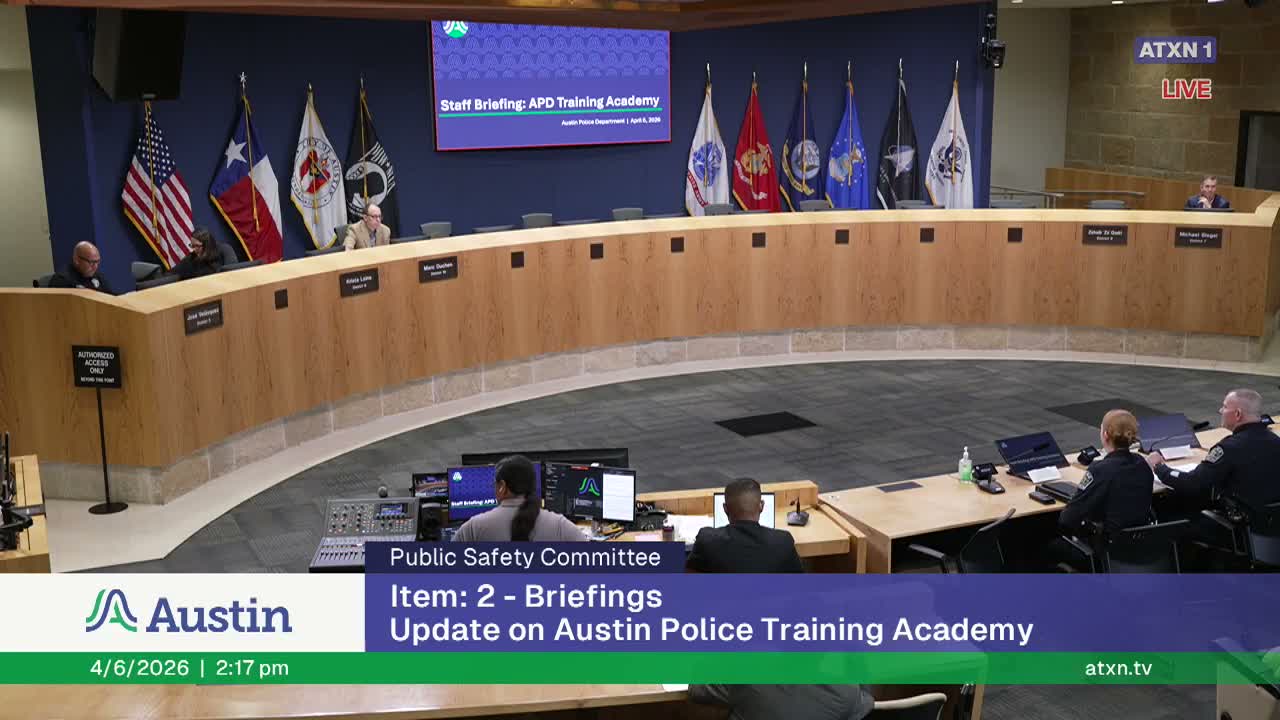
Commander Richard Eagle briefed the Public Safety Committee on April 6 about five years of training changes at the Austin Police Department’s academy following Kroll assessments. He said Kroll produced 84 formal recommendations and that APD has complied with most of them; 22 final process recommendations from Kroll are embedded in the academy operations manual.
Eagle described a cadet pipeline that begins with a two-week academy foundation, continues with 32 weeks of formal cadet training, 4 weeks of intermediate TCOLE training, and a 13-week field-training program. He said APD has implemented ABLE (active bystandership) and ICAT de-escalation principles and has added a victim-services counselor on campus to support cadets who disclose trauma.
Commander Eagle said APD has three outstanding Kroll recommendations it continues to address: building a training-video library (work in progress and assigned to a video production specialist), expanding training facilities (a proposed $100,000,000 joint-use scenario facility was removed from a 2026 bond package and currently has no identified funding), and a Kroll suggestion to reduce cadet lunch hours to shift time back into training (Eagle said cadet lunch is unpaid time and APD has instead offered voluntary training before and after shifts).
On recruitment and retention, APD provided class-size and status figures: 36 cadets in the 156th class (scheduled to graduate May 1), 48 in the 150th class (scheduled to graduate Sept. 18), and other cohorts at various field-training phases. Council members asked about attrition comparisons to other cities and exit-interview data; program manager Brienne Edwards said the current attrition rate is lower than recent classes and that detailed exit-interview data and historical cadet metrics are available and will be provided upon request (some data are on APD’s open data portal).
Council members pressed APD on measurement and evaluation; Eagle said the department is working with a research analyst to develop metrics and is shifting intermediate TCOLE classes later in officers’ careers so new officers get on the street sooner. He said instructor development and facilities remain the department’s major near-term challenges.
Next steps: APD will provide requested attrition and exit-interview data, continue developing the video library and instructor cadre, and report back to the committee; funding for a training facility remains unresolved.
Eagle described a cadet pipeline that begins with a two-week academy foundation, continues with 32 weeks of formal cadet training, 4 weeks of intermediate TCOLE training, and a 13-week field-training program. He said APD has implemented ABLE (active bystandership) and ICAT de-escalation principles and has added a victim-services counselor on campus to support cadets who disclose trauma.
Commander Eagle said APD has three outstanding Kroll recommendations it continues to address: building a training-video library (work in progress and assigned to a video production specialist), expanding training facilities (a proposed $100,000,000 joint-use scenario facility was removed from a 2026 bond package and currently has no identified funding), and a Kroll suggestion to reduce cadet lunch hours to shift time back into training (Eagle said cadet lunch is unpaid time and APD has instead offered voluntary training before and after shifts).
On recruitment and retention, APD provided class-size and status figures: 36 cadets in the 156th class (scheduled to graduate May 1), 48 in the 150th class (scheduled to graduate Sept. 18), and other cohorts at various field-training phases. Council members asked about attrition comparisons to other cities and exit-interview data; program manager Brienne Edwards said the current attrition rate is lower than recent classes and that detailed exit-interview data and historical cadet metrics are available and will be provided upon request (some data are on APD’s open data portal).
Council members pressed APD on measurement and evaluation; Eagle said the department is working with a research analyst to develop metrics and is shifting intermediate TCOLE classes later in officers’ careers so new officers get on the street sooner. He said instructor development and facilities remain the department’s major near-term challenges.
Next steps: APD will provide requested attrition and exit-interview data, continue developing the video library and instructor cadre, and report back to the committee; funding for a training facility remains unresolved.
View the Full Meeting & All Its Details
This article offers just a summary. Unlock complete video, transcripts, and insights as a Founder Member.
✓
Watch full, unedited meeting videos
✓
Search every word spoken in unlimited transcripts
✓
AI summaries & real-time alerts (all government levels)
✓
Permanent access to expanding government content
30-day money-back guarantee
