City considers wider use of small mobility platforms for events, parks and wildfire response
April 06, 2026 | Austin, Travis County, Texas
This article was created by AI summarizing key points discussed. AI makes mistakes, so for full details and context, please refer to the video of the full meeting. Please report any errors so we can fix them. Report an error »
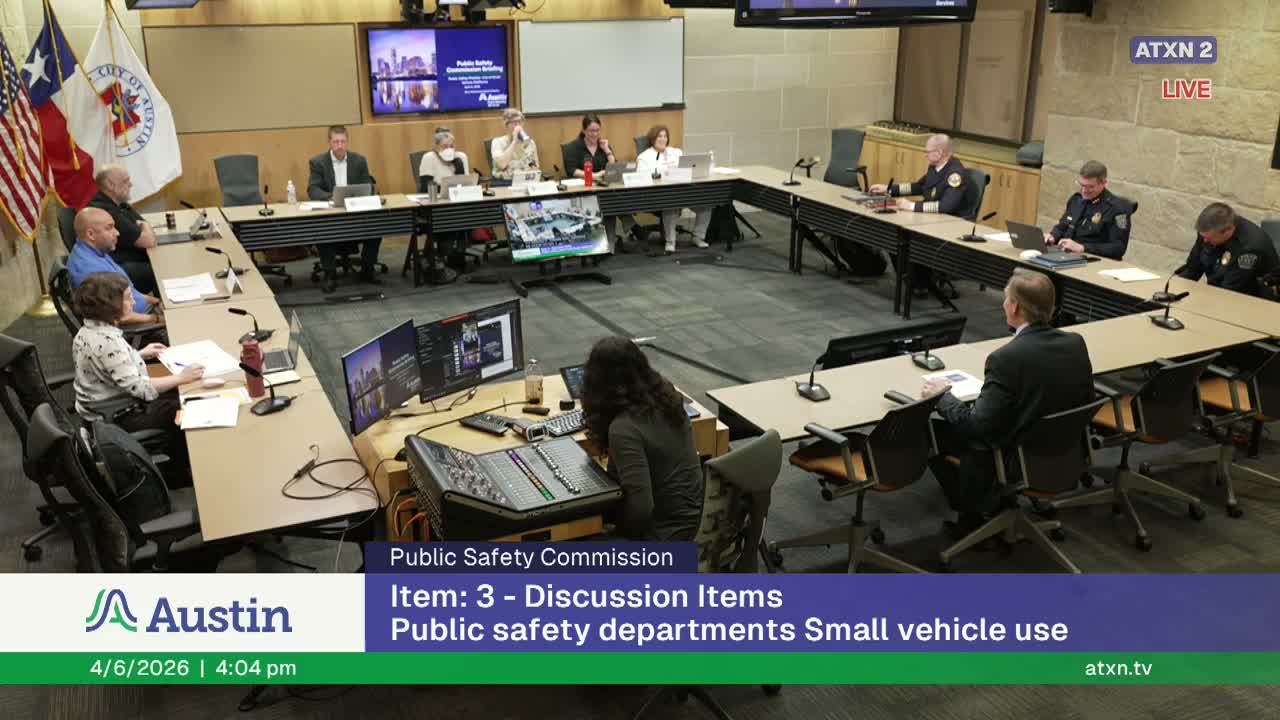
City staff and public safety leaders told the Public Safety Commission that small mobility platforms — including UTVs, ATVs, mini ambulances and specialized off‑road units — play a targeted role in Austin’s public safety operations, particularly at large events, in parks and on trails, and during wildland incidents.
"These platforms are valuable, but only when they're applied to the right mission in the right environment," Rick Harland, assistant director at Fleet Mobility Services, said in a presentation that framed the city’s approach as "mission‑based deployment." Harland described the platforms as supplemental tools that cannot replace full‑size ambulances or fire apparatus because of limitations in range, speed and patient‑transport capability.
Wesley (first name only), describing the Austin Center for Events’ operations, detailed the city’s use of ASAP mini ambulances with enclosed med beds and a power‑load stretcher — equipment meant to provide privacy and reduce strain on medics during special events. Tom Bokey (identified as "Tom Bokey, Fossil Fire") said smaller UTVs outfitted with pumps work well for wildfire response and for accessing restricted areas at events.
Commissioners asked about safety equipment and medical supplies. APD and EMS representatives confirmed that naloxone is carried on advanced and basic life‑support assets and that officers are issued naloxone. Harland and operational staff emphasized training, PPE (helmets, eye protection, high‑visibility gear) and telematics integration as essential elements for safe deployment.
Speakers also discussed electric vehicles: Harland noted that electric UTVs currently represent a small share of the market but said the department is building charging infrastructure to take advantage as options mature.
The commission did not take formal action on policy changes but encouraged departments to continue piloting platforms where operationally appropriate and to return with more detailed implementation proposals, training plans and budget implications.
"These platforms are valuable, but only when they're applied to the right mission in the right environment," Rick Harland, assistant director at Fleet Mobility Services, said in a presentation that framed the city’s approach as "mission‑based deployment." Harland described the platforms as supplemental tools that cannot replace full‑size ambulances or fire apparatus because of limitations in range, speed and patient‑transport capability.
Wesley (first name only), describing the Austin Center for Events’ operations, detailed the city’s use of ASAP mini ambulances with enclosed med beds and a power‑load stretcher — equipment meant to provide privacy and reduce strain on medics during special events. Tom Bokey (identified as "Tom Bokey, Fossil Fire") said smaller UTVs outfitted with pumps work well for wildfire response and for accessing restricted areas at events.
Commissioners asked about safety equipment and medical supplies. APD and EMS representatives confirmed that naloxone is carried on advanced and basic life‑support assets and that officers are issued naloxone. Harland and operational staff emphasized training, PPE (helmets, eye protection, high‑visibility gear) and telematics integration as essential elements for safe deployment.
Speakers also discussed electric vehicles: Harland noted that electric UTVs currently represent a small share of the market but said the department is building charging infrastructure to take advantage as options mature.
The commission did not take formal action on policy changes but encouraged departments to continue piloting platforms where operationally appropriate and to return with more detailed implementation proposals, training plans and budget implications.
View the Full Meeting & All Its Details
This article offers just a summary. Unlock complete video, transcripts, and insights as a Founder Member.
✓
Watch full, unedited meeting videos
✓
Search every word spoken in unlimited transcripts
✓
AI summaries & real-time alerts (all government levels)
✓
Permanent access to expanding government content
30-day money-back guarantee
