Bill waiving ID and birth‑certificate fees for unhoused young adults gets first hearing
April 02, 2026 | 2026 Legislature Alaska, Alaska
This article was created by AI summarizing key points discussed. AI makes mistakes, so for full details and context, please refer to the video of the full meeting. Please report any errors so we can fix them. Report an error »
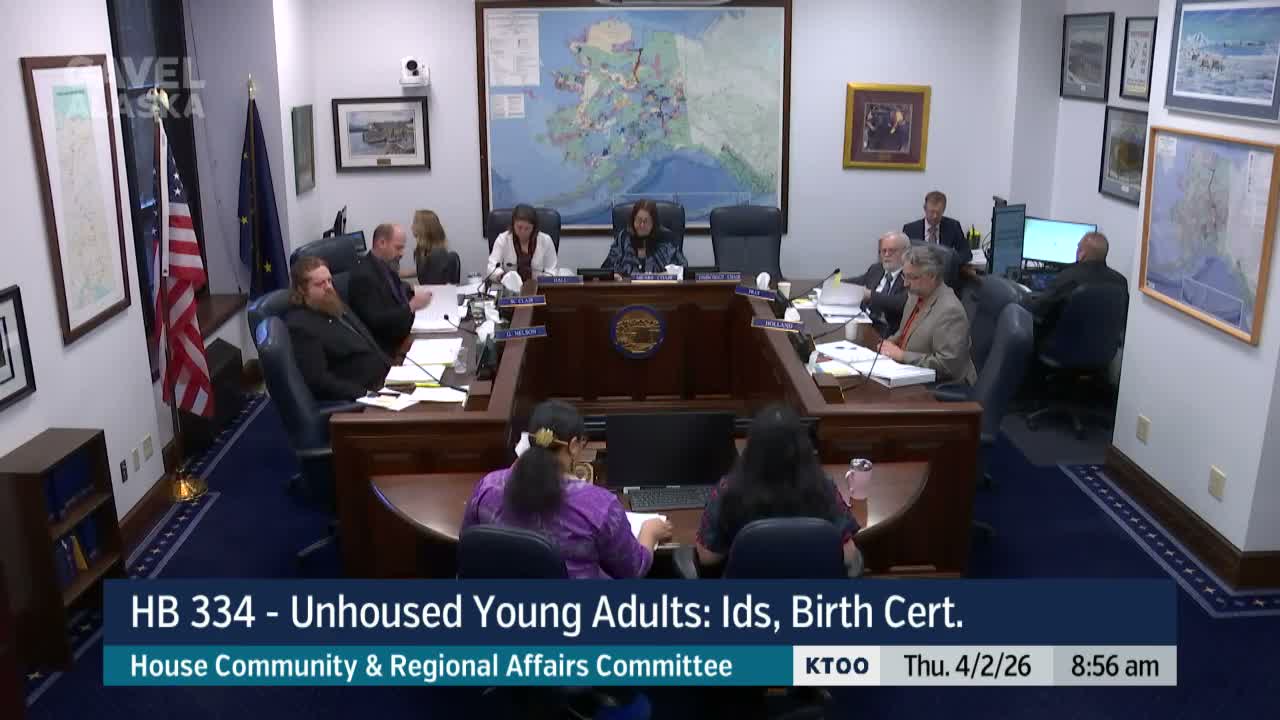
Representative Genevieve Mina (House District 19) told the committee that House Bill 334 removes financial and procedural barriers to help transition‑age young adults experiencing homelessness obtain certified birth certificates and state IDs.
The bill, as explained by staff, adds alternative methods for verifying identity when requesting a certified birth certificate, authorizes the state registrar to waive certified copy fees for unhoused individuals aged 18–25, and directs the Department of Health and the Department of Administration to prescribe forms and verification procedures. The bill also permits non‑principal addresses — such as a frequent location or service provider address — to appear on identification issued to unhoused youth.
"Without a birth certificate or ID, nobody can get a job, they can't sign a lease, they can't access health care," Josh Flowers, senior director at Covenant House Alaska, said. He told the committee that Covenant House helped more than 300 young people in 2025 who needed assistance getting replacement identification and that waiving fees and accepting alternative documents would be transformative.
Brian Wilson, executive director of the Alaska Coalition on Housing and Homelessness, provided statewide context and data, saying 1,464 unique Alaskans age 18–25 used some form of homeless services during the year. He described additional non‑fee barriers— transportation, lost documents and limited service provider availability— that make ID access difficult for youth in rural communities.
Committee discussion focused on definitions of "unhoused," how verification would work in practice and whether the bill covers minors (it does not; sponsors said it targets transition‑age young adults). Sponsors referenced McKinney‑Vento and HUD definitions as possible references for verification policies and said verification could involve service providers confirming status.
Next steps: the committee set HB 334 aside for further consideration and indicated staff and sponsors would work on technical language and verification procedures.
The bill, as explained by staff, adds alternative methods for verifying identity when requesting a certified birth certificate, authorizes the state registrar to waive certified copy fees for unhoused individuals aged 18–25, and directs the Department of Health and the Department of Administration to prescribe forms and verification procedures. The bill also permits non‑principal addresses — such as a frequent location or service provider address — to appear on identification issued to unhoused youth.
"Without a birth certificate or ID, nobody can get a job, they can't sign a lease, they can't access health care," Josh Flowers, senior director at Covenant House Alaska, said. He told the committee that Covenant House helped more than 300 young people in 2025 who needed assistance getting replacement identification and that waiving fees and accepting alternative documents would be transformative.
Brian Wilson, executive director of the Alaska Coalition on Housing and Homelessness, provided statewide context and data, saying 1,464 unique Alaskans age 18–25 used some form of homeless services during the year. He described additional non‑fee barriers— transportation, lost documents and limited service provider availability— that make ID access difficult for youth in rural communities.
Committee discussion focused on definitions of "unhoused," how verification would work in practice and whether the bill covers minors (it does not; sponsors said it targets transition‑age young adults). Sponsors referenced McKinney‑Vento and HUD definitions as possible references for verification policies and said verification could involve service providers confirming status.
Next steps: the committee set HB 334 aside for further consideration and indicated staff and sponsors would work on technical language and verification procedures.
Don't Miss a Word: See the Full Meeting!
Go beyond summaries. Unlock every video, transcript, and key insight with a Founder Membership.
✓
Get instant access to full meeting videos
✓
Search and clip any phrase from complete transcripts
✓
Receive AI-powered summaries & custom alerts
✓
Enjoy lifetime, unrestricted access to government data
30-day money-back guarantee
