Council hears proposed updates to automated traffic-camera rules after state law changes; implementation largely at court level
May 15, 2024 | Lynnwood, Snohomish County, Washington
This article was created by AI summarizing key points discussed. AI makes mistakes, so for full details and context, please refer to the video of the full meeting. Please report any errors so we can fix them. Report an error »
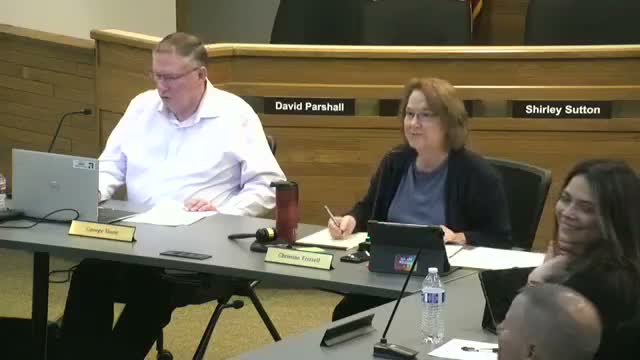
Deputy Chief Patrick Fagan told the Lynnwood City Council on May 15 that the proposed ordinance to amend Lynnwood Municipal Code 11.18 would incorporate verbatim changes from recent state legislation (House Bill 2384) governing automated traffic safety cameras.
Fagan said the changes fall into three primary areas. First, the legislation allows trained, authorized civilian employees of a law-enforcement agency or designated employees of a city’s public-works or transportation departments to review and issue automated-traffic citations, expanding beyond commissioned officers. "So they added that into the law," Fagan said, and he clarified the city has no present intent to change its current practice, which reviews tickets via commissioned officers.
Second, the bill caps the maximum automated-traffic citation at $145 and permits doubling for school-zone violations. Fagan said Lynnwood’s previous maximum had been higher and required language updates to conform to the new state cap.
Third, Fagan noted the legislation requires courts to offer a 50% reduction in the fine for first infractions (or a second infraction if within 21 days) for recipients who are on public assistance or the Women, Infants, and Children (WIC) program. He said the mechanism is being implemented at the court level and will appear as an option on the infraction notice; "they're providing model language that'll be incorporated into those infractions when they get sent out," he said.
Council members asked how eligibility for the reduced fine would be verified. Fagan said the legislation does not establish a verification database and that courts would rely on an attestation under oath by the recipient. Council President Hurst asked whether changing who reviews citations would require bargaining with employee groups; Fagan said it would. Hurst and others also questioned the local fiscal effect; Fagan described the fiscal impact as "undeterminable" without knowing what proportion of ticket recipients would qualify for reductions.
Fagan said the statutory changes are slated to take effect June 6 and emphasized that much of the operational work — the court notices, eligibility attestation procedures and vendor coordination — will be handled by the prosecutor, the court and the citation vendor rather than by direct city practice changes.
The council did not take a final vote at the work session. Council members requested further clarification about implementation details and monitoring of the local fiscal impact before any local policy changes to review practices would be pursued.
Fagan said the changes fall into three primary areas. First, the legislation allows trained, authorized civilian employees of a law-enforcement agency or designated employees of a city’s public-works or transportation departments to review and issue automated-traffic citations, expanding beyond commissioned officers. "So they added that into the law," Fagan said, and he clarified the city has no present intent to change its current practice, which reviews tickets via commissioned officers.
Second, the bill caps the maximum automated-traffic citation at $145 and permits doubling for school-zone violations. Fagan said Lynnwood’s previous maximum had been higher and required language updates to conform to the new state cap.
Third, Fagan noted the legislation requires courts to offer a 50% reduction in the fine for first infractions (or a second infraction if within 21 days) for recipients who are on public assistance or the Women, Infants, and Children (WIC) program. He said the mechanism is being implemented at the court level and will appear as an option on the infraction notice; "they're providing model language that'll be incorporated into those infractions when they get sent out," he said.
Council members asked how eligibility for the reduced fine would be verified. Fagan said the legislation does not establish a verification database and that courts would rely on an attestation under oath by the recipient. Council President Hurst asked whether changing who reviews citations would require bargaining with employee groups; Fagan said it would. Hurst and others also questioned the local fiscal effect; Fagan described the fiscal impact as "undeterminable" without knowing what proportion of ticket recipients would qualify for reductions.
Fagan said the statutory changes are slated to take effect June 6 and emphasized that much of the operational work — the court notices, eligibility attestation procedures and vendor coordination — will be handled by the prosecutor, the court and the citation vendor rather than by direct city practice changes.
The council did not take a final vote at the work session. Council members requested further clarification about implementation details and monitoring of the local fiscal impact before any local policy changes to review practices would be pursued.
Don't Miss a Word: See the Full Meeting!
Go beyond summaries. Unlock every video, transcript, and key insight with a Founder Membership.
✓
Get instant access to full meeting videos
✓
Search and clip any phrase from complete transcripts
✓
Receive AI-powered summaries & custom alerts
✓
Enjoy lifetime, unrestricted access to government data
30-day money-back guarantee
