Planning board denies Ohana Subdivision over unresolved drainage and driveway sight‑distance concerns
March 18, 2026 | Fairbanks North Star (Borough), Alaska
This article was created by AI summarizing key points discussed. AI makes mistakes, so for full details and context, please refer to the video of the full meeting. Please report any errors so we can fix them. Report an error »
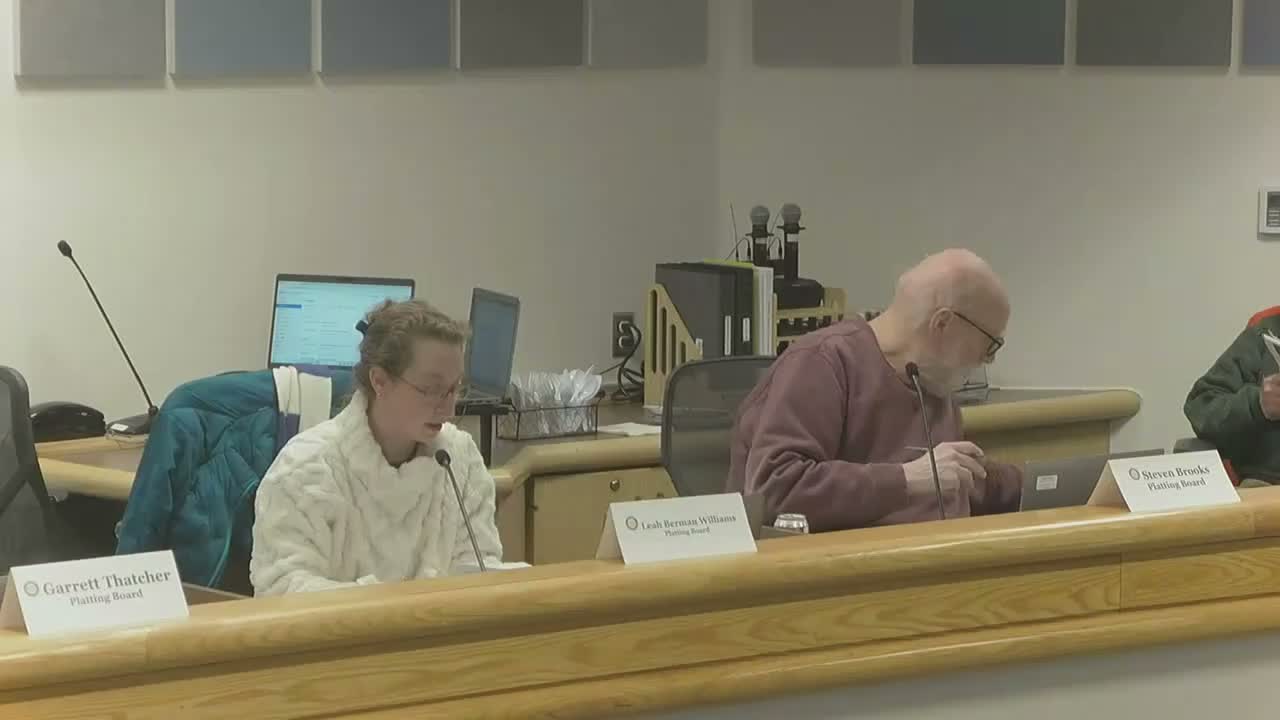
The Fairbanks North Star Borough Planning Board on March 18, 2026, voted 3–2 to deny SD009‑26, the Ohana Subdivision, concluding that the application failed to provide sufficient technical information to verify neighbors’ drainage and driveway sight‑distance concerns.
Board members who voted to deny the three‑lot subdivision said the record lacked spot elevations, contour lines and sight‑distance documentation needed to evaluate whether a new driveway and lot layout would redirect water or create a traffic hazard for nearby homes. The board’s denial cited two findings of fact: (1) insufficient information (missing spot elevations and contour lines) to ascertain whether interested parties’ concerns about drainage and driveway access were valid; and (2) concerns raised by adjoining landowners could not be verified.
Neighbors who testified said they were not opposing a neighbor’s right to develop land but asked that property lines and drainage be clarified before approval. "We're not here to oppose our neighbor from building a home or improving his land... We simply want to make sure that things are done right so there are no problems down the road," resident Katherine Johnson said during public testimony.
Applicant surveyor John Brady told the board he had flagged the property line and possessed elevation data, and he said his client intends to relocate driveway access to reduce downstream impacts. "I did find both the northern corner and the southern corner on that line and flagged in the trees," Brady said in response to questions about the boundary. But Brady acknowledged that spot elevations and contour lines were not included on the preliminary plat distributed to the board.
During more than two hours of discussion the board debated alternatives including requiring an engineer's letter or sight‑distance photos. An amendment asking the applicant to supply photographs of sight distance for the west lot driveway and spot elevations/contours for the west flag stem passed, but subsequent motions to return the file and to approve the subdivision failed on roll calls. The board later adopted a motion to deny the application with the amended findings, 3–2 (Brooks, Perkins, Pitney voting yes; Thatcher and Berman Williams voting no).
The motion to deny was made by Mr. Brooks and seconded by Mr. Perkins; it was debated and amended on the record to specify the missing materials the board sought. The denial notice to the applicant included the finding language the board adopted and advised that the decision may be appealed to the Board of Adjustment by filing a written notice within seven days of the decision.
Next steps for the applicant are to either submit the additional survey and sight‑distance evidence the board requested and return for reconsideration, or pursue the appeal process. The board’s action did not create immediate technical mitigation requirements; instead it required the applicant to cure informational deficiencies before approval could be reconsidered.
Board members who voted to deny the three‑lot subdivision said the record lacked spot elevations, contour lines and sight‑distance documentation needed to evaluate whether a new driveway and lot layout would redirect water or create a traffic hazard for nearby homes. The board’s denial cited two findings of fact: (1) insufficient information (missing spot elevations and contour lines) to ascertain whether interested parties’ concerns about drainage and driveway access were valid; and (2) concerns raised by adjoining landowners could not be verified.
Neighbors who testified said they were not opposing a neighbor’s right to develop land but asked that property lines and drainage be clarified before approval. "We're not here to oppose our neighbor from building a home or improving his land... We simply want to make sure that things are done right so there are no problems down the road," resident Katherine Johnson said during public testimony.
Applicant surveyor John Brady told the board he had flagged the property line and possessed elevation data, and he said his client intends to relocate driveway access to reduce downstream impacts. "I did find both the northern corner and the southern corner on that line and flagged in the trees," Brady said in response to questions about the boundary. But Brady acknowledged that spot elevations and contour lines were not included on the preliminary plat distributed to the board.
During more than two hours of discussion the board debated alternatives including requiring an engineer's letter or sight‑distance photos. An amendment asking the applicant to supply photographs of sight distance for the west lot driveway and spot elevations/contours for the west flag stem passed, but subsequent motions to return the file and to approve the subdivision failed on roll calls. The board later adopted a motion to deny the application with the amended findings, 3–2 (Brooks, Perkins, Pitney voting yes; Thatcher and Berman Williams voting no).
The motion to deny was made by Mr. Brooks and seconded by Mr. Perkins; it was debated and amended on the record to specify the missing materials the board sought. The denial notice to the applicant included the finding language the board adopted and advised that the decision may be appealed to the Board of Adjustment by filing a written notice within seven days of the decision.
Next steps for the applicant are to either submit the additional survey and sight‑distance evidence the board requested and return for reconsideration, or pursue the appeal process. The board’s action did not create immediate technical mitigation requirements; instead it required the applicant to cure informational deficiencies before approval could be reconsidered.
View the Full Meeting & All Its Details
This article offers just a summary. Unlock complete video, transcripts, and insights as a Founder Member.
✓
Watch full, unedited meeting videos
✓
Search every word spoken in unlimited transcripts
✓
AI summaries & real-time alerts (all government levels)
✓
Permanent access to expanding government content
30-day money-back guarantee
