Assembly requires large consumer arbitration providers to publish searchable case data, drawing debate on scope and burden
March 30, 2026 | 2026 Legislature NY, New York
This article was created by AI summarizing key points discussed. AI makes mistakes, so for full details and context, please refer to the video of the full meeting. Please report any errors so we can fix them. Report an error »
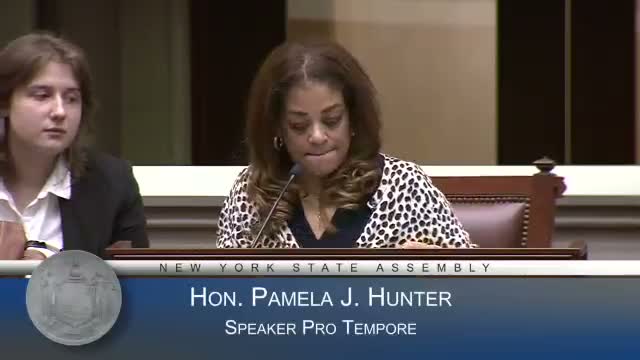
The Assembly voted to require private arbitration organizations that administer 50 or more consumer arbitration proceedings in a year to publish a searchable database with specified information, including the type of dispute, whether the consumer prevailed, and basic party identifiers.
Sponsor Assemblymember Dinowitz said the measure is aimed at "greater transparency and accountability," arguing that most large arbitration providers already maintain the requested information and that public access would allow consumers and researchers to identify patterns or potential conflicts.
Assemblymember Walsh pressed the sponsor on details throughout an extended exchange. Walsh asked whether the bill’s effective date—listed as Jan. 1, 2027—creates only a prospective duty or would require data back to 2022; Dinowitz said organizations that meet the threshold in 2027 would have to supply records covering the preceding five years. Walsh also asked how to determine whether a consumer ‘prevailed’ in mixed outcomes; the sponsor said mixed results would be indicated, and the database would show both parts of split decisions.
Questions also focused on scope: the bill excludes union-collective-bargaining matters and some consumer-vs-consumer disputes. Walsh read objections from industry groups, including the New York Insurance Association and the National Federation of Independent Business, which argued the bill could impose unnecessary burdens and expose sensitive information. Dinowitz said some carve-outs reflect practical and legal distinctions (for example, collective bargaining is governed by separate processes) and reiterated that the attorney general would have enforcement authority (including seeking injunctions for nondisclosure) and that the statute also creates a private right of action.
The clerk recorded the final tally: Ayes 91, Nays 49. The bill was passed.
The House moved on to other calendar items.
Sponsor Assemblymember Dinowitz said the measure is aimed at "greater transparency and accountability," arguing that most large arbitration providers already maintain the requested information and that public access would allow consumers and researchers to identify patterns or potential conflicts.
Assemblymember Walsh pressed the sponsor on details throughout an extended exchange. Walsh asked whether the bill’s effective date—listed as Jan. 1, 2027—creates only a prospective duty or would require data back to 2022; Dinowitz said organizations that meet the threshold in 2027 would have to supply records covering the preceding five years. Walsh also asked how to determine whether a consumer ‘prevailed’ in mixed outcomes; the sponsor said mixed results would be indicated, and the database would show both parts of split decisions.
Questions also focused on scope: the bill excludes union-collective-bargaining matters and some consumer-vs-consumer disputes. Walsh read objections from industry groups, including the New York Insurance Association and the National Federation of Independent Business, which argued the bill could impose unnecessary burdens and expose sensitive information. Dinowitz said some carve-outs reflect practical and legal distinctions (for example, collective bargaining is governed by separate processes) and reiterated that the attorney general would have enforcement authority (including seeking injunctions for nondisclosure) and that the statute also creates a private right of action.
The clerk recorded the final tally: Ayes 91, Nays 49. The bill was passed.
The House moved on to other calendar items.
Don't Miss a Word: See the Full Meeting!
Go beyond summaries. Unlock every video, transcript, and key insight with a Founder Membership.
✓
Get instant access to full meeting videos
✓
Search and clip any phrase from complete transcripts
✓
Receive AI-powered summaries & custom alerts
✓
Enjoy lifetime, unrestricted access to government data
30-day money-back guarantee
