Assembly approves bill requiring utilities to include time‑based restoration goals in emergency plans
March 24, 2026 | 2026 Legislature NY, New York
This article was created by AI summarizing key points discussed. AI makes mistakes, so for full details and context, please refer to the video of the full meeting. Please report any errors so we can fix them. Report an error »
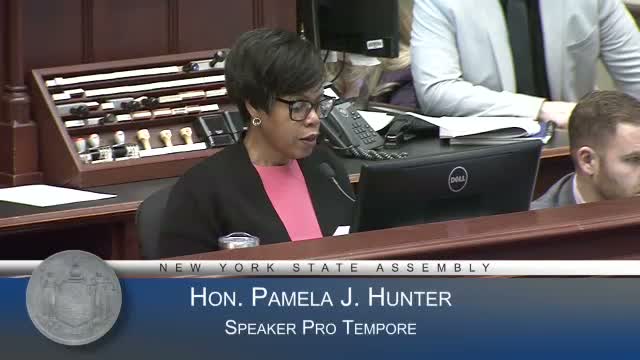
The Assembly voted to pass A.6285, a bill that amends the Public Service Law to require electric utilities’ emergency response plans to include staffing details, equipment inventories and time‑based restoration benchmarks that the Public Service Commission (PSC) would use to assess performance after storms and other emergency events.
Sponsor Assemblymember Otis said the legislation is intended to reduce long outages by encouraging proximate staffing or contractor arrangements so that mutual aid is not days away. “The purpose of this bill is really to encourage more proximate staffing either by increased staff by the utilities themselves or better arrangements with local subcontractors that are here in the Northeast,” Otis said. He said the PSC would retain latitude to set benchmarks that account for different storm types.
Opponents and questioners raised concerns about whether the PSC already has tools to evaluate restoration and whether mandating time‑based goals could raise costs for ratepayers. “So when we talk about that, is there any consideration for the size of the storm?” a member asked, and Otis replied that the bill gives the PSC the latitude to differentiate by storm type and circumstances.
Other members noted existing PSC penalties and reimbursement programs for extended outages and asked whether penalties assessed would be borne by shareholders or ratepayers; the sponsor did not provide a definitive answer and said he would study the question further.
After debate, the clerk recorded the vote: Ayes 109, Nays 34, and the bill passed. Supporters framed the measure as an accountability and preparedness tool; critics said it may duplicate PSC authority and could have unintended cost consequences.
Sponsor Assemblymember Otis said the legislation is intended to reduce long outages by encouraging proximate staffing or contractor arrangements so that mutual aid is not days away. “The purpose of this bill is really to encourage more proximate staffing either by increased staff by the utilities themselves or better arrangements with local subcontractors that are here in the Northeast,” Otis said. He said the PSC would retain latitude to set benchmarks that account for different storm types.
Opponents and questioners raised concerns about whether the PSC already has tools to evaluate restoration and whether mandating time‑based goals could raise costs for ratepayers. “So when we talk about that, is there any consideration for the size of the storm?” a member asked, and Otis replied that the bill gives the PSC the latitude to differentiate by storm type and circumstances.
Other members noted existing PSC penalties and reimbursement programs for extended outages and asked whether penalties assessed would be borne by shareholders or ratepayers; the sponsor did not provide a definitive answer and said he would study the question further.
After debate, the clerk recorded the vote: Ayes 109, Nays 34, and the bill passed. Supporters framed the measure as an accountability and preparedness tool; critics said it may duplicate PSC authority and could have unintended cost consequences.
View the Full Meeting & All Its Details
This article offers just a summary. Unlock complete video, transcripts, and insights as a Founder Member.
✓
Watch full, unedited meeting videos
✓
Search every word spoken in unlimited transcripts
✓
AI summaries & real-time alerts (all government levels)
✓
Permanent access to expanding government content
30-day money-back guarantee
