Lake Champlain advisory board urges funding for flood resilience, clean water and invasive-species control
March 21, 2026 | Natural Resources & Energy, SENATE, Committees, Legislative , Vermont
This article was created by AI summarizing key points discussed. AI makes mistakes, so for full details and context, please refer to the video of the full meeting. Please report any errors so we can fix them. Report an error »
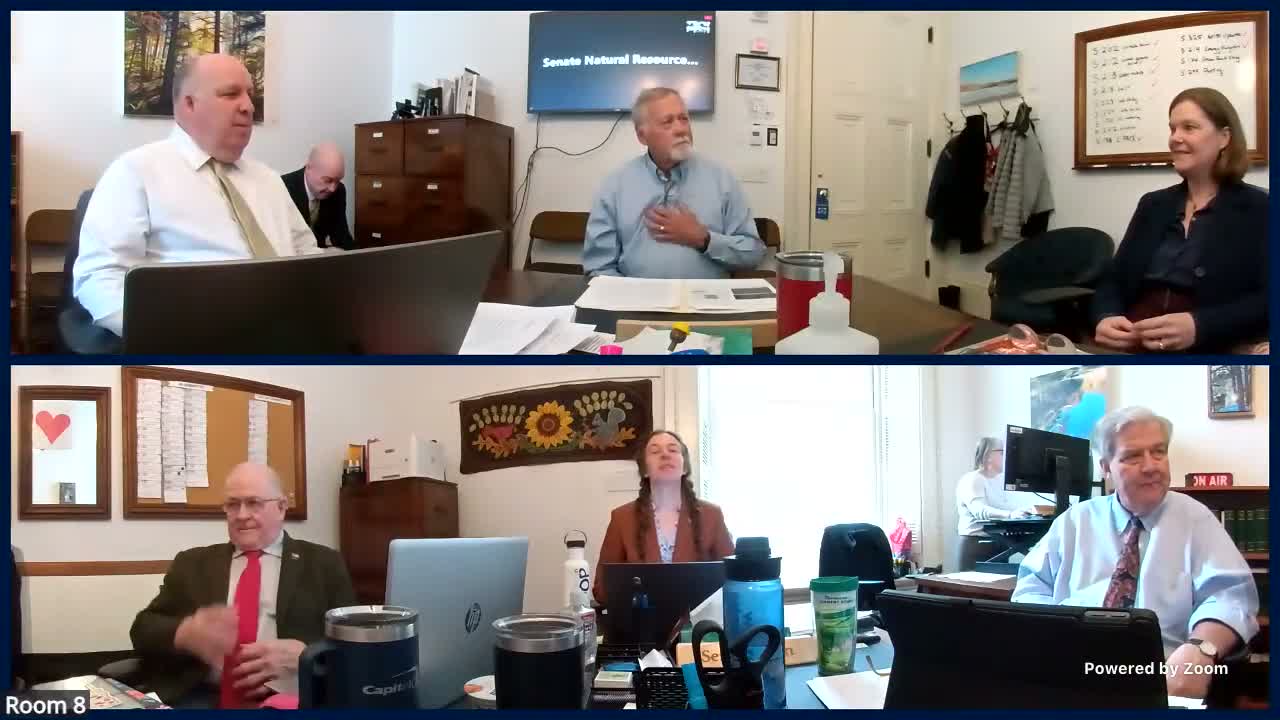
On March 20, the Lake Champlain Citizens Advisory Board presented its priorities to the Senate Natural Resources & Energy Committee, urging lawmakers to fund flood resilience, address water contaminants, invest in invasive-species management and improve equitable public access to the lake.
Brett Gallatin, a committee member and retired University of Vermont professor, said the board frames its work around three intersecting goals: healthy ecosystems, climate resilience and clean water. He told the committee the basin'wide scale of Lake Champlain (a large drainage-to-lake area ratio) magnifies land-based impacts and increases the payoff for investments in land conservation, natural floodplain restoration and modernized wastewater infrastructure.
Gallatin cited estimates of flood and drought economic impacts and urged staff and program funding to implement existing strategies. He told senators a study estimated a "100-year flood" could cost the state roughly three-quarters of $1 billion in damages and recovery, and he referenced an estimate presented to the committee of about $2.07 billion in agricultural-sector losses during the recent drought period.
The board recommended five opportunities for flood resilience: restoring headwaters, corridors and wetlands; investing in agency staff and cross-agency coordination; funding Vermont-specific research and demonstrations; supporting sustainable agriculture and working lands initiatives; and upgrading aging treatment and stormwater infrastructure.
South Burlington water-quality superintendent Bob Fisher spoke after the board and urged prevention and funding to address chloride accumulation, emerging contaminants such as PFAS, and biosolids management. Fisher warned of pending TMDLs (total maximum daily loads) for impaired streams and said long-term prevention and updated infrastructure are more cost-effective than later remediation.
What happens next: the committee said it would incorporate these priorities into follow-up with appropriations and legislative staff and expects continued dialogue with the advisory board and local water-quality officials.
Brett Gallatin, a committee member and retired University of Vermont professor, said the board frames its work around three intersecting goals: healthy ecosystems, climate resilience and clean water. He told the committee the basin'wide scale of Lake Champlain (a large drainage-to-lake area ratio) magnifies land-based impacts and increases the payoff for investments in land conservation, natural floodplain restoration and modernized wastewater infrastructure.
Gallatin cited estimates of flood and drought economic impacts and urged staff and program funding to implement existing strategies. He told senators a study estimated a "100-year flood" could cost the state roughly three-quarters of $1 billion in damages and recovery, and he referenced an estimate presented to the committee of about $2.07 billion in agricultural-sector losses during the recent drought period.
The board recommended five opportunities for flood resilience: restoring headwaters, corridors and wetlands; investing in agency staff and cross-agency coordination; funding Vermont-specific research and demonstrations; supporting sustainable agriculture and working lands initiatives; and upgrading aging treatment and stormwater infrastructure.
South Burlington water-quality superintendent Bob Fisher spoke after the board and urged prevention and funding to address chloride accumulation, emerging contaminants such as PFAS, and biosolids management. Fisher warned of pending TMDLs (total maximum daily loads) for impaired streams and said long-term prevention and updated infrastructure are more cost-effective than later remediation.
What happens next: the committee said it would incorporate these priorities into follow-up with appropriations and legislative staff and expects continued dialogue with the advisory board and local water-quality officials.
Don't Miss a Word: See the Full Meeting!
Go beyond summaries. Unlock every video, transcript, and key insight with a Founder Membership.
✓
Get instant access to full meeting videos
✓
Search and clip any phrase from complete transcripts
✓
Receive AI-powered summaries & custom alerts
✓
Enjoy lifetime, unrestricted access to government data
30-day money-back guarantee
