Vasbury & Sims attorney outlines Tennessee special-assessment option; commissioners press on lien priority and safeguards
March 23, 2026 | Town of Nolensville, Williamson County, Tennessee
This article was created by AI summarizing key points discussed. AI makes mistakes, so for full details and context, please refer to the video of the full meeting. Please report any errors so we can fix them. Report an error »
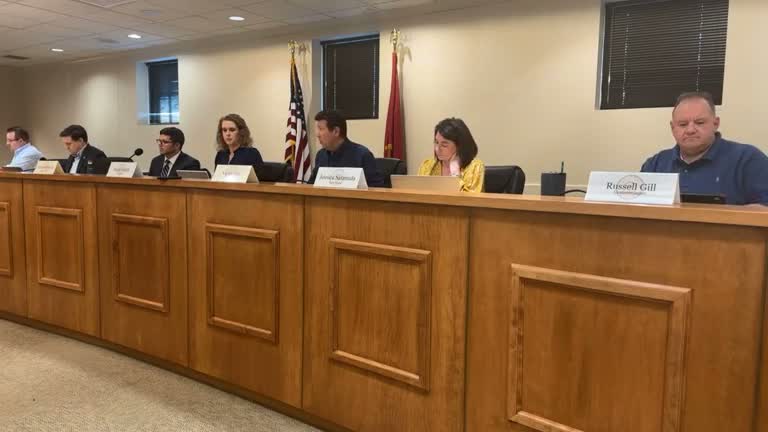
A consultant from Vasbury & Sims summarized how municipalities can use Tennessees Real Estate Infrastructure Development Act (RIADA) to help finance public infrastructure in new developments, drawing questions about who ultimately bears risk if projects fail.
The presentation, led by an attorney introduced at the meeting as Mark, explained the tool as a developer-initiated financing mechanism that can assess lots for up to 30 years to pay for public infrastructure such as roads, turn lanes and utilities. "If a developer files a petition under RIADA that complies with state law, then you have to say yes or no," he said, describing statutory timelines and the typical development-agreement and financing steps.
Why it matters: RIADA can lower developers' borrowing costs by enabling tax-exempt, long-term financing that may make projects more attractive and, proponents say, could help with off-site improvements that otherwise stall development. But several board members said they were concerned about administrative burden, collection practices and exposure to reputational or fiscal risk.
Commissioners pressed the presenter on substantive points. Asked where special-assessment liens fall in payment priority, the presenter said: "If someone only made a partial payment, it would go first toward your taxes and then towards special assessments to the extent there's any excess." He added that mortgages generally come after the special-assessment lien, a structure that makes assessment-backed debt highly secured once properties are developed.
Board members raised specific local concerns: the collector role of the county trustee, recent litigation over impact fees, and past instances in which developers failed to complete promised off-site improvements. The presenter said communities can mitigate those risks through the structure of development agreements and financing documents: require reimbursement only after infrastructure is complete, add strong performance milestones, and consider using an industrial development board to issue the debt and keep the municipality's name off the obligation.
On the question whether RIADA is functionally the same as an impact fee, the presenter said the law is designed to be a voluntary, developer-initiated mechanism rather than a top-down municipal fee, though economically the outcomes can look similar in some cases.
What happens next: The board did not take formal action on RIADA at this meeting. Commissioners asked staff to continue studying the administrative workload, county collection options and policy safeguards before deciding whether to adopt a local policy or accept petitions under the new law.
The presentation, led by an attorney introduced at the meeting as Mark, explained the tool as a developer-initiated financing mechanism that can assess lots for up to 30 years to pay for public infrastructure such as roads, turn lanes and utilities. "If a developer files a petition under RIADA that complies with state law, then you have to say yes or no," he said, describing statutory timelines and the typical development-agreement and financing steps.
Why it matters: RIADA can lower developers' borrowing costs by enabling tax-exempt, long-term financing that may make projects more attractive and, proponents say, could help with off-site improvements that otherwise stall development. But several board members said they were concerned about administrative burden, collection practices and exposure to reputational or fiscal risk.
Commissioners pressed the presenter on substantive points. Asked where special-assessment liens fall in payment priority, the presenter said: "If someone only made a partial payment, it would go first toward your taxes and then towards special assessments to the extent there's any excess." He added that mortgages generally come after the special-assessment lien, a structure that makes assessment-backed debt highly secured once properties are developed.
Board members raised specific local concerns: the collector role of the county trustee, recent litigation over impact fees, and past instances in which developers failed to complete promised off-site improvements. The presenter said communities can mitigate those risks through the structure of development agreements and financing documents: require reimbursement only after infrastructure is complete, add strong performance milestones, and consider using an industrial development board to issue the debt and keep the municipality's name off the obligation.
On the question whether RIADA is functionally the same as an impact fee, the presenter said the law is designed to be a voluntary, developer-initiated mechanism rather than a top-down municipal fee, though economically the outcomes can look similar in some cases.
What happens next: The board did not take formal action on RIADA at this meeting. Commissioners asked staff to continue studying the administrative workload, county collection options and policy safeguards before deciding whether to adopt a local policy or accept petitions under the new law.
View the Full Meeting & All Its Details
This article offers just a summary. Unlock complete video, transcripts, and insights as a Founder Member.
✓
Watch full, unedited meeting videos
✓
Search every word spoken in unlimited transcripts
✓
AI summaries & real-time alerts (all government levels)
✓
Permanent access to expanding government content
30-day money-back guarantee
