McAlester officials discuss clarifying and capping sick-leave bank created by Ordinance 2697
March 24, 2026 | McAlester, Pittsburg County, Oklahoma
This article was created by AI summarizing key points discussed. AI makes mistakes, so for full details and context, please refer to the video of the full meeting. Please report any errors so we can fix them. Report an error »
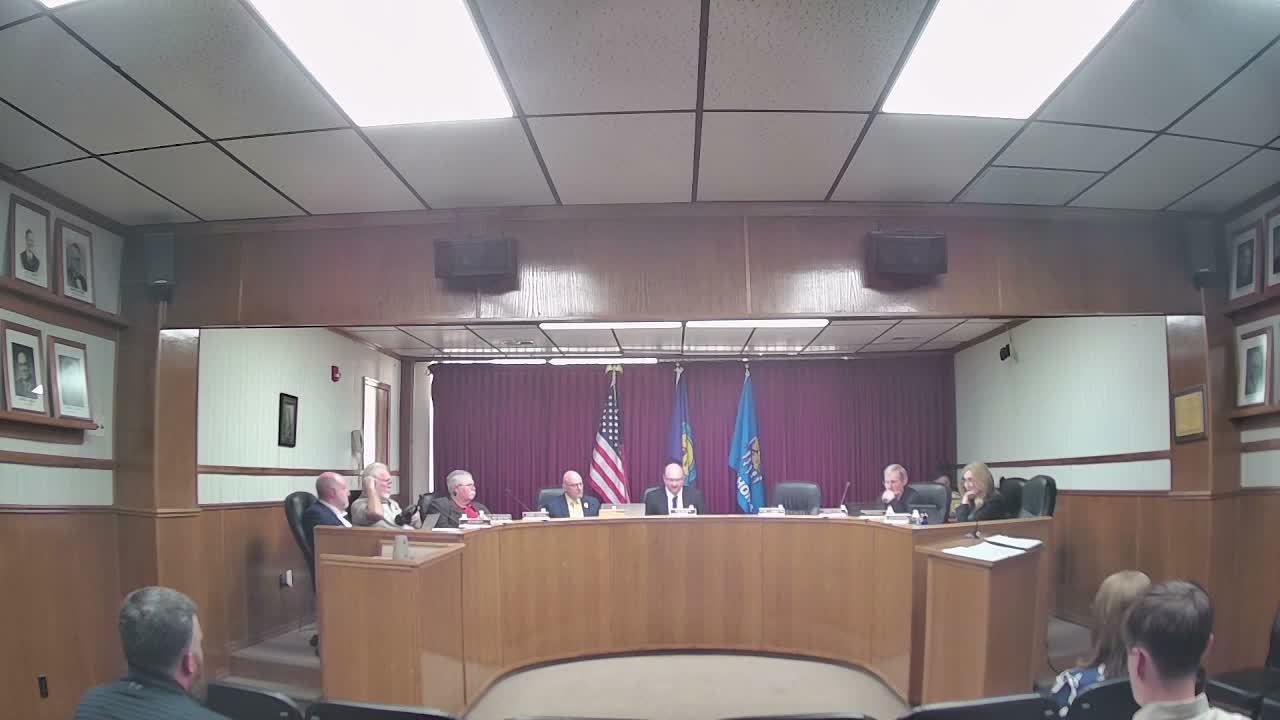
A city staff member told the McAlester City Council at a special meeting that the citys sick-leave bank, established by Ordinance 2697 in October 2020, has fallen to 677 hours and needs clearer rules and replenishment options.
The presentation, made at the councils Oct. 27 special meeting, explained the bank was created during the COVID-19 surge to allow employees who exhausted accrued leave to apply for time from a shared pool. The staff member said the banks balance was 710 hours when last checked and is now 677 hours, and that three employees used a combined 540 hours over the previous calendar year; 232 hours were donated two months ago.
"Our sick bank was created from this ordinance 2697," the city staff member said, noting the ordinances phrase "long term serious illness" is subjective and has produced inconsistent applications. She urged the council to consider defining that term and adding parameters so requests are treated equitably.
Council members and staff discussed several policy options. Suggestions included setting a per-employee cap (on a calendar or fiscal-year basis), aligning language with FMLA and intermittent leave rules, and considering the citys existing short- and long-term disability coverage when setting caps. One council participant asked whether mental-health conditions would qualify; the staff member confirmed mental-health conditions would be covered under the proposed definitions.
Councilors also raised funding and accounting questions. Participants debated whether excess sick hours paid out at separation could be routed to the bank, and whether converting hours to a fund or restricted account (rather than leaving them as a payroll liability) would reduce future budgetary risk. The staff member said the citys auditors and an external consultant (Crawford & Associates) advised that transfers of terminated employees balances could be allowed if the ordinance and policy explicitly permit it and the city manager/auditor sign off.
To increase donations, several council members proposed an employee-giving campaign or an opt-in payroll-deduction approach (an "hour club") that would let employees donate hours or small per-pay amounts. The staff member said payroll currently logs donations manually and she would consult payroll staff about the feasibility of automatic enrollment or easier donation processes.
No formal amendments or votes on Ordinance 2697 took place during the special meeting; instead the council asked staff to draft an amending ordinance, consult the city attorney and auditors, and return with recommended language. The staff member said she could prepare draft language and hoped to have it ready by July 1 or sooner, though legal and wording work could take 30 to 60 days.
A motion to adjourn was made by Councilor Beatty and seconded by Councilor Stone. A roll-call vote recorded yes responses from Councilor Woodley, Councilor Stone, Councilor Roden, Councilor Boatwright, Councilor Beatty and the Mayor, and the meeting was adjourned.
The presentation, made at the councils Oct. 27 special meeting, explained the bank was created during the COVID-19 surge to allow employees who exhausted accrued leave to apply for time from a shared pool. The staff member said the banks balance was 710 hours when last checked and is now 677 hours, and that three employees used a combined 540 hours over the previous calendar year; 232 hours were donated two months ago.
"Our sick bank was created from this ordinance 2697," the city staff member said, noting the ordinances phrase "long term serious illness" is subjective and has produced inconsistent applications. She urged the council to consider defining that term and adding parameters so requests are treated equitably.
Council members and staff discussed several policy options. Suggestions included setting a per-employee cap (on a calendar or fiscal-year basis), aligning language with FMLA and intermittent leave rules, and considering the citys existing short- and long-term disability coverage when setting caps. One council participant asked whether mental-health conditions would qualify; the staff member confirmed mental-health conditions would be covered under the proposed definitions.
Councilors also raised funding and accounting questions. Participants debated whether excess sick hours paid out at separation could be routed to the bank, and whether converting hours to a fund or restricted account (rather than leaving them as a payroll liability) would reduce future budgetary risk. The staff member said the citys auditors and an external consultant (Crawford & Associates) advised that transfers of terminated employees balances could be allowed if the ordinance and policy explicitly permit it and the city manager/auditor sign off.
To increase donations, several council members proposed an employee-giving campaign or an opt-in payroll-deduction approach (an "hour club") that would let employees donate hours or small per-pay amounts. The staff member said payroll currently logs donations manually and she would consult payroll staff about the feasibility of automatic enrollment or easier donation processes.
No formal amendments or votes on Ordinance 2697 took place during the special meeting; instead the council asked staff to draft an amending ordinance, consult the city attorney and auditors, and return with recommended language. The staff member said she could prepare draft language and hoped to have it ready by July 1 or sooner, though legal and wording work could take 30 to 60 days.
A motion to adjourn was made by Councilor Beatty and seconded by Councilor Stone. A roll-call vote recorded yes responses from Councilor Woodley, Councilor Stone, Councilor Roden, Councilor Boatwright, Councilor Beatty and the Mayor, and the meeting was adjourned.
Don't Miss a Word: See the Full Meeting!
Go beyond summaries. Unlock every video, transcript, and key insight with a Founder Membership.
✓
Get instant access to full meeting videos
✓
Search and clip any phrase from complete transcripts
✓
Receive AI-powered summaries & custom alerts
✓
Enjoy lifetime, unrestricted access to government data
30-day money-back guarantee
