Valley Transit consultants outline plan to restore service, but staffing and municipal funding limit timing
March 24, 2026 | Appleton City, Winnebago County, Wisconsin
This article was created by AI summarizing key points discussed. AI makes mistakes, so for full details and context, please refer to the video of the full meeting. Please report any errors so we can fix them. Report an error »
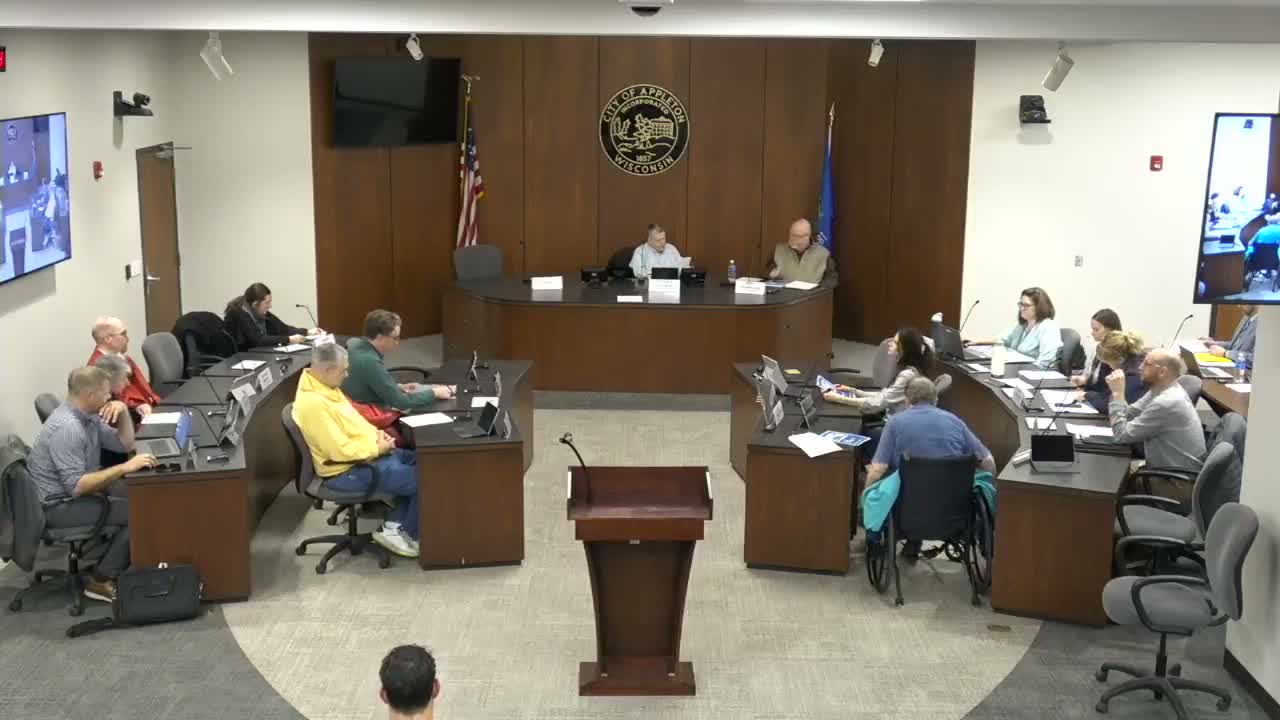
SRF Consulting presented a draft Transportation Development Plan (TDP) to the Valley Transit Commission on the transportation agency's near-, medium- and long-term service recommendations, emphasizing phased improvements that depend on driver hiring and partner-community funding.
'2, we'll give an overview of the TDP process' and the recommendations,' SRF transit planner Joe Capper said, introducing the consultant team and the agenda packet containing the full draft report. Project manager Matt Stegeman said the plan builds on previous studies and steering-committee engagement across the Fox Cities.
The plan separates recommendations into near-term (1'2 years), medium-term (3'5 years) and long-term categories. Near-term changes intended to be achievable without additional operating resources include small alignment edits: a tweak to Route 2 to accommodate Badger Avenue reconstruction, a routing adjustment for Route 15 at the Woodman's on Appleton's west side, an extension of Route 20 in Kaukauna to serve a Piggly Wiggly, and shifting Route 30 service to put northbound and southbound service on the same street to improve on-time performance.
For medium-term changes, SRF recommended increasing frequency on four of Valley Transit's highest-ridership trunk routes'Routes 12, 15, 20 and 30'from 60-minute to 30-minute headways to improve transfers and usability.
'2, going to 30 minute service on each route would require Valley Transit to add about 2, full time drivers or full time equivalents,' Stegeman said. He and the consultants estimated roughly two FTEs per route (about eight additional drivers) for the four-route frequency upgrade, and noted restoring broader pre-2020 service levels would bring Valley Transit back toward a roughly 36-driver complement from its current 'about 24 full-time-equivalent drivers.'
Commissioners pressed the consultants on phasing and feasibility.
'2, it's important to understand that reimplementing these services isn't as simplistic as it sounds,' Valley Transit staff member Ron Torrance said, arguing that scheduling, existing services and budget cycles complicate quick rollouts and that nine municipalities must agree to fund expanded service.
Commissioner Larry Wordinger echoed funding concerns: '2, communities just don't have the money,' he said, warning that unless municipalities commit additional dollars or a regional funding solution emerges, the region could remain near current service levels for years.
SRF said the plan includes flexibility for phased implementation. For example, if a small number of newly hired operators become available, the agency could prioritize restoring Saturday-afternoon or evening span-of-service before or instead of expanding frequency on multiple routes. The consultants also recommended continuing to pursue transit-friendly design on projects such as a proposed College Avenue reconstruction, exploring connector demand-response expansion with willing partner communities, and evaluating zero-emission bus technologies as a longer-term fleet option.
On performance metrics, SRF recommended consistent KPI reporting and described plans to transition to automated passenger counters for state and federal reporting, subject to federal collaboration. The draft-final report is in the commission packet; SRF said it expects to finalize the report by the end of its contract on March 31 and will accept edits from the commission.
The commission did not vote on the plan; SRF sought the commission's feedback and left time for follow-up conversations. The consultants remained available after the meeting for additional questions and next steps.
'2, we'll give an overview of the TDP process' and the recommendations,' SRF transit planner Joe Capper said, introducing the consultant team and the agenda packet containing the full draft report. Project manager Matt Stegeman said the plan builds on previous studies and steering-committee engagement across the Fox Cities.
The plan separates recommendations into near-term (1'2 years), medium-term (3'5 years) and long-term categories. Near-term changes intended to be achievable without additional operating resources include small alignment edits: a tweak to Route 2 to accommodate Badger Avenue reconstruction, a routing adjustment for Route 15 at the Woodman's on Appleton's west side, an extension of Route 20 in Kaukauna to serve a Piggly Wiggly, and shifting Route 30 service to put northbound and southbound service on the same street to improve on-time performance.
For medium-term changes, SRF recommended increasing frequency on four of Valley Transit's highest-ridership trunk routes'Routes 12, 15, 20 and 30'from 60-minute to 30-minute headways to improve transfers and usability.
'2, going to 30 minute service on each route would require Valley Transit to add about 2, full time drivers or full time equivalents,' Stegeman said. He and the consultants estimated roughly two FTEs per route (about eight additional drivers) for the four-route frequency upgrade, and noted restoring broader pre-2020 service levels would bring Valley Transit back toward a roughly 36-driver complement from its current 'about 24 full-time-equivalent drivers.'
Commissioners pressed the consultants on phasing and feasibility.
'2, it's important to understand that reimplementing these services isn't as simplistic as it sounds,' Valley Transit staff member Ron Torrance said, arguing that scheduling, existing services and budget cycles complicate quick rollouts and that nine municipalities must agree to fund expanded service.
Commissioner Larry Wordinger echoed funding concerns: '2, communities just don't have the money,' he said, warning that unless municipalities commit additional dollars or a regional funding solution emerges, the region could remain near current service levels for years.
SRF said the plan includes flexibility for phased implementation. For example, if a small number of newly hired operators become available, the agency could prioritize restoring Saturday-afternoon or evening span-of-service before or instead of expanding frequency on multiple routes. The consultants also recommended continuing to pursue transit-friendly design on projects such as a proposed College Avenue reconstruction, exploring connector demand-response expansion with willing partner communities, and evaluating zero-emission bus technologies as a longer-term fleet option.
On performance metrics, SRF recommended consistent KPI reporting and described plans to transition to automated passenger counters for state and federal reporting, subject to federal collaboration. The draft-final report is in the commission packet; SRF said it expects to finalize the report by the end of its contract on March 31 and will accept edits from the commission.
The commission did not vote on the plan; SRF sought the commission's feedback and left time for follow-up conversations. The consultants remained available after the meeting for additional questions and next steps.
View the Full Meeting & All Its Details
This article offers just a summary. Unlock complete video, transcripts, and insights as a Founder Member.
✓
Watch full, unedited meeting videos
✓
Search every word spoken in unlimited transcripts
✓
AI summaries & real-time alerts (all government levels)
✓
Permanent access to expanding government content
30-day money-back guarantee
