Appleton School District reports attendance gains, outlines steps tied to truancy ordinance
March 25, 2026 | Appleton City, Winnebago County, Wisconsin
This article was created by AI summarizing key points discussed. AI makes mistakes, so for full details and context, please refer to the video of the full meeting. Please report any errors so we can fix them. Report an error »
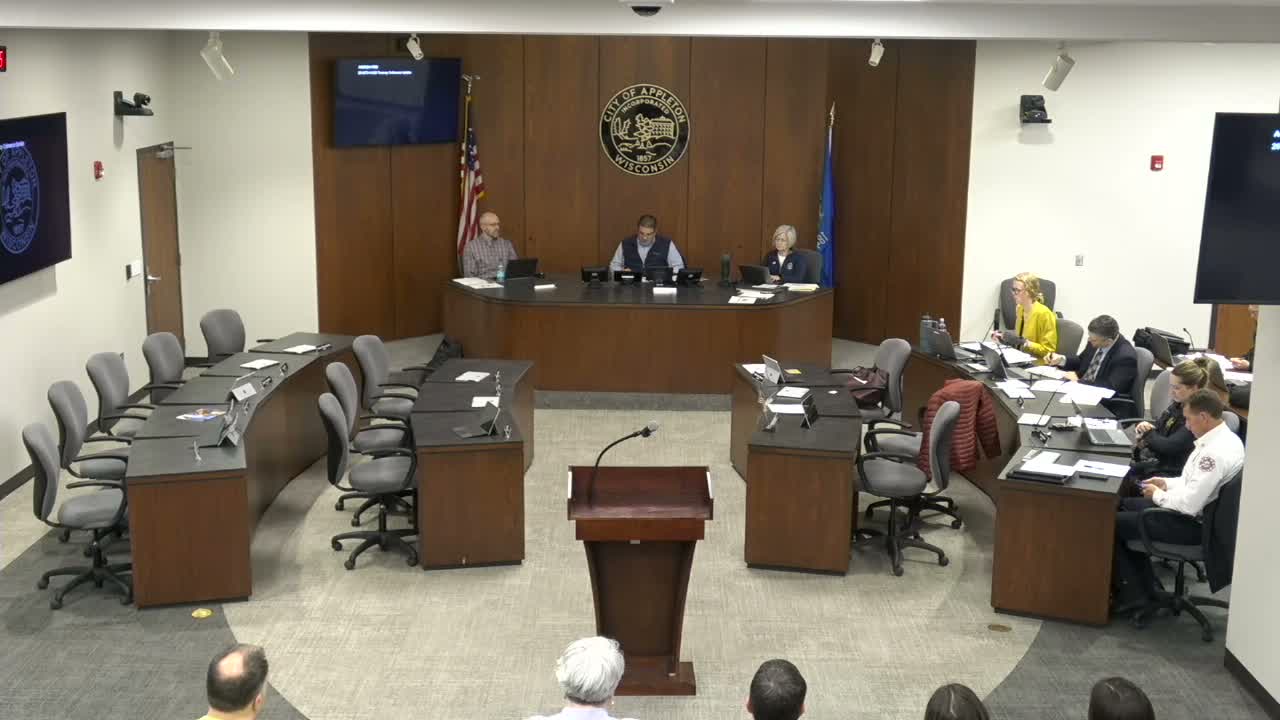
At a March 25 meeting of the City of Appleton Safety & Licensing Committee, Superintendent Hargis reported that the Appleton School District’s second report on the city’s truancy ordinance showed measurable improvement in attendance and outlined how the district is meeting council reporting requirements. The district requested guidance on parent-survey questions and proposed a May check‑in and a final June report before the ordinance’s sunset.
Hargis said the district’s first‑semester chronic absenteeism rate was 22.3% and its habitual truancy rate 23.1%, and that academic outcomes improved alongside attendance: “We had 95.35% of all classes taken across first semester,” Hargis told the committee. The superintendent credited attendance lessons and other supports for part of that improvement.
The report described the district’s tiered interventions. Attendance teams screened 989 high‑school students who met the habitual‑truancy threshold; 605 (61.2%) did not receive the five‑day letter after individualized outreach, while 384 received letters and 104 developed an attendance plan. The district reported 185 students receiving Tier‑2 interventions and about 70 receiving Tier‑3 supports, which include school‑based mental‑health programs and county referrals.
Stephanie Marta, an attendance coordinator, summarized outcomes from the district’s attendance lessons: 409 students attended lessons in November and December, and 187 (45%) increased their attendance afterward. Marta said the most frequently cited motivation in student surveys was avoiding a truancy citation: “51 percent of students listed ‘I want to avoid a truancy citation’ as a reason they improved their attendance.” She added that lack of motivation remained the top barrier (63%).
The district told the committee it had issued a single truancy citation so far and would not be able to produce detailed demographic breakdowns tied to many citations because the volume is low; officials said they will report demographics consistent with DPI reporting if and when numbers warrant it. Hargis also described administrative changes: the attendance policy was revised in October 2025 and will be further updated in April to incorporate the committee’s recommendations.
Committee members asked how they should provide feedback on proposed parent questions and anonymous reporting mechanisms without creating an unlawful quorum via group email. Hargis offered to accept guidance from one committee member acting as a liaison; Chair Chris Croat volunteered to serve as that conduit.
The committee did not take formal action on the report; members agreed to schedule a May update and a final June presentation to inform the city’s decision on whether to extend the ordinance.
Topics and details: chronic absenteeism 22.3%; habitual truancy 23.1%; 409 students attended lessons, 187 improved attendance; 989 high‑school students met threshold; 384 received letters; 104 attendance plans; one truancy citation issued.
Hargis said the district’s first‑semester chronic absenteeism rate was 22.3% and its habitual truancy rate 23.1%, and that academic outcomes improved alongside attendance: “We had 95.35% of all classes taken across first semester,” Hargis told the committee. The superintendent credited attendance lessons and other supports for part of that improvement.
The report described the district’s tiered interventions. Attendance teams screened 989 high‑school students who met the habitual‑truancy threshold; 605 (61.2%) did not receive the five‑day letter after individualized outreach, while 384 received letters and 104 developed an attendance plan. The district reported 185 students receiving Tier‑2 interventions and about 70 receiving Tier‑3 supports, which include school‑based mental‑health programs and county referrals.
Stephanie Marta, an attendance coordinator, summarized outcomes from the district’s attendance lessons: 409 students attended lessons in November and December, and 187 (45%) increased their attendance afterward. Marta said the most frequently cited motivation in student surveys was avoiding a truancy citation: “51 percent of students listed ‘I want to avoid a truancy citation’ as a reason they improved their attendance.” She added that lack of motivation remained the top barrier (63%).
The district told the committee it had issued a single truancy citation so far and would not be able to produce detailed demographic breakdowns tied to many citations because the volume is low; officials said they will report demographics consistent with DPI reporting if and when numbers warrant it. Hargis also described administrative changes: the attendance policy was revised in October 2025 and will be further updated in April to incorporate the committee’s recommendations.
Committee members asked how they should provide feedback on proposed parent questions and anonymous reporting mechanisms without creating an unlawful quorum via group email. Hargis offered to accept guidance from one committee member acting as a liaison; Chair Chris Croat volunteered to serve as that conduit.
The committee did not take formal action on the report; members agreed to schedule a May update and a final June presentation to inform the city’s decision on whether to extend the ordinance.
Topics and details: chronic absenteeism 22.3%; habitual truancy 23.1%; 409 students attended lessons, 187 improved attendance; 989 high‑school students met threshold; 384 received letters; 104 attendance plans; one truancy citation issued.
View the Full Meeting & All Its Details
This article offers just a summary. Unlock complete video, transcripts, and insights as a Founder Member.
✓
Watch full, unedited meeting videos
✓
Search every word spoken in unlimited transcripts
✓
AI summaries & real-time alerts (all government levels)
✓
Permanent access to expanding government content
30-day money-back guarantee
