Council balks at Master’s University bond measure after Placerita Canyon residents raise concerns
August 30, 2025 | William S. Hart Union High, School Districts, California
This article was created by AI summarizing key points discussed. AI makes mistakes, so for full details and context, please refer to the video of the full meeting. Please report any errors so we can fix them. Report an error »
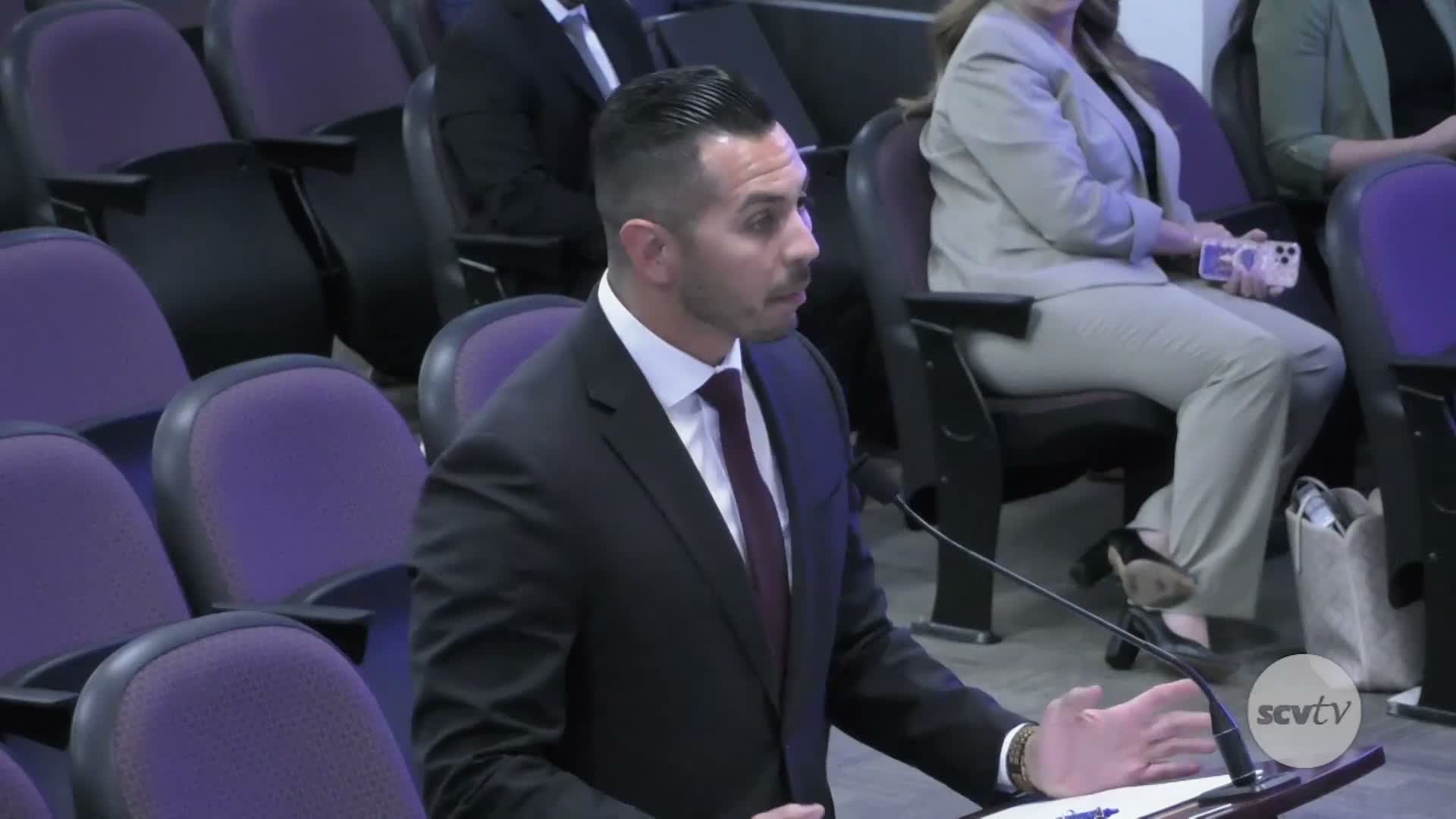
Santa Clarita city officials voted down a motion to move forward with a TEFRA resolution for The Master’s University and Seminary on Tuesday after residents from Placerita Canyon and council members raised sharp questions about the university’s purchases of local homes and the lack of enforceable safeguards on bond proceeds.
Assistant to the city manager Michael Villegas explained the TEFRA hearing is a federal‑tax‑code procedural requirement related to tax‑exempt bond issuances; he told the council that adopting the resolution would not obligate the city financially. Villegas and city counsel outlined the intended uses of bond proceeds described by the California Municipal Finance Authority: refinancing costs for student housing, acquiring and refinancing apartment properties within a one‑half‑mile radius of an 8th Street complex, and financing capital improvements on the TMU main campus, with an overall not‑to‑exceed amount of $65 million.
Placerita Canyon residents and representatives from the Placerita Canyon Property Owners Association urged the council to delay or oppose the measure. Linda Townsley said TMU’s acquisitions had changed the character of the canyon and cited an example where a 2024 property tax bill for a canyon home would fall from roughly $20,305 to $900 under nonprofit exemptions. Numerous speakers accused the university or its affiliates of paying above‑market offers that priced out local families and of using some properties for short‑term rentals. "This is not the same as supporting a bond of Henry Mayo," one speaker said, arguing the college is a private religious institution and that the neighborhood impact differs from past public bonds.
TMU’s finance director, John Russell, said some bond proceeds would refinance properties the university already owns and that TMU had agreed as part of negotiations to not use proceeds to acquire additional single‑family canyon homes. Council members, however, said the city has limited mechanisms to enforce spending restrictions once proceeds are returned to the borrower and asked whether the state could approve a different set of conditions if TMU pursued approval at the state level.
After deliberation, a motion to approve the recommended action was made and seconded but failed on roll call. Council members who had concerns asked that TMU and the community produce clearer master‑plan amendments, stronger community outreach and more definitive, enforceable commitments before the city would consider facilitation. Council discussion also flagged the broad language in the bond authorization that could permit expenditures beyond current master‑plan boundaries and noted that some of the bond buckets referenced property refinancing outside the main campus.
What’s next: TMU can pursue required hearings with the issuer (California Municipal Finance Authority) or at the state level; council members requested improved communication with the Placerita Canyon community and said they expect firmer assurances about how proceeds will and will not be used before reconsidering similar actions.
Assistant to the city manager Michael Villegas explained the TEFRA hearing is a federal‑tax‑code procedural requirement related to tax‑exempt bond issuances; he told the council that adopting the resolution would not obligate the city financially. Villegas and city counsel outlined the intended uses of bond proceeds described by the California Municipal Finance Authority: refinancing costs for student housing, acquiring and refinancing apartment properties within a one‑half‑mile radius of an 8th Street complex, and financing capital improvements on the TMU main campus, with an overall not‑to‑exceed amount of $65 million.
Placerita Canyon residents and representatives from the Placerita Canyon Property Owners Association urged the council to delay or oppose the measure. Linda Townsley said TMU’s acquisitions had changed the character of the canyon and cited an example where a 2024 property tax bill for a canyon home would fall from roughly $20,305 to $900 under nonprofit exemptions. Numerous speakers accused the university or its affiliates of paying above‑market offers that priced out local families and of using some properties for short‑term rentals. "This is not the same as supporting a bond of Henry Mayo," one speaker said, arguing the college is a private religious institution and that the neighborhood impact differs from past public bonds.
TMU’s finance director, John Russell, said some bond proceeds would refinance properties the university already owns and that TMU had agreed as part of negotiations to not use proceeds to acquire additional single‑family canyon homes. Council members, however, said the city has limited mechanisms to enforce spending restrictions once proceeds are returned to the borrower and asked whether the state could approve a different set of conditions if TMU pursued approval at the state level.
After deliberation, a motion to approve the recommended action was made and seconded but failed on roll call. Council members who had concerns asked that TMU and the community produce clearer master‑plan amendments, stronger community outreach and more definitive, enforceable commitments before the city would consider facilitation. Council discussion also flagged the broad language in the bond authorization that could permit expenditures beyond current master‑plan boundaries and noted that some of the bond buckets referenced property refinancing outside the main campus.
What’s next: TMU can pursue required hearings with the issuer (California Municipal Finance Authority) or at the state level; council members requested improved communication with the Placerita Canyon community and said they expect firmer assurances about how proceeds will and will not be used before reconsidering similar actions.
View the Full Meeting & All Its Details
This article offers just a summary. Unlock complete video, transcripts, and insights as a Founder Member.
✓
Watch full, unedited meeting videos
✓
Search every word spoken in unlimited transcripts
✓
AI summaries & real-time alerts (all government levels)
✓
Permanent access to expanding government content
30-day money-back guarantee
