Public-health officials outline infectious-disease, food-safety and heat plans for World Cup crowds
March 26, 2026 | Office of the Governor, Executive , Massachusetts
This article was created by AI summarizing key points discussed. AI makes mistakes, so for full details and context, please refer to the video of the full meeting. Please report any errors so we can fix them. Report an error »
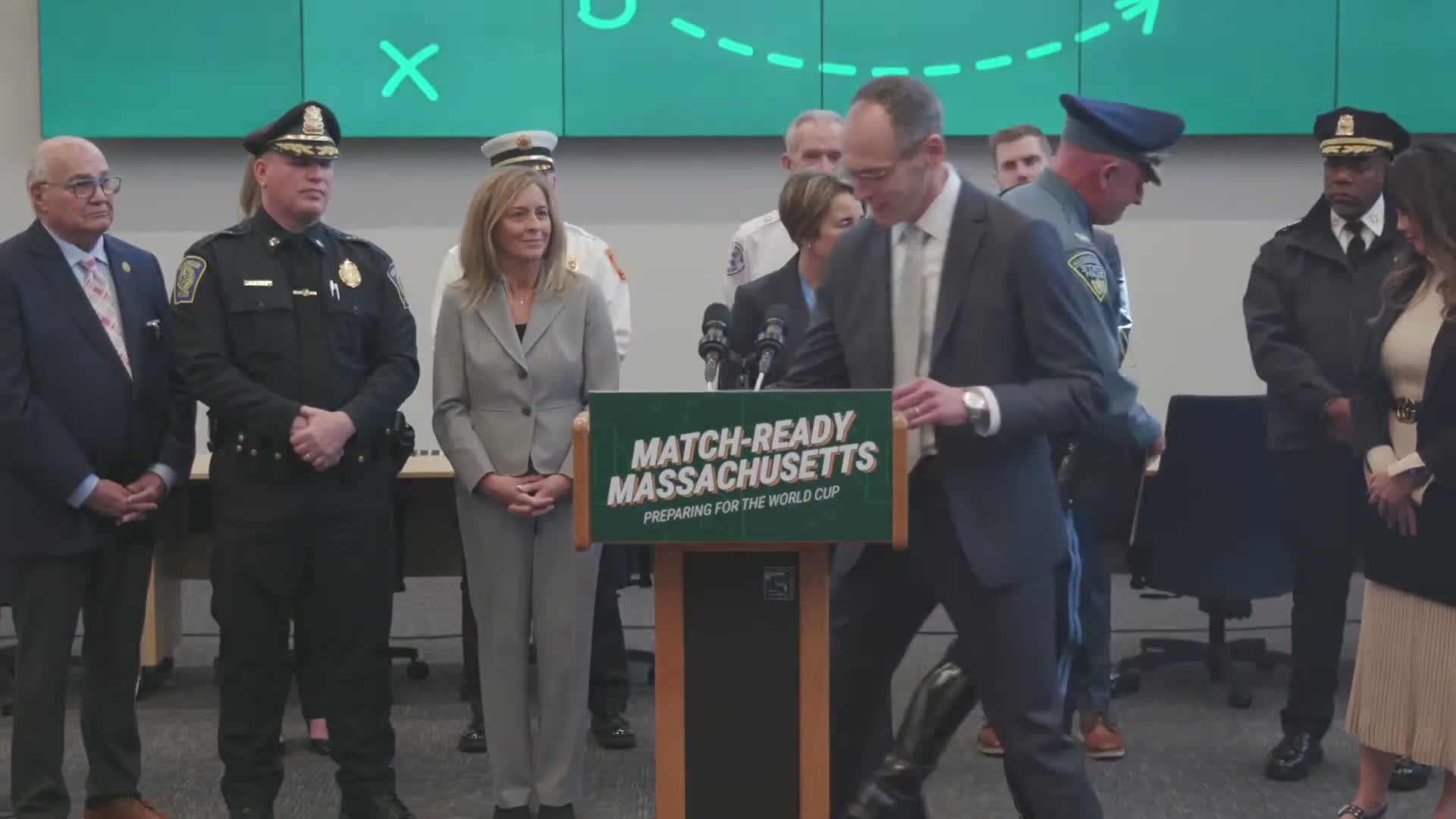
Dr. Robbie Goldstein, commissioner of the Massachusetts Department of Public Health, told the briefing that the department is preparing for infectious-disease surveillance, food-safety monitoring, hospital surge capacity and environmental hazards including extreme heat ahead of the World Cup.
"As an infectious disease physician, I look at the World Cup through a very practical lens," Goldstein said, noting the state will draw hundreds of thousands of visitors and that strengthened surveillance systems honed since COVID provide real-time visibility into emerging patterns. He said teams will be ready to "move quickly" if surveillance identifies clusters or unusual patterns.
Goldstein listed monitoring for foodborne illness and coordination with local, regional and national partners for rapid response. He also highlighted heat-related risks and said the state activates alerts when temperatures reach about 85 degrees for three or more days to coordinate medical surge responses and public messaging.
The department said it will share guidance to help visitors and residents recognize heat-related illness, protect against mosquitoes and ticks, access medical care and navigate health and emergency systems during events. Officials said these measures build on long-standing partnerships used for events such as the Boston Marathon and are designed to scale medical response if needed.
Public-health officials asked event organizers and attendees to follow posted health guidance and to consult official state resources for the latest recommendations.
"As an infectious disease physician, I look at the World Cup through a very practical lens," Goldstein said, noting the state will draw hundreds of thousands of visitors and that strengthened surveillance systems honed since COVID provide real-time visibility into emerging patterns. He said teams will be ready to "move quickly" if surveillance identifies clusters or unusual patterns.
Goldstein listed monitoring for foodborne illness and coordination with local, regional and national partners for rapid response. He also highlighted heat-related risks and said the state activates alerts when temperatures reach about 85 degrees for three or more days to coordinate medical surge responses and public messaging.
The department said it will share guidance to help visitors and residents recognize heat-related illness, protect against mosquitoes and ticks, access medical care and navigate health and emergency systems during events. Officials said these measures build on long-standing partnerships used for events such as the Boston Marathon and are designed to scale medical response if needed.
Public-health officials asked event organizers and attendees to follow posted health guidance and to consult official state resources for the latest recommendations.
View the Full Meeting & All Its Details
This article offers just a summary. Unlock complete video, transcripts, and insights as a Founder Member.
✓
Watch full, unedited meeting videos
✓
Search every word spoken in unlimited transcripts
✓
AI summaries & real-time alerts (all government levels)
✓
Permanent access to expanding government content
30-day money-back guarantee
