Commission recommends expanded harm‑reduction and xylazine‑specific emergency guidance, urges caution on 'hotspot' claims
March 24, 2026 | 2026 Legislature MA, Massachusetts
This article was created by AI summarizing key points discussed. AI makes mistakes, so for full details and context, please refer to the video of the full meeting. Please report any errors so we can fix them. Report an error »
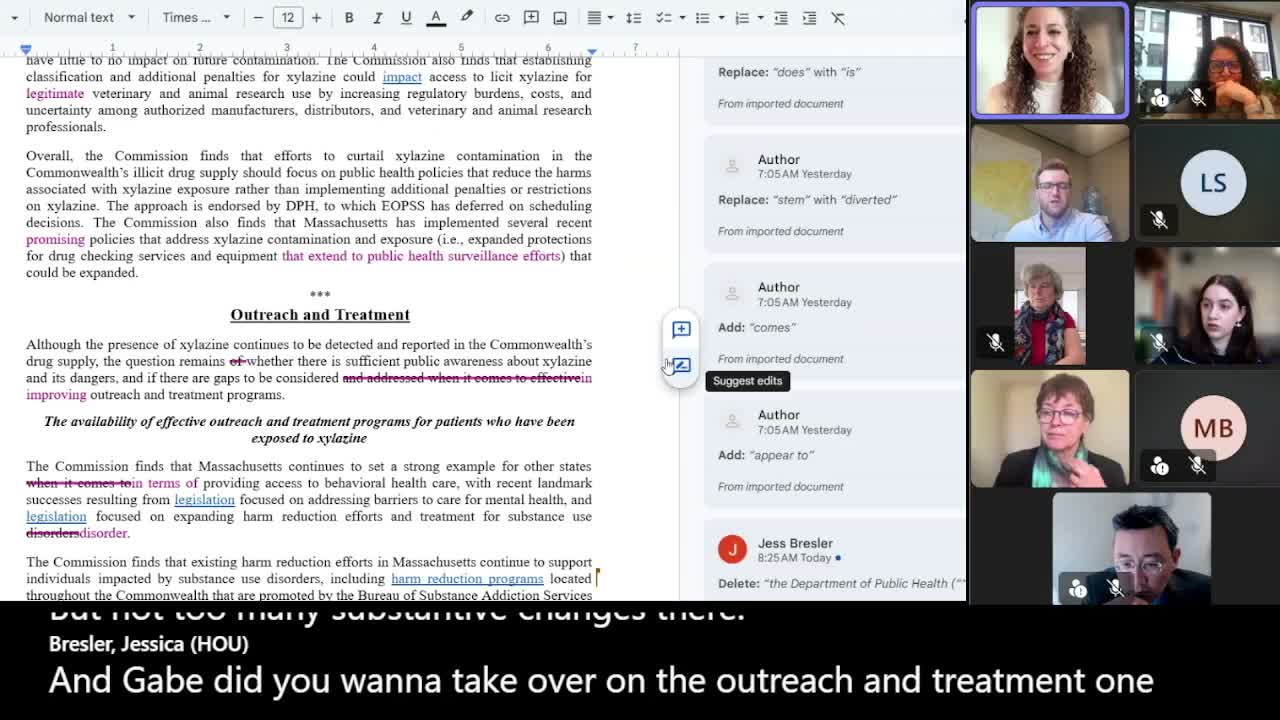
Commission staff presented substantive additions to the draft report that expand harm‑reduction and emergency‑response guidance for xylazine and related adulterants.
Gabe Adams, a commission staff presenter, said testimony received by the commission supported adding "drug checking activities, mobile healthcare services and overdose prevention centers" to the recommendations and highlighted a staff addition emphasizing oxygenation and airway positioning as primary responses for suspected xylazine exposure.
Staff also recommended caution about repeated naloxone dosing for xylazine‑involved overdoses, noting evidence and testimony suggesting possible detrimental consequences from repeated doses when xylazine is present. Commissioners endorsed strengthening language about supportive treatments beyond naloxone and including oxygenation and airway management in emergency response guidance.
Commissioners discussed terminology and data limitations. Deputy Director Sarah Ruiz and others cautioned against using the term "hotspot" without comprehensive statewide drug‑checking data, saying that the phrase implies more robust, geographically complete surveillance than currently exists. Staff agreed to rephrase references to "hotspots" as concentrations or local patterns and to recommend bolstering drug‑checking efforts so that data could support such claims in the future.
The report also calls for tailored training and educational materials for target populations (first responders, clinicians, non‑clinical workers and people in recovery) and recommends language‑access considerations for distributed wound care kits and materials. Staff noted that Appendix C will list trainings and materials collected during the commission’s process and that Appendix D will present final recommendations in an easy‑to‑follow table.
The additions were accepted during the meeting and will be incorporated by staff prior to final submission to legislative clerks.
Gabe Adams, a commission staff presenter, said testimony received by the commission supported adding "drug checking activities, mobile healthcare services and overdose prevention centers" to the recommendations and highlighted a staff addition emphasizing oxygenation and airway positioning as primary responses for suspected xylazine exposure.
Staff also recommended caution about repeated naloxone dosing for xylazine‑involved overdoses, noting evidence and testimony suggesting possible detrimental consequences from repeated doses when xylazine is present. Commissioners endorsed strengthening language about supportive treatments beyond naloxone and including oxygenation and airway management in emergency response guidance.
Commissioners discussed terminology and data limitations. Deputy Director Sarah Ruiz and others cautioned against using the term "hotspot" without comprehensive statewide drug‑checking data, saying that the phrase implies more robust, geographically complete surveillance than currently exists. Staff agreed to rephrase references to "hotspots" as concentrations or local patterns and to recommend bolstering drug‑checking efforts so that data could support such claims in the future.
The report also calls for tailored training and educational materials for target populations (first responders, clinicians, non‑clinical workers and people in recovery) and recommends language‑access considerations for distributed wound care kits and materials. Staff noted that Appendix C will list trainings and materials collected during the commission’s process and that Appendix D will present final recommendations in an easy‑to‑follow table.
The additions were accepted during the meeting and will be incorporated by staff prior to final submission to legislative clerks.
View the Full Meeting & All Its Details
This article offers just a summary. Unlock complete video, transcripts, and insights as a Founder Member.
✓
Watch full, unedited meeting videos
✓
Search every word spoken in unlimited transcripts
✓
AI summaries & real-time alerts (all government levels)
✓
Permanent access to expanding government content
30-day money-back guarantee
