Mass. public‑health committee hears strong support for a three‑year celiac screening pilot
March 23, 2026 | 2026 Legislature MA, Massachusetts
This article was created by AI summarizing key points discussed. AI makes mistakes, so for full details and context, please refer to the video of the full meeting. Please report any errors so we can fix them. Report an error »
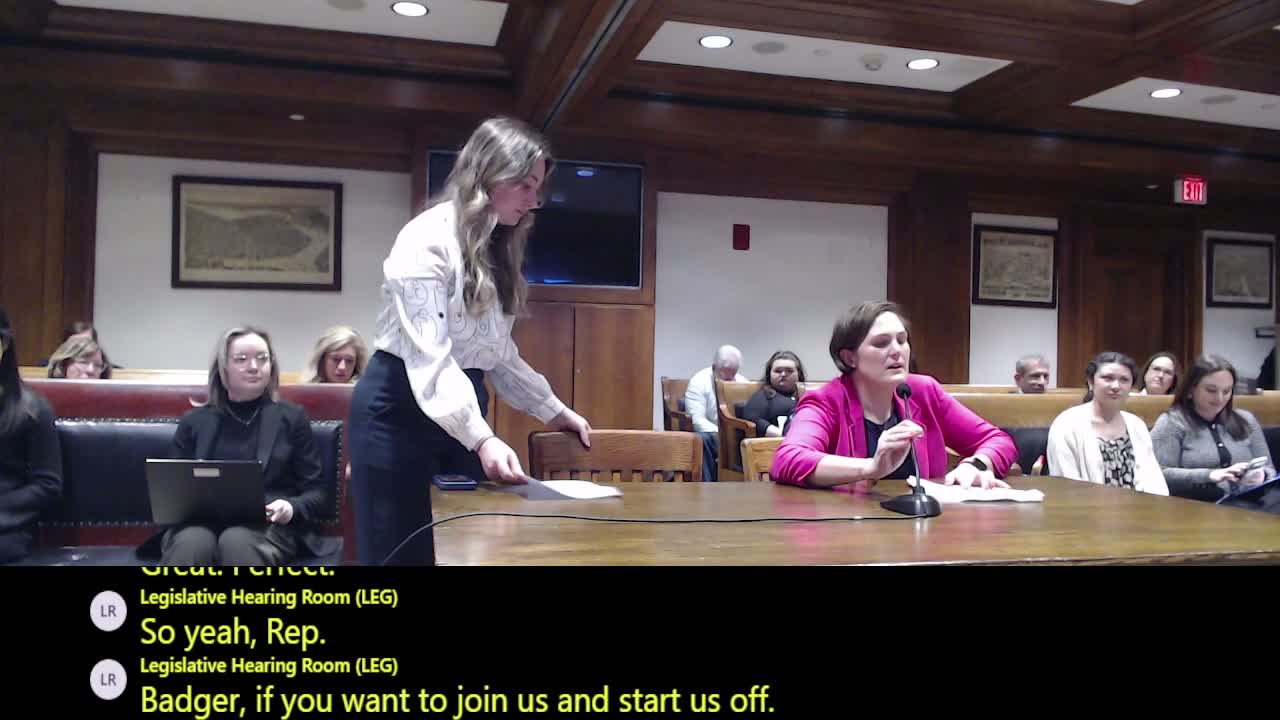
The Joint Committee on Public Health heard robust testimony on H5013 and S2928, bills to fund a three‑year pilot that would add celiac‑disease screening to routine cholesterol and lipid bloodwork for school‑age children.
Representative Badger, who introduced the bills, said the measure aims to shorten the long diagnostic delays many patients face and urged the committee to report the bills favorably. “I respectfully urge you to vote positively,” she said.
The bill’s proponents told the committee the proposed screen is a simple blood test (tTG) that could be performed alongside exams already recommended for preteens. Senator Lovely described the pilot’s design as a three‑year feasibility study that would evaluate accuracy, cost, acceptability and outcomes and require the Commissioner of Public Health to submit annual reports on findings and recommendations.
Patient witnesses described the human consequences of delayed diagnosis. “I never once left a pediatrician’s office at a healthy weight for my age,” said Hazel Fitzpatrick, who testified that years of undiagnosed illness left her malnourished and struggling in school. Jamie Stein and other adult patients said late diagnoses have led to chronic health problems.
Clinical and research witnesses said the program is both practical and evidence‑driven. Dr. Maureen Leonard, director of the Center for Celiac Disease at Mass General Brigham for Children, told the committee that a population pilot of roughly 1,500 children could detect prevalences near 1.5 percent and generate meaningful data for the Commonwealth. She and other clinicians emphasized the pilot is intended to pair laboratory screening with education and connection to dietitians and medical follow‑up, not to immediately change standard practice across the state.
Multiple experts stressed equity concerns: Dr. Dan Leffler of Beth Israel Deaconess/Harvard Medical School said clinicians often under‑test people of color and that population screening could help reach underserved groups. International evidence was offered by Carlo Catacci, who described screening pilots and subsequent national programs in Italy as a model for studying feasibility before broader adoption.
Committee members asked technical questions about testing and implementation; witnesses said the initial screen is inexpensive and widely available but that the pilot is necessary to study real‑world implementation, cost effectiveness and family acceptance.
The committee did not vote. Co‑chairs said they will review the written testimony and reports submitted by clinicians, advocacy groups and patients before deciding on next steps.
Representative Badger, who introduced the bills, said the measure aims to shorten the long diagnostic delays many patients face and urged the committee to report the bills favorably. “I respectfully urge you to vote positively,” she said.
The bill’s proponents told the committee the proposed screen is a simple blood test (tTG) that could be performed alongside exams already recommended for preteens. Senator Lovely described the pilot’s design as a three‑year feasibility study that would evaluate accuracy, cost, acceptability and outcomes and require the Commissioner of Public Health to submit annual reports on findings and recommendations.
Patient witnesses described the human consequences of delayed diagnosis. “I never once left a pediatrician’s office at a healthy weight for my age,” said Hazel Fitzpatrick, who testified that years of undiagnosed illness left her malnourished and struggling in school. Jamie Stein and other adult patients said late diagnoses have led to chronic health problems.
Clinical and research witnesses said the program is both practical and evidence‑driven. Dr. Maureen Leonard, director of the Center for Celiac Disease at Mass General Brigham for Children, told the committee that a population pilot of roughly 1,500 children could detect prevalences near 1.5 percent and generate meaningful data for the Commonwealth. She and other clinicians emphasized the pilot is intended to pair laboratory screening with education and connection to dietitians and medical follow‑up, not to immediately change standard practice across the state.
Multiple experts stressed equity concerns: Dr. Dan Leffler of Beth Israel Deaconess/Harvard Medical School said clinicians often under‑test people of color and that population screening could help reach underserved groups. International evidence was offered by Carlo Catacci, who described screening pilots and subsequent national programs in Italy as a model for studying feasibility before broader adoption.
Committee members asked technical questions about testing and implementation; witnesses said the initial screen is inexpensive and widely available but that the pilot is necessary to study real‑world implementation, cost effectiveness and family acceptance.
The committee did not vote. Co‑chairs said they will review the written testimony and reports submitted by clinicians, advocacy groups and patients before deciding on next steps.
View the Full Meeting & All Its Details
This article offers just a summary. Unlock complete video, transcripts, and insights as a Founder Member.
✓
Watch full, unedited meeting videos
✓
Search every word spoken in unlimited transcripts
✓
AI summaries & real-time alerts (all government levels)
✓
Permanent access to expanding government content
30-day money-back guarantee
