La Crosse council declines $92K TID beautification request amid MOU and procurement concerns
March 12, 2026 | La Crosse, La Crosse County, Wisconsin
This article was created by AI summarizing key points discussed. AI makes mistakes, so for full details and context, please refer to the video of the full meeting. Please report any errors so we can fix them. Report an error »
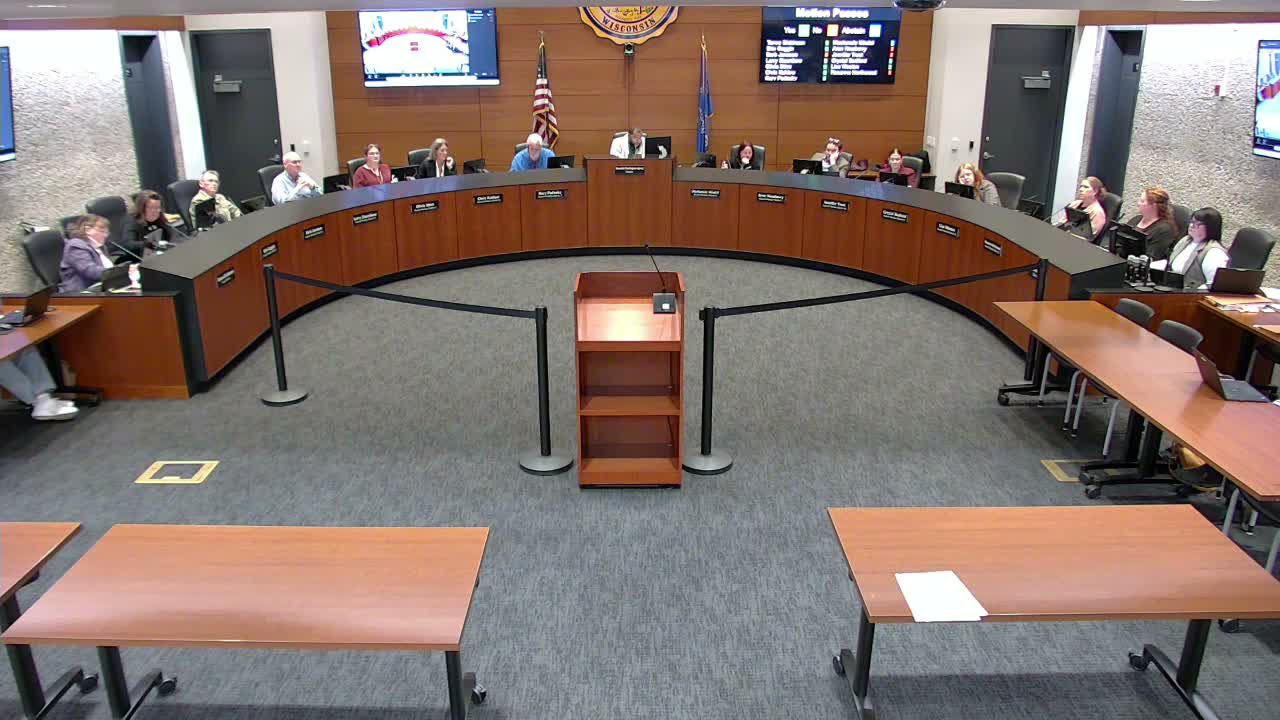
A proposal to use tax-increment district (TID) funds to replace downtown planters and purchase 10 additional trash receptacles failed after extended discussion on March 12, with council members split over procurement details, ownership and a missing memorandum of understanding with Downtown Main Street (DMI).
Director Dan Train (city economic-development staff) explained that TID 11 is at its expenditure period and that the council must enter contracts before the TID expires on Oct. 12, 2026, if it wants to use remaining increment dollars. Train said TID 11 could be made a donor to TID 17 if the council sought to extend funding options.
Parks staff and Director Gallagher flagged that the city had not finalized an MOU with DMI and that one proposal DMI submitted sought the city to assume installation, removal, ownership and insurance for planters — responsibilities Parks said it does not currently have resources to accept. Gallagher also noted that installation would be subject to public bidding and that staff-provided material quotes did not include installation costs.
Councilmembers debated timing and accessibility concerns. Council Member Janssen and others urged referral to allow staff and legal to craft an MOU and clarify procurement; that referral motion failed. Council Member Kalo and others argued the project addresses visible downtown blight and noted that planters currently belong to the city and have been maintained by downtown businesses for years.
When the council voted on the full beautification motion, it failed (recorded in the transcript as "That motion fails for yes, 9, no"). Several council members said they supported the concept but wanted written agreements and clearer cost and maintenance responsibilities before authorizing TID spending.
The debate raised several implementation issues city staff said would need resolving should the proposal return: a clear MOU documenting maintenance, insurance and ownership; detailed bid specifications and cost estimates that include installation; and a procurement path aligned with state statute.
Director Dan Train (city economic-development staff) explained that TID 11 is at its expenditure period and that the council must enter contracts before the TID expires on Oct. 12, 2026, if it wants to use remaining increment dollars. Train said TID 11 could be made a donor to TID 17 if the council sought to extend funding options.
Parks staff and Director Gallagher flagged that the city had not finalized an MOU with DMI and that one proposal DMI submitted sought the city to assume installation, removal, ownership and insurance for planters — responsibilities Parks said it does not currently have resources to accept. Gallagher also noted that installation would be subject to public bidding and that staff-provided material quotes did not include installation costs.
Councilmembers debated timing and accessibility concerns. Council Member Janssen and others urged referral to allow staff and legal to craft an MOU and clarify procurement; that referral motion failed. Council Member Kalo and others argued the project addresses visible downtown blight and noted that planters currently belong to the city and have been maintained by downtown businesses for years.
When the council voted on the full beautification motion, it failed (recorded in the transcript as "That motion fails for yes, 9, no"). Several council members said they supported the concept but wanted written agreements and clearer cost and maintenance responsibilities before authorizing TID spending.
The debate raised several implementation issues city staff said would need resolving should the proposal return: a clear MOU documenting maintenance, insurance and ownership; detailed bid specifications and cost estimates that include installation; and a procurement path aligned with state statute.
View the Full Meeting & All Its Details
This article offers just a summary. Unlock complete video, transcripts, and insights as a Founder Member.
✓
Watch full, unedited meeting videos
✓
Search every word spoken in unlimited transcripts
✓
AI summaries & real-time alerts (all government levels)
✓
Permanent access to expanding government content
30-day money-back guarantee
