Residents press for speed humps on Arnold, Leewood and Creel; staff urges engineering studies first
March 24, 2026 | Melbourne, Brevard County, Florida
This article was created by AI summarizing key points discussed. AI makes mistakes, so for full details and context, please refer to the video of the full meeting. Please report any errors so we can fix them. Report an error »
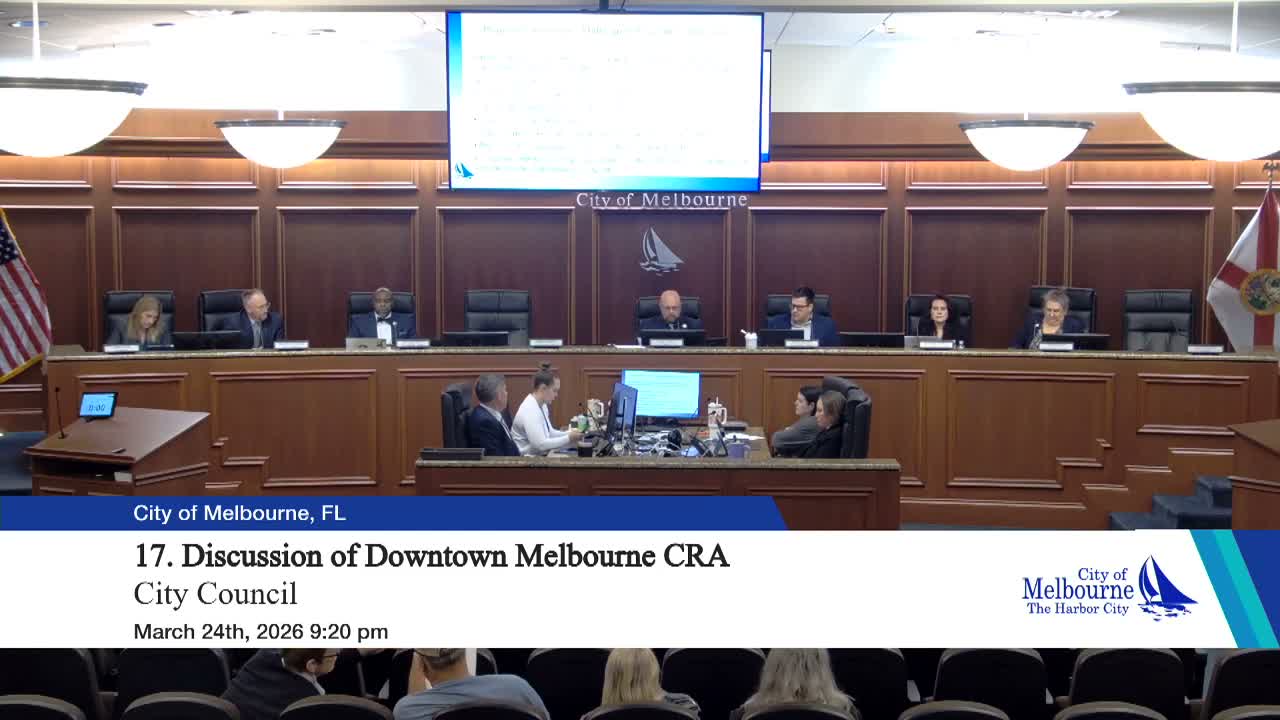
A packed public comment portion of the March 24 Melbourne City Council meeting turned to neighborhood speeding and cut‑through traffic, with residents asking the council to install traffic‑calming measures on Arnold Drive, Leewood and Creel Street.
Engineering staff explained that Florida statutory and design standards (Florida Green Book and the Manual on Uniform Traffic Control Devices) limit how municipalities may modify roadways and that engineering justification is required before installing physical devices. Staff said an in‑house calibrated speed study typically costs $1,500–$2,000 (deployment, data collection and analysis) while hiring a consultant for a formal study can run $8,000–$10,000; design and permanent installation of speed tables or humps can cost substantially more once engineering and drainage issues are included.
A resident from Arnold Drive said the neighborhood has recorded thousands of vehicles per week and occasional speeds measured well above posted limits. Staff responded that portable police radar trailers are a useful awareness tool but are not calibrated for engineering studies; the city uses calibrated counters placed at mid‑block locations to capture 7 days (or extended periods when requested) of data, then analyzes the 85th‑percentile speeds and roadway geometry to determine appropriate treatments. Staff cautioned that poorly sited or temporary devices can create safety, maintenance and liability problems and noted the risk that traffic will simply shift to adjacent streets if mitigation is not holistic.
Councilmembers expressed sympathy for residents and asked staff to run calibrated studies at the neighborhoods named (Arnold, Leewood, Creel) and to return with siting recommendations, cost estimates and an implementation plan. Council discussed temporary radar deployments as an interim measure and permanent speed‑table installations where engineering warrants.
Next steps: Staff will schedule calibrated counters at the locations requested, extend data collection per council direction if needed, and return to council with the engineering report and proposed measures.
Engineering staff explained that Florida statutory and design standards (Florida Green Book and the Manual on Uniform Traffic Control Devices) limit how municipalities may modify roadways and that engineering justification is required before installing physical devices. Staff said an in‑house calibrated speed study typically costs $1,500–$2,000 (deployment, data collection and analysis) while hiring a consultant for a formal study can run $8,000–$10,000; design and permanent installation of speed tables or humps can cost substantially more once engineering and drainage issues are included.
A resident from Arnold Drive said the neighborhood has recorded thousands of vehicles per week and occasional speeds measured well above posted limits. Staff responded that portable police radar trailers are a useful awareness tool but are not calibrated for engineering studies; the city uses calibrated counters placed at mid‑block locations to capture 7 days (or extended periods when requested) of data, then analyzes the 85th‑percentile speeds and roadway geometry to determine appropriate treatments. Staff cautioned that poorly sited or temporary devices can create safety, maintenance and liability problems and noted the risk that traffic will simply shift to adjacent streets if mitigation is not holistic.
Councilmembers expressed sympathy for residents and asked staff to run calibrated studies at the neighborhoods named (Arnold, Leewood, Creel) and to return with siting recommendations, cost estimates and an implementation plan. Council discussed temporary radar deployments as an interim measure and permanent speed‑table installations where engineering warrants.
Next steps: Staff will schedule calibrated counters at the locations requested, extend data collection per council direction if needed, and return to council with the engineering report and proposed measures.
Don't Miss a Word: See the Full Meeting!
Go beyond summaries. Unlock every video, transcript, and key insight with a Founder Membership.
✓
Get instant access to full meeting videos
✓
Search and clip any phrase from complete transcripts
✓
Receive AI-powered summaries & custom alerts
✓
Enjoy lifetime, unrestricted access to government data
30-day money-back guarantee
