Port St. Lucie magistrate certifies fines, orders abatements and sets compliance dates in March 18 code-enforcement hearing
March 18, 2026 | Port St. Lucie, St. Lucie County, Florida
This article was created by AI summarizing key points discussed. AI makes mistakes, so for full details and context, please refer to the video of the full meeting. Please report any errors so we can fix them. Report an error »
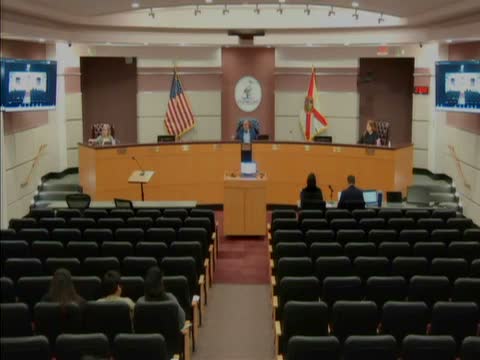
Special Magistrate Keith Davis presided over a Port St. Lucie special magistrate hearing on March 18, 2026 that ended with fines certified, abatement costs ordered and compliance dates set for multiple properties across the city.
In one of the first matters, Davis said he would “accept the city's recommendation and certify the fine” after Code Officer Mendoza told the court the property at 755 Southeast Albatross Avenue had not been brought into compliance. Respondent Steven Hannah, appearing by video, said he had recently inherited the house, described interior damage after a break-in and outlined plans to replace stucco, windows and roofing. Davis certified the fine and the administrative cost of $411 and urged Hannah to seek the city’s mitigation process once the property is brought into compliance.
At a hearing for 2297 Southeast Seamus Street, respondent Serana La Torte told the magistrate she moved to Florida to care for a family member and has been working to clear overgrowth and repaint the house. Officer Gomez confirmed the city’s main concern was the overgrowth and associated maintenance issues; Davis found proper notice, certified a $75-per-day fine and assessed administrative costs of $411 but noted mitigation options are available after compliance is achieved.
Several other cases followed a similar pattern: city inspectors presented photos and records showing unresolved violations — commonly high grass and open storage, damaged fences, unmaintained pools or driveway/culvert defects. Where the city had already abated a violation, the magistrate ordered recovery of abatement costs (commonly $225 or $395) plus the $411 administrative fee. Where properties remained noncompliant, Davis set March 25, 2026 as the compliance date in numerous files and authorized the city under Florida statutory authority to enter properties and abate violations if respondents do not comply by that date.
The court also addressed permit requirements in several cases. In one driveway/culvert matter, staff told the respondent that a permit would be required for work over the culvert and that the city would help clarify the permit timeline. In an open-storage case where the city’s vendor reported unsafe conditions, Davis ratified prior abatement authority and certified fines beginning the date the violation persisted.
One case was postponed because staff could not secure a Creole interpreter. Davis declined to continue without an interpreter after the respondent requested one and directed staff to renotice the case when an interpreter is available. “I’m not going to hear from you at this point…you’ve testified under oath that you need an interpreter,” Davis said.
What happens next: respondents will receive written orders reflecting the magistrate’s findings and any assessed costs. For cases where fines were certified, daily fines will accrue until compliance is verified by a city inspection; respondents who bring properties into compliance may apply for mitigation or reduction of assessed fines under city procedures.
Votes at a glance: the magistrate certified fines or assessed costs and authorized abatements in dozens of matters; examples from the hearing record include 755 SE Albatross Ave (fine certified, admin cost $411), 2297 SE Seamus St (fine certified, admin cost $411), 412 SE Majestic (fine certified, admin cost $411), 741 SE Volterra Terr. (fine certified, abatement cost $225, admin $411) and multiple properties where abatement costs of $225 or $395 were assessed plus the administrative cost of $411. Respondents were given March 25 or early-April compliance deadlines in most non- abated cases.
The hearing adjourned at about 10:44 a.m.; respondents will be notified in writing of orders, costs and how to request mitigation or file for permit-based exceptions where appropriate.
In one of the first matters, Davis said he would “accept the city's recommendation and certify the fine” after Code Officer Mendoza told the court the property at 755 Southeast Albatross Avenue had not been brought into compliance. Respondent Steven Hannah, appearing by video, said he had recently inherited the house, described interior damage after a break-in and outlined plans to replace stucco, windows and roofing. Davis certified the fine and the administrative cost of $411 and urged Hannah to seek the city’s mitigation process once the property is brought into compliance.
At a hearing for 2297 Southeast Seamus Street, respondent Serana La Torte told the magistrate she moved to Florida to care for a family member and has been working to clear overgrowth and repaint the house. Officer Gomez confirmed the city’s main concern was the overgrowth and associated maintenance issues; Davis found proper notice, certified a $75-per-day fine and assessed administrative costs of $411 but noted mitigation options are available after compliance is achieved.
Several other cases followed a similar pattern: city inspectors presented photos and records showing unresolved violations — commonly high grass and open storage, damaged fences, unmaintained pools or driveway/culvert defects. Where the city had already abated a violation, the magistrate ordered recovery of abatement costs (commonly $225 or $395) plus the $411 administrative fee. Where properties remained noncompliant, Davis set March 25, 2026 as the compliance date in numerous files and authorized the city under Florida statutory authority to enter properties and abate violations if respondents do not comply by that date.
The court also addressed permit requirements in several cases. In one driveway/culvert matter, staff told the respondent that a permit would be required for work over the culvert and that the city would help clarify the permit timeline. In an open-storage case where the city’s vendor reported unsafe conditions, Davis ratified prior abatement authority and certified fines beginning the date the violation persisted.
One case was postponed because staff could not secure a Creole interpreter. Davis declined to continue without an interpreter after the respondent requested one and directed staff to renotice the case when an interpreter is available. “I’m not going to hear from you at this point…you’ve testified under oath that you need an interpreter,” Davis said.
What happens next: respondents will receive written orders reflecting the magistrate’s findings and any assessed costs. For cases where fines were certified, daily fines will accrue until compliance is verified by a city inspection; respondents who bring properties into compliance may apply for mitigation or reduction of assessed fines under city procedures.
Votes at a glance: the magistrate certified fines or assessed costs and authorized abatements in dozens of matters; examples from the hearing record include 755 SE Albatross Ave (fine certified, admin cost $411), 2297 SE Seamus St (fine certified, admin cost $411), 412 SE Majestic (fine certified, admin cost $411), 741 SE Volterra Terr. (fine certified, abatement cost $225, admin $411) and multiple properties where abatement costs of $225 or $395 were assessed plus the administrative cost of $411. Respondents were given March 25 or early-April compliance deadlines in most non- abated cases.
The hearing adjourned at about 10:44 a.m.; respondents will be notified in writing of orders, costs and how to request mitigation or file for permit-based exceptions where appropriate.
View the Full Meeting & All Its Details
This article offers just a summary. Unlock complete video, transcripts, and insights as a Founder Member.
✓
Watch full, unedited meeting videos
✓
Search every word spoken in unlimited transcripts
✓
AI summaries & real-time alerts (all government levels)
✓
Permanent access to expanding government content
30-day money-back guarantee
