Public works reports 19 new pieces of equipment arriving; committee presses security, staffing and inmate-labor options
March 24, 2026 | Jackson City, Hinds County, Mississippi
This article was created by AI summarizing key points discussed. AI makes mistakes, so for full details and context, please refer to the video of the full meeting. Please report any errors so we can fix them. Report an error »
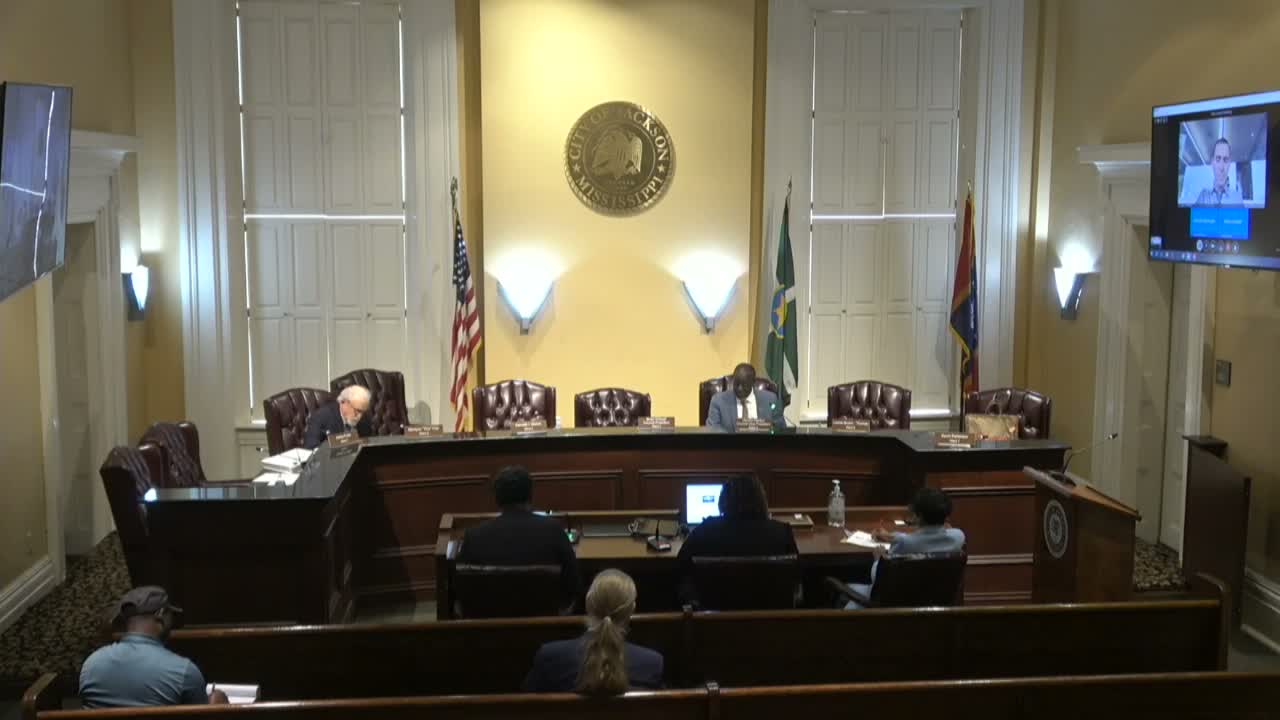
The Public Works Committee was told the city has ordered 19 pieces of equipment and expects several key items to arrive within about a month, including three skid steers that Anderson said should be operating in the field by late April or early May. "We ordered, but we have 19 pieces of equipment," Anderson told the committee during the March 24 meeting, and he repeated that the skid steers were on a roughly one-month timeline.
The update covered associated purchases and logistics: three utility trailers, three dump trailers, three dump trucks, three zero-turn mowers (some already on site), three ATVs with spray tanks, and seven pickup trucks expected in two to three weeks. Anderson said most equipment is coming from a vendor called Divinny and that many items are attachments rather than separate vehicles.
Why it matters: committee members said the new equipment is needed for blight abatement, grass cutting and storm-drain work but warned that a large, newly acquired fleet raises security and maintenance questions. The Chair pressed staff for a deployment plan and a monthly inventory protocol to prevent theft and to make the equipment a "combat multiplier" for crews rather than an underused asset.
Security, maintenance and trackers: Members flagged incidents of vehicles leaving the city garage and stressed that fences and controlled access may be necessary. Anderson said the department has discussed equipment-tracking options and told the committee some tagging services could cost "less probably less than $20 a month" per unit. Drew Martin, city attorney, added that contractors working on the police impound recommended an electrical fence and warning signage at that lot.
Staffing and motor-pool capacity: Anderson reported that the fleet operation currently has one fleet manager (Tony) and four mechanics, with one mechanic on leave. He said the department is in the process of hiring and has requested two more positions to keep up with the larger fleet load. He also said one jet truck for storm-drain cleaning is operational while another is often down; the city plans TV inspections and is exploring contract options where appropriate.
Bids and minority participation: Anderson said grass-cutting bids would be opened that afternoon after a pre-bid meeting with roughly 10 contractors and that the city structured the work by ward to allow smaller contractors to compete. A committee member asked whether requests-for-proposal (RFPs) stipulate minority participation. Anderson said the current RFPs do not require minority participation. Drew Martin cautioned that recent executive actions and Department of Justice scrutiny make mandatory minority- participation quotas legally risky, but he said the city can structure contracts to encourage minority and small-business participation without explicit quotas.
Use of inmate labor and work-off programs: Members asked whether inmates or people working off fines could help with litter abatement. Martin said the city has an MOU with county and corrections partners that permits supervised inmate cleanup when eligible, though availability is limited by eligibility rules. The committee asked staff to revisit prior programs and report back on coordinating municipal court services, judges and other partners to reinstate or expand supervised-work options.
Next steps: The Chair asked Anderson and staff (including Weathers and the deputy director) to produce a follow-up report and a handout showing crew assignments, deployment plans and a monthly inventory protocol for committee review at the next meeting. Anderson also said staff would circulate details on bid outcomes and any schedule changes for equipment deliveries.
Ending: The committee closed the discussion with direction for staff to return with the requested reports, and the meeting moved to the Jackson Metro Water Authority item.
The update covered associated purchases and logistics: three utility trailers, three dump trailers, three dump trucks, three zero-turn mowers (some already on site), three ATVs with spray tanks, and seven pickup trucks expected in two to three weeks. Anderson said most equipment is coming from a vendor called Divinny and that many items are attachments rather than separate vehicles.
Why it matters: committee members said the new equipment is needed for blight abatement, grass cutting and storm-drain work but warned that a large, newly acquired fleet raises security and maintenance questions. The Chair pressed staff for a deployment plan and a monthly inventory protocol to prevent theft and to make the equipment a "combat multiplier" for crews rather than an underused asset.
Security, maintenance and trackers: Members flagged incidents of vehicles leaving the city garage and stressed that fences and controlled access may be necessary. Anderson said the department has discussed equipment-tracking options and told the committee some tagging services could cost "less probably less than $20 a month" per unit. Drew Martin, city attorney, added that contractors working on the police impound recommended an electrical fence and warning signage at that lot.
Staffing and motor-pool capacity: Anderson reported that the fleet operation currently has one fleet manager (Tony) and four mechanics, with one mechanic on leave. He said the department is in the process of hiring and has requested two more positions to keep up with the larger fleet load. He also said one jet truck for storm-drain cleaning is operational while another is often down; the city plans TV inspections and is exploring contract options where appropriate.
Bids and minority participation: Anderson said grass-cutting bids would be opened that afternoon after a pre-bid meeting with roughly 10 contractors and that the city structured the work by ward to allow smaller contractors to compete. A committee member asked whether requests-for-proposal (RFPs) stipulate minority participation. Anderson said the current RFPs do not require minority participation. Drew Martin cautioned that recent executive actions and Department of Justice scrutiny make mandatory minority- participation quotas legally risky, but he said the city can structure contracts to encourage minority and small-business participation without explicit quotas.
Use of inmate labor and work-off programs: Members asked whether inmates or people working off fines could help with litter abatement. Martin said the city has an MOU with county and corrections partners that permits supervised inmate cleanup when eligible, though availability is limited by eligibility rules. The committee asked staff to revisit prior programs and report back on coordinating municipal court services, judges and other partners to reinstate or expand supervised-work options.
Next steps: The Chair asked Anderson and staff (including Weathers and the deputy director) to produce a follow-up report and a handout showing crew assignments, deployment plans and a monthly inventory protocol for committee review at the next meeting. Anderson also said staff would circulate details on bid outcomes and any schedule changes for equipment deliveries.
Ending: The committee closed the discussion with direction for staff to return with the requested reports, and the meeting moved to the Jackson Metro Water Authority item.
Don't Miss a Word: See the Full Meeting!
Go beyond summaries. Unlock every video, transcript, and key insight with a Founder Membership.
✓
Get instant access to full meeting videos
✓
Search and clip any phrase from complete transcripts
✓
Receive AI-powered summaries & custom alerts
✓
Enjoy lifetime, unrestricted access to government data
30-day money-back guarantee
