House passes bill to require special elections for legislative vacancies after heated debate
March 27, 2026 | HOUSE OF REPRESENTATIVES, Committees, Legislative, Maryland
This article was created by AI summarizing key points discussed. AI makes mistakes, so for full details and context, please refer to the video of the full meeting. Please report any errors so we can fix them. Report an error »
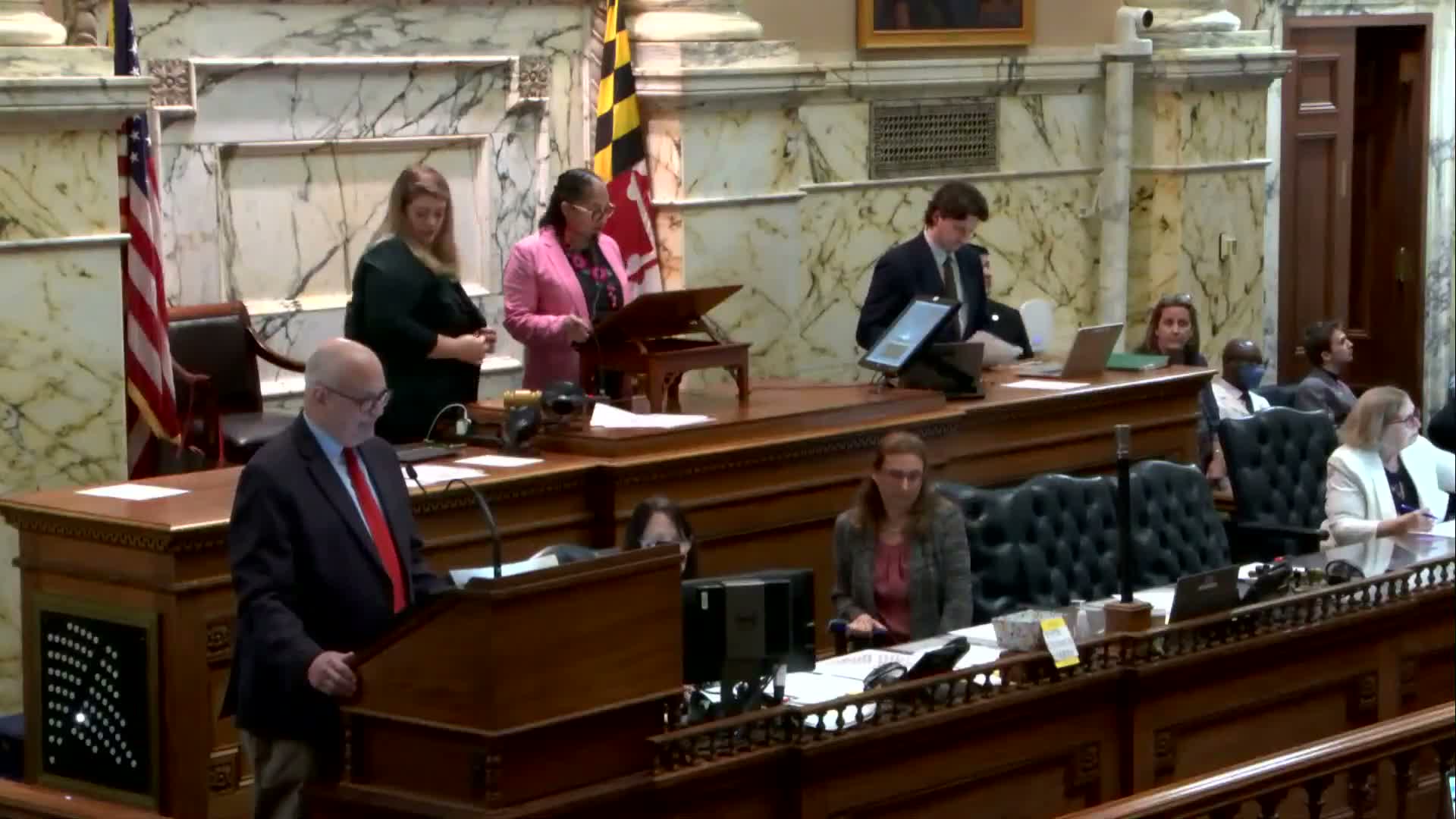
The Maryland House of Delegates voted 93–33 to pass Senate Bill 5 on third reading, adopting a measure that requires special elections to fill legislative vacancies and that includes committee amendments changing who determines certain constitutional questions.
Supporters said the bill returns the decision about representation to voters. "Under this bill, the voters will decide," said the Deputy Majority Leader, arguing the measure clarifies constitutional language after what supporters described as a court misinterpretation. The Deputy Majority Leader framed the change as preventing courts from determining the meaning of the state constitution in future vacancy cases.
Opponents said amendments altered the bill's original intent and raised concerns about partisan effects and single-subject rules. "I want to rise to explain my red vote on this bill," said the Delegate from Cecil County, who described the amended measure as having been "hijacked" and warned it could be impaired on procedural grounds. Other dissenting members said the amendments appeared designed to reduce minority-party representation in the congressional delegation and risked misleading voters if placed on the ballot.
The Delegate from Frederick, who explained his green vote, said the bill "opens the process truly to the people" by making special elections the mechanism for filling vacancies instead of appointments. He added that recent amendments address ambiguities the body previously left unresolved, saying the chamber is "fixing that mistake" and preserving the legislature's authority.
Members debated constitutional and political implications, referenced past court rulings and law-review analysis, and framed the issue around who decides—an unelected judge or the electorate. The clerk reported the final tally—93 affirmative votes and 33 negatives—and the Speaker declared Senate Bill 5 passed.
The debate included repeated calls for the Senate to consider the House's amendments and for conference if necessary; the transcript records members urging continued negotiation and use of conference procedures if the Senate perceives a single-subject concern. The record does not specify additional procedural steps taken immediately at the floor session beyond declaring the bill passed.
The House proceeded with other routine business after the vote and recessed for the weekend.
Supporters said the bill returns the decision about representation to voters. "Under this bill, the voters will decide," said the Deputy Majority Leader, arguing the measure clarifies constitutional language after what supporters described as a court misinterpretation. The Deputy Majority Leader framed the change as preventing courts from determining the meaning of the state constitution in future vacancy cases.
Opponents said amendments altered the bill's original intent and raised concerns about partisan effects and single-subject rules. "I want to rise to explain my red vote on this bill," said the Delegate from Cecil County, who described the amended measure as having been "hijacked" and warned it could be impaired on procedural grounds. Other dissenting members said the amendments appeared designed to reduce minority-party representation in the congressional delegation and risked misleading voters if placed on the ballot.
The Delegate from Frederick, who explained his green vote, said the bill "opens the process truly to the people" by making special elections the mechanism for filling vacancies instead of appointments. He added that recent amendments address ambiguities the body previously left unresolved, saying the chamber is "fixing that mistake" and preserving the legislature's authority.
Members debated constitutional and political implications, referenced past court rulings and law-review analysis, and framed the issue around who decides—an unelected judge or the electorate. The clerk reported the final tally—93 affirmative votes and 33 negatives—and the Speaker declared Senate Bill 5 passed.
The debate included repeated calls for the Senate to consider the House's amendments and for conference if necessary; the transcript records members urging continued negotiation and use of conference procedures if the Senate perceives a single-subject concern. The record does not specify additional procedural steps taken immediately at the floor session beyond declaring the bill passed.
The House proceeded with other routine business after the vote and recessed for the weekend.
View the Full Meeting & All Its Details
This article offers just a summary. Unlock complete video, transcripts, and insights as a Founder Member.
✓
Watch full, unedited meeting videos
✓
Search every word spoken in unlimited transcripts
✓
AI summaries & real-time alerts (all government levels)
✓
Permanent access to expanding government content
30-day money-back guarantee
