Ohio Pet Fund seeks voluntary tax checkoff to boost spay/neuter grants
March 24, 2026 | Ways and Means, Senate, Committees, Legislative, Ohio
This article was created by AI summarizing key points discussed. AI makes mistakes, so for full details and context, please refer to the video of the full meeting. Please report any errors so we can fix them. Report an error »
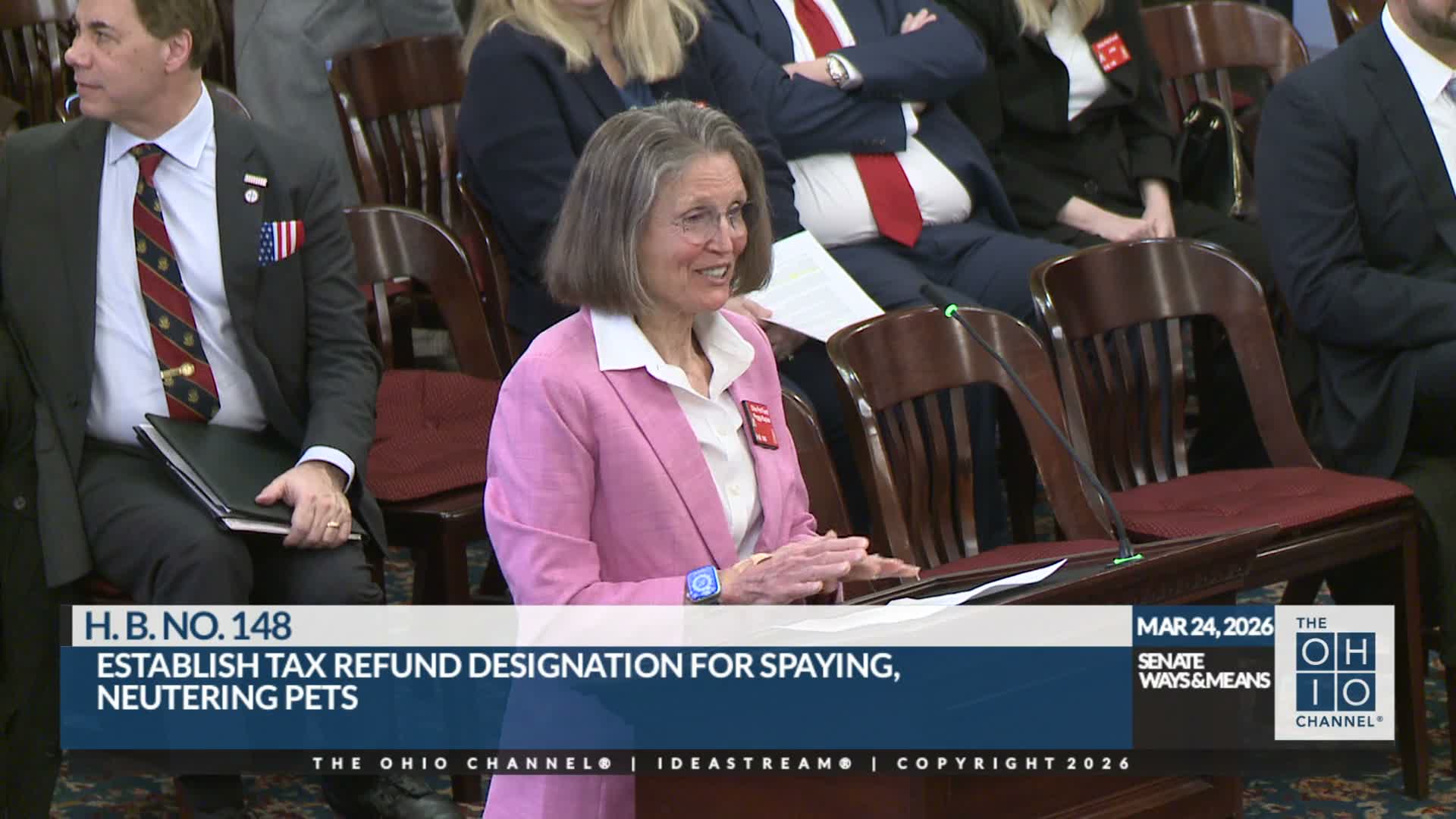
Proponents of House Bill 148 told the Senate Ways and Means Committee the bill would allow Ohio taxpayers to voluntarily donate a portion of an income tax refund to a newly created companion animal fund administered by the Ohio Pet Fund.
"Through the sale of the pet friendly license plate, we provide spay and neuter grants to county run dog shelters and nonprofit rescue organizations in Ohio," Peggy Kaplan, director of the Ohio Pet Fund, said in proponent testimony. She told the committee that rising costs and shelter capacity strains mean plate proceeds no longer meet statewide need.
Other witnesses described the fund’s track record and oversight. Tony Segers said the Pet Fund has a long history of grantmaking and transparency and estimated license plate proceeds were about $270,000 in 2024, which he said is insufficient for current demand. Liane Bertani, president of the Ohio Pet Fund, described the nonprofit’s volunteer governance, annual IRS 990 filings and reporting to the attorney general; she said HB148 would add reporting to the General Assembly.
Former representative Jim Trakis, also testifying in support, urged prompt passage so the Department of Taxation could add the voluntary checkoff to 2026 tax forms and allow contributions to begin in 2027. "If this simple bill can be passed here in the spring and signed into law by Governor DeWine before the summer, then the Ohio Department of Taxation will be able to include this voluntary tax donation on the 2026 tax forms," Trakis said.
Supporters described HB148 as a voluntary mechanism that does not reduce or reallocate general-fund dollars; the committee received several proponent statements and closed the second hearing without committee votes recorded.
No committee objections were raised during testimony, and the chair moved on to the next agenda item.
"Through the sale of the pet friendly license plate, we provide spay and neuter grants to county run dog shelters and nonprofit rescue organizations in Ohio," Peggy Kaplan, director of the Ohio Pet Fund, said in proponent testimony. She told the committee that rising costs and shelter capacity strains mean plate proceeds no longer meet statewide need.
Other witnesses described the fund’s track record and oversight. Tony Segers said the Pet Fund has a long history of grantmaking and transparency and estimated license plate proceeds were about $270,000 in 2024, which he said is insufficient for current demand. Liane Bertani, president of the Ohio Pet Fund, described the nonprofit’s volunteer governance, annual IRS 990 filings and reporting to the attorney general; she said HB148 would add reporting to the General Assembly.
Former representative Jim Trakis, also testifying in support, urged prompt passage so the Department of Taxation could add the voluntary checkoff to 2026 tax forms and allow contributions to begin in 2027. "If this simple bill can be passed here in the spring and signed into law by Governor DeWine before the summer, then the Ohio Department of Taxation will be able to include this voluntary tax donation on the 2026 tax forms," Trakis said.
Supporters described HB148 as a voluntary mechanism that does not reduce or reallocate general-fund dollars; the committee received several proponent statements and closed the second hearing without committee votes recorded.
No committee objections were raised during testimony, and the chair moved on to the next agenda item.
Don't Miss a Word: See the Full Meeting!
Go beyond summaries. Unlock every video, transcript, and key insight with a Founder Membership.
✓
Get instant access to full meeting videos
✓
Search and clip any phrase from complete transcripts
✓
Receive AI-powered summaries & custom alerts
✓
Enjoy lifetime, unrestricted access to government data
30-day money-back guarantee
