Sponsors tell Judiciary committee HB492 would raise penalty for refusing to identify at traffic stops
March 11, 2026 | Judiciary, Senate, Committees, Legislative, Ohio
This article was created by AI summarizing key points discussed. AI makes mistakes, so for full details and context, please refer to the video of the full meeting. Please report any errors so we can fix them. Report an error »
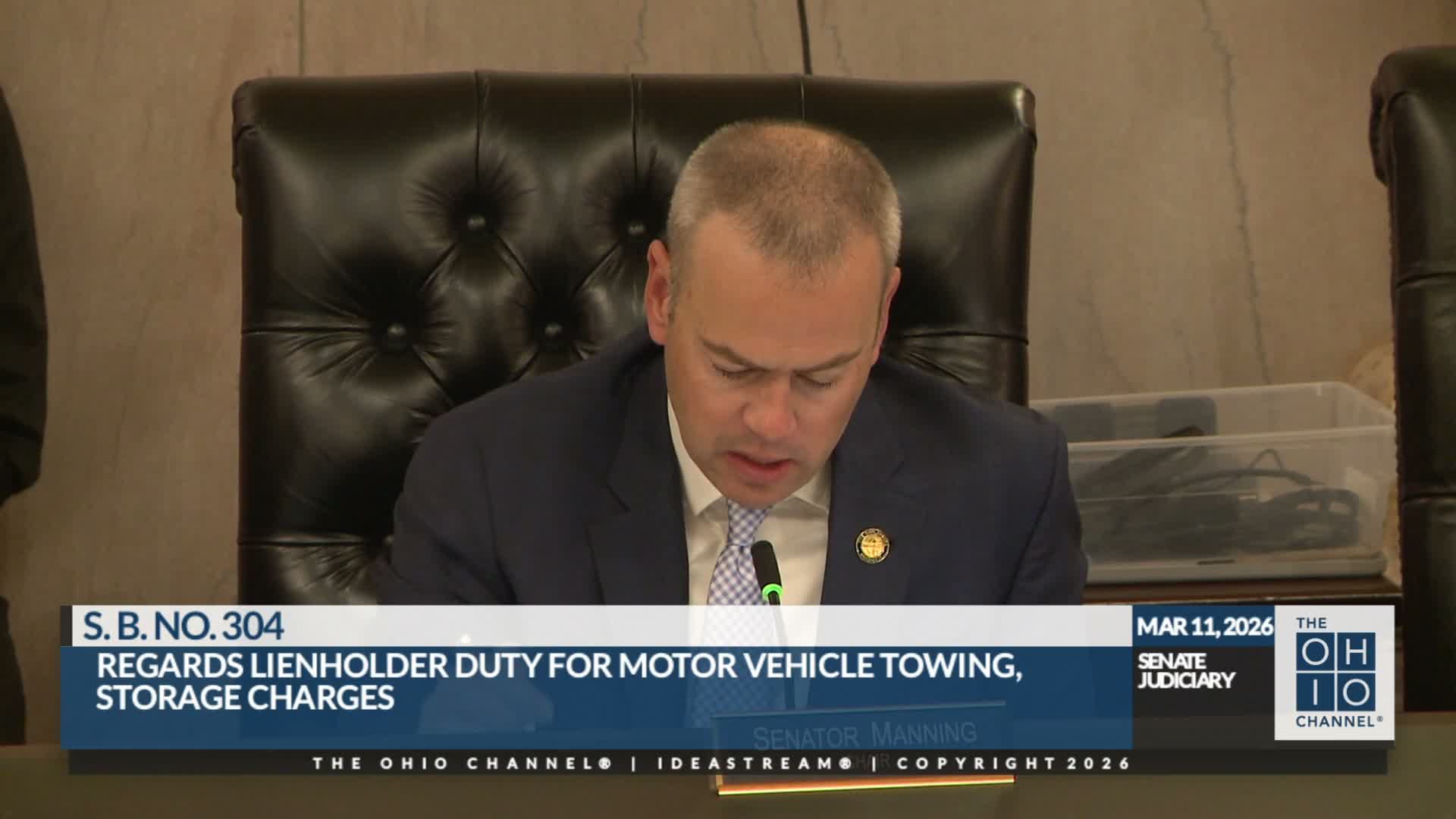
At a first hearing on House Bill 492, sponsors Representative Ray and Representative Abrams presented the proposal to strengthen penalties for failing to identify oneself at a traffic stop when an officer has observed a Title 45 traffic violation.
Representative Ray told the Senate Judiciary Committee that current refusal‑to‑identify offenses are unclassified, fine‑only misdemeanors that do not permit fingerprinting or identification before release. HB492 would make the offense a fourth‑degree misdemeanor in the specified circumstances, making fingerprints and identification possible and carrying a potential sentence of up to 30 days in jail. Representative Abrams described the measure in two parts: clarifying Title 45 coverage for interfering‑with‑an‑arrest provisions and creating a separate fourth‑degree misdemeanor for refusal to disclose name, address and date of birth when an officer witnesses a Title 45 violation.
Sponsors said they narrowed the bill in the House Public Safety Committee to change the term “law enforcement” to “peace officer,” added a passenger‑disclosure provision for officer safety and included constitutional protections so the obligated disclosure is limited to name, address and date of birth, not additional questioning. Sponsors said the bill passed the House Public Safety Committee 7‑3 and the full House 59‑21.
Committee members asked about the reasonable‑suspicion threshold, how officers could avoid inconsistent applications, and whether the change would meaningfully improve officer safety. Representative Abrams responded that current law requires officers to witness a Title 45 offense to justify a stop and that the bill preserves that requirement; sponsors said they could provide additional clarifying language if the committee requests it.
Chair Manning recorded this as the first hearing on HB492; no committee vote was taken.
Representative Ray told the Senate Judiciary Committee that current refusal‑to‑identify offenses are unclassified, fine‑only misdemeanors that do not permit fingerprinting or identification before release. HB492 would make the offense a fourth‑degree misdemeanor in the specified circumstances, making fingerprints and identification possible and carrying a potential sentence of up to 30 days in jail. Representative Abrams described the measure in two parts: clarifying Title 45 coverage for interfering‑with‑an‑arrest provisions and creating a separate fourth‑degree misdemeanor for refusal to disclose name, address and date of birth when an officer witnesses a Title 45 violation.
Sponsors said they narrowed the bill in the House Public Safety Committee to change the term “law enforcement” to “peace officer,” added a passenger‑disclosure provision for officer safety and included constitutional protections so the obligated disclosure is limited to name, address and date of birth, not additional questioning. Sponsors said the bill passed the House Public Safety Committee 7‑3 and the full House 59‑21.
Committee members asked about the reasonable‑suspicion threshold, how officers could avoid inconsistent applications, and whether the change would meaningfully improve officer safety. Representative Abrams responded that current law requires officers to witness a Title 45 offense to justify a stop and that the bill preserves that requirement; sponsors said they could provide additional clarifying language if the committee requests it.
Chair Manning recorded this as the first hearing on HB492; no committee vote was taken.
View the Full Meeting & All Its Details
This article offers just a summary. Unlock complete video, transcripts, and insights as a Founder Member.
✓
Watch full, unedited meeting videos
✓
Search every word spoken in unlimited transcripts
✓
AI summaries & real-time alerts (all government levels)
✓
Permanent access to expanding government content
30-day money-back guarantee
