Committee adopts substitute to expand in-room camera protections to assisted-living settings
March 11, 2026 | Health, Senate, Committees, Legislative, Ohio
This article was created by AI summarizing key points discussed. AI makes mistakes, so for full details and context, please refer to the video of the full meeting. Please report any errors so we can fix them. Report an error »
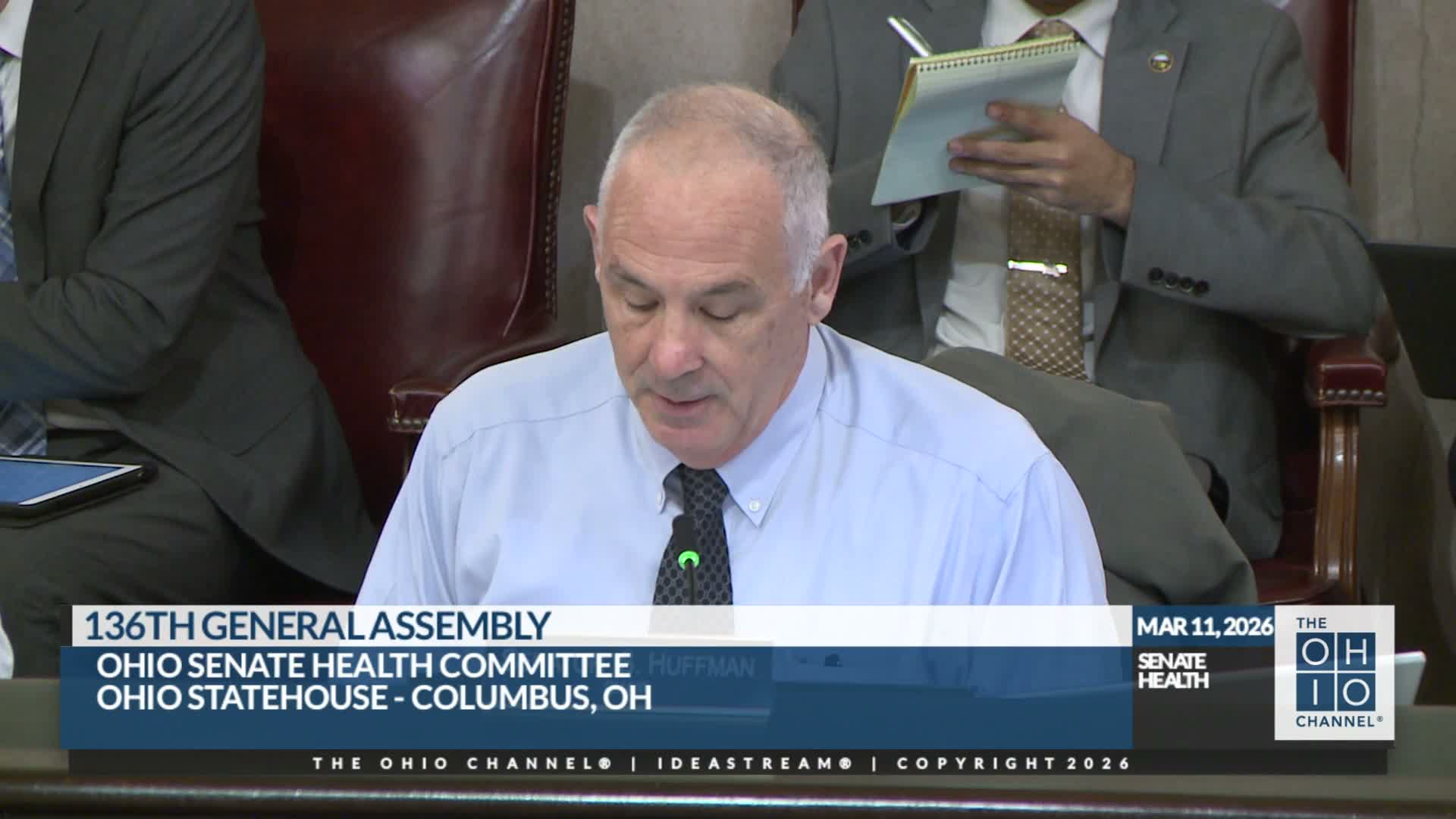
Senator Ingram moved to adopt substitute bill 0293-1 to modify Senate Bill 154 and the committee approved the substitute by unanimous consent. The sponsor said the substitute broadens who may serve as a decision-maker for camera use, replaces a fixed dollar cap on installation with a time-and-materials standard, allows residents to choose certain two-way audio devices, clarifies prohibited camera features and adds a requirement that facilities provide internet access to the extent it is available to the facility. The substitute also added language to allow a facility to offer an opt-in turnkey camera package.
Linda Kirdoff, an ombudsman with the Office of the State Long Term Care Ombudsman, told senators that the 2022 Esther's Law for nursing homes has worked and that in-room cameras have a record of helping residents and families detect and prevent harm. “Esther's Law allowed for nursing home residents to have an in-room camera for monitoring purposes… Esther's law works,” Kirdoff said, describing instances in which family members spotted falls, unattended call lights and other care lapses on camera and then got immediate help for residents.
Kirdoff said the substitute preserves the fundamental protections of Esther's Law while expanding resident access to electronic room monitoring in licensed residential care facilities (assisted living) and urged the committee’s support. She also explained why the substitute shifts to a time-and-materials approach for installation: the ombudsman program has documented situations in which facilities charged excessive installation fees, in one case reportedly up to $900.
The chair declared there were no objections to the amendment, and the amendment became part of the bill; the committee then completed the second hearing on Senate Bill 154.
Linda Kirdoff, an ombudsman with the Office of the State Long Term Care Ombudsman, told senators that the 2022 Esther's Law for nursing homes has worked and that in-room cameras have a record of helping residents and families detect and prevent harm. “Esther's Law allowed for nursing home residents to have an in-room camera for monitoring purposes… Esther's law works,” Kirdoff said, describing instances in which family members spotted falls, unattended call lights and other care lapses on camera and then got immediate help for residents.
Kirdoff said the substitute preserves the fundamental protections of Esther's Law while expanding resident access to electronic room monitoring in licensed residential care facilities (assisted living) and urged the committee’s support. She also explained why the substitute shifts to a time-and-materials approach for installation: the ombudsman program has documented situations in which facilities charged excessive installation fees, in one case reportedly up to $900.
The chair declared there were no objections to the amendment, and the amendment became part of the bill; the committee then completed the second hearing on Senate Bill 154.
Don't Miss a Word: See the Full Meeting!
Go beyond summaries. Unlock every video, transcript, and key insight with a Founder Membership.
✓
Get instant access to full meeting videos
✓
Search and clip any phrase from complete transcripts
✓
Receive AI-powered summaries & custom alerts
✓
Enjoy lifetime, unrestricted access to government data
30-day money-back guarantee
