Sponsor says 'My Child, My Chart' would alert parents when minors' portal access changes
March 11, 2026 | Health, Senate, Committees, Legislative, Ohio
This article was created by AI summarizing key points discussed. AI makes mistakes, so for full details and context, please refer to the video of the full meeting. Please report any errors so we can fix them. Report an error »
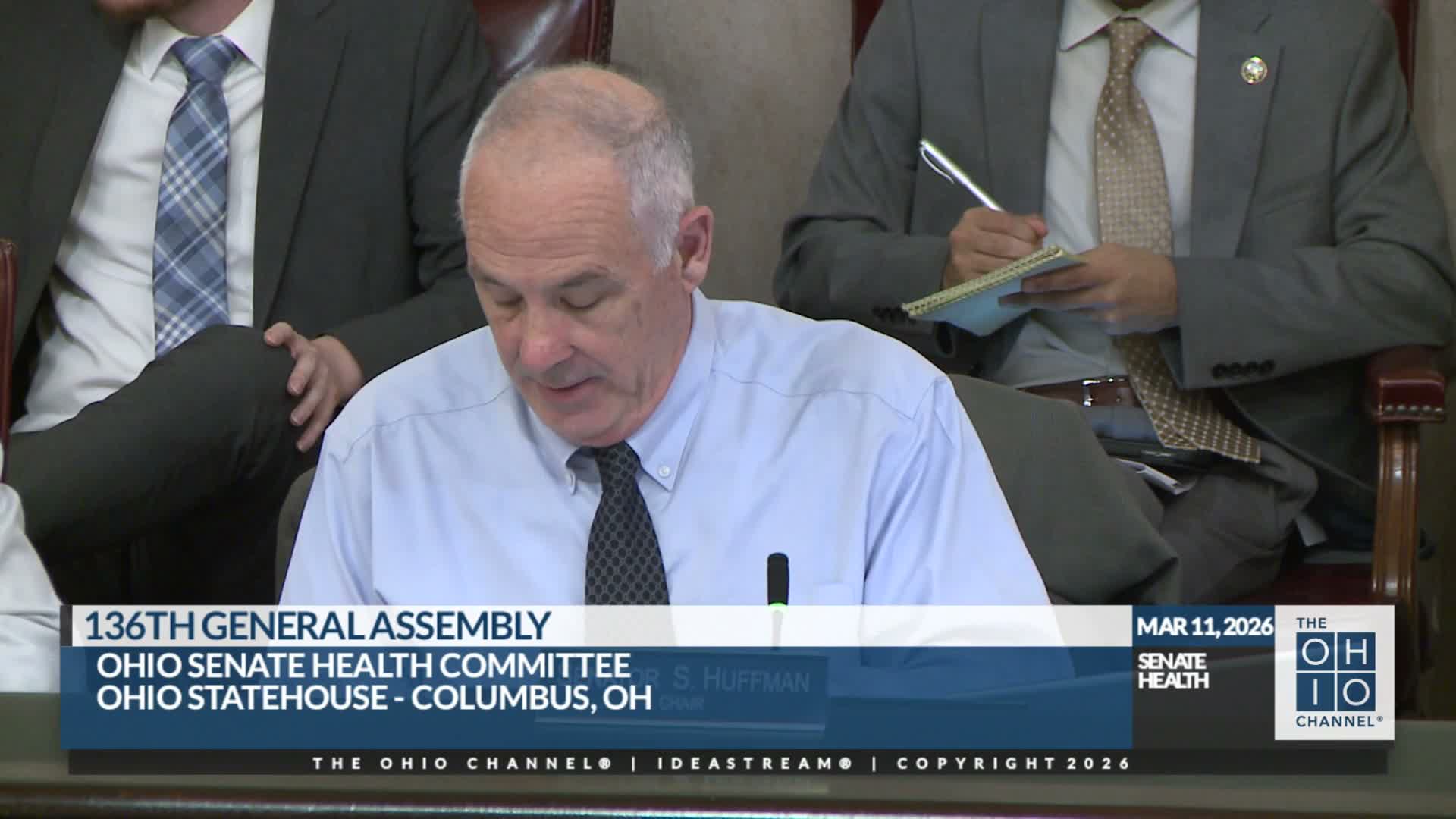
Representative Klick provided sponsor testimony on House Bill 162, called the 'My Child, My Chart' bill, describing cases in which parents were unexpectedly cut off from online patient portals after a minor accessed services that do not require parental consent. Klick said the bill’s aim is transparency: parents should be informed when a minor's portal access means the parent may not see certain records.
Klick listed eight categories of care that minors may obtain without parental consent under current law — items he said may lead providers to close a parent's portal access rather than attempt technical segregation — and described the bill’s practical approach to reducing surprise. “We just simply say every year, the primary physician ... will certify to the parents and say these are the things that your child is allowed to do without your consent,” Klick told the committee, describing the effort as bipartisan and previously passed by the Ohio House.
Committee members pressed several operational and policy questions. A committee member asked how the bill would handle revocation of consent when a minor later changes their mind; Klick said the bill presumes a minor could revoke consent but that the committee could add clarifying language. Other senators raised concerns about whether digital records can be segregated and whether requiring licensure-level transparency could inadvertently apply to emergency or specialty visits; Klick said the language had been amended to limit some provisions to primary care settings and that the committee could further refine the bill.
The committee completed the first hearing on House Bill 162 and closed the session; no committee vote was taken at this hearing.
Klick listed eight categories of care that minors may obtain without parental consent under current law — items he said may lead providers to close a parent's portal access rather than attempt technical segregation — and described the bill’s practical approach to reducing surprise. “We just simply say every year, the primary physician ... will certify to the parents and say these are the things that your child is allowed to do without your consent,” Klick told the committee, describing the effort as bipartisan and previously passed by the Ohio House.
Committee members pressed several operational and policy questions. A committee member asked how the bill would handle revocation of consent when a minor later changes their mind; Klick said the bill presumes a minor could revoke consent but that the committee could add clarifying language. Other senators raised concerns about whether digital records can be segregated and whether requiring licensure-level transparency could inadvertently apply to emergency or specialty visits; Klick said the language had been amended to limit some provisions to primary care settings and that the committee could further refine the bill.
The committee completed the first hearing on House Bill 162 and closed the session; no committee vote was taken at this hearing.
View the Full Meeting & All Its Details
This article offers just a summary. Unlock complete video, transcripts, and insights as a Founder Member.
✓
Watch full, unedited meeting videos
✓
Search every word spoken in unlimited transcripts
✓
AI summaries & real-time alerts (all government levels)
✓
Permanent access to expanding government content
30-day money-back guarantee
