Ohio lawmakers hear bill to require prisons to report pregnancy outcomes to DRC
March 17, 2026 | Government Oversight, House of Representatives, Committees, Legislative, Ohio
This article was created by AI summarizing key points discussed. AI makes mistakes, so for full details and context, please refer to the video of the full meeting. Please report any errors so we can fix them. Report an error »
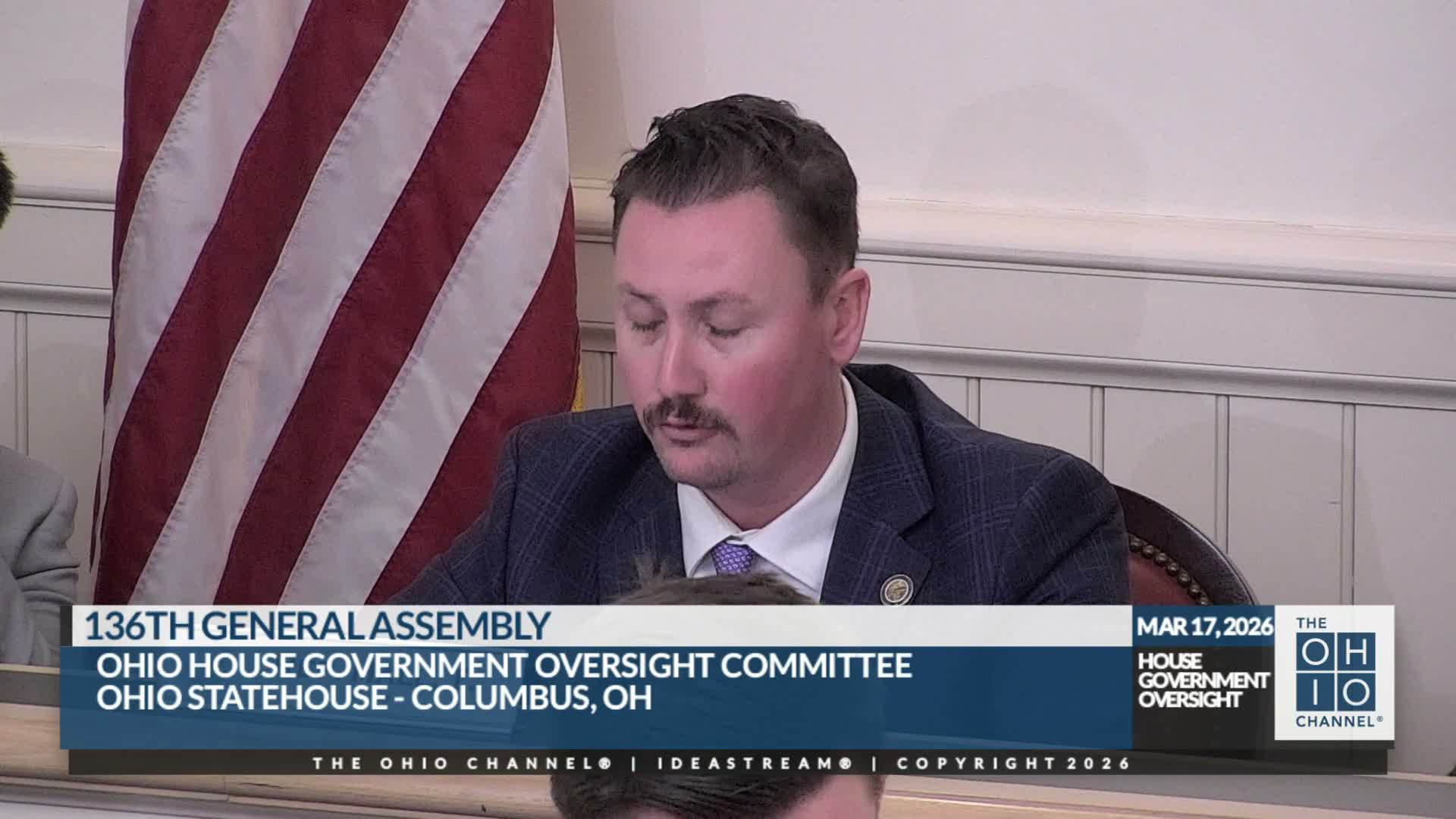
Sponsors of House Bill 542 told the House Government Oversight Committee on a first hearing that the measure would require municipal, county and state correctional facilities to report the outcomes of pregnancies among incarcerated people to the Department of Rehabilitation and Corrections (DRC) annually.
Representative Upchurch told the committee the bill’s aim is to see whether correctional facilities are providing adequate prenatal care. He cited published national figures presented in testimony that in 2023 about 700 pregnancies were reported in prisons nationwide and that roughly 6 percent of those pregnancies ended in miscarriage. He also described a January 2024 stillbirth at the Cuyahoga County Correctional Facility in his district, saying the person was 17 weeks pregnant, ‘‘spent hours pleading for help, screaming in pain,’’ and that the facility’s nurse did not provide adequate care before a delayed medical emergency declaration.
Representative Josh Williams, a co-sponsor, said the bill is ‘‘extraordinarily simple’’ in design: it would require correctional facilities to report the outcome of each pregnancy to ODRC so legislators can understand how widespread adverse pregnancy outcomes are and whether correctional health care requires change. Williams and Upchurch described the proposal as a first step: collecting outcome data does not itself allocate new health-care funding but would provide the information needed to target possible investments or reforms.
Ranking Member Humphrey questioned whether the committee should pair reporting requirements with investments in care, arguing that tracking outcomes without addressing staffing or medical capacity may not improve results. Upchurch and Williams responded that they see reporting as the initial step and welcomed future legislative conversations about funding and improvements, but emphasized the immediate need to know the scale of the problem before designing interventions.
Committee members also asked how pregnancy status would be identified. Williams said there is no requirement in the bill for universal pregnancy testing; in practice pregnancy is typically reported by the incarcerated person or becomes apparent to corrections staff, and the bill aims to record outcomes (live birth, miscarriage, stillbirth) rather than require new testing procedures.
Supporters said the data would allow comparisons with the general population to see whether pregnancy loss is disproportionately common in correctional settings and to highlight preventable causes, such as untreated infection. Opponents were not recorded in the transcript. The committee concluded the first hearing on House Bill 542 without an immediate committee vote; no formal action was recorded on the measure during this meeting.
The bill was introduced at the House Government Oversight Committee first hearing; sponsors said the data could guide later decisions about investments in care and facility practices.
Representative Upchurch told the committee the bill’s aim is to see whether correctional facilities are providing adequate prenatal care. He cited published national figures presented in testimony that in 2023 about 700 pregnancies were reported in prisons nationwide and that roughly 6 percent of those pregnancies ended in miscarriage. He also described a January 2024 stillbirth at the Cuyahoga County Correctional Facility in his district, saying the person was 17 weeks pregnant, ‘‘spent hours pleading for help, screaming in pain,’’ and that the facility’s nurse did not provide adequate care before a delayed medical emergency declaration.
Representative Josh Williams, a co-sponsor, said the bill is ‘‘extraordinarily simple’’ in design: it would require correctional facilities to report the outcome of each pregnancy to ODRC so legislators can understand how widespread adverse pregnancy outcomes are and whether correctional health care requires change. Williams and Upchurch described the proposal as a first step: collecting outcome data does not itself allocate new health-care funding but would provide the information needed to target possible investments or reforms.
Ranking Member Humphrey questioned whether the committee should pair reporting requirements with investments in care, arguing that tracking outcomes without addressing staffing or medical capacity may not improve results. Upchurch and Williams responded that they see reporting as the initial step and welcomed future legislative conversations about funding and improvements, but emphasized the immediate need to know the scale of the problem before designing interventions.
Committee members also asked how pregnancy status would be identified. Williams said there is no requirement in the bill for universal pregnancy testing; in practice pregnancy is typically reported by the incarcerated person or becomes apparent to corrections staff, and the bill aims to record outcomes (live birth, miscarriage, stillbirth) rather than require new testing procedures.
Supporters said the data would allow comparisons with the general population to see whether pregnancy loss is disproportionately common in correctional settings and to highlight preventable causes, such as untreated infection. Opponents were not recorded in the transcript. The committee concluded the first hearing on House Bill 542 without an immediate committee vote; no formal action was recorded on the measure during this meeting.
The bill was introduced at the House Government Oversight Committee first hearing; sponsors said the data could guide later decisions about investments in care and facility practices.
View the Full Meeting & All Its Details
This article offers just a summary. Unlock complete video, transcripts, and insights as a Founder Member.
✓
Watch full, unedited meeting videos
✓
Search every word spoken in unlimited transcripts
✓
AI summaries & real-time alerts (all government levels)
✓
Permanent access to expanding government content
30-day money-back guarantee
