Small-business owner tells committee no-shows from job applicants strain local employers
March 17, 2026 | Government Oversight, House of Representatives, Committees, Legislative, Ohio
This article was created by AI summarizing key points discussed. AI makes mistakes, so for full details and context, please refer to the video of the full meeting. Please report any errors so we can fix them. Report an error »
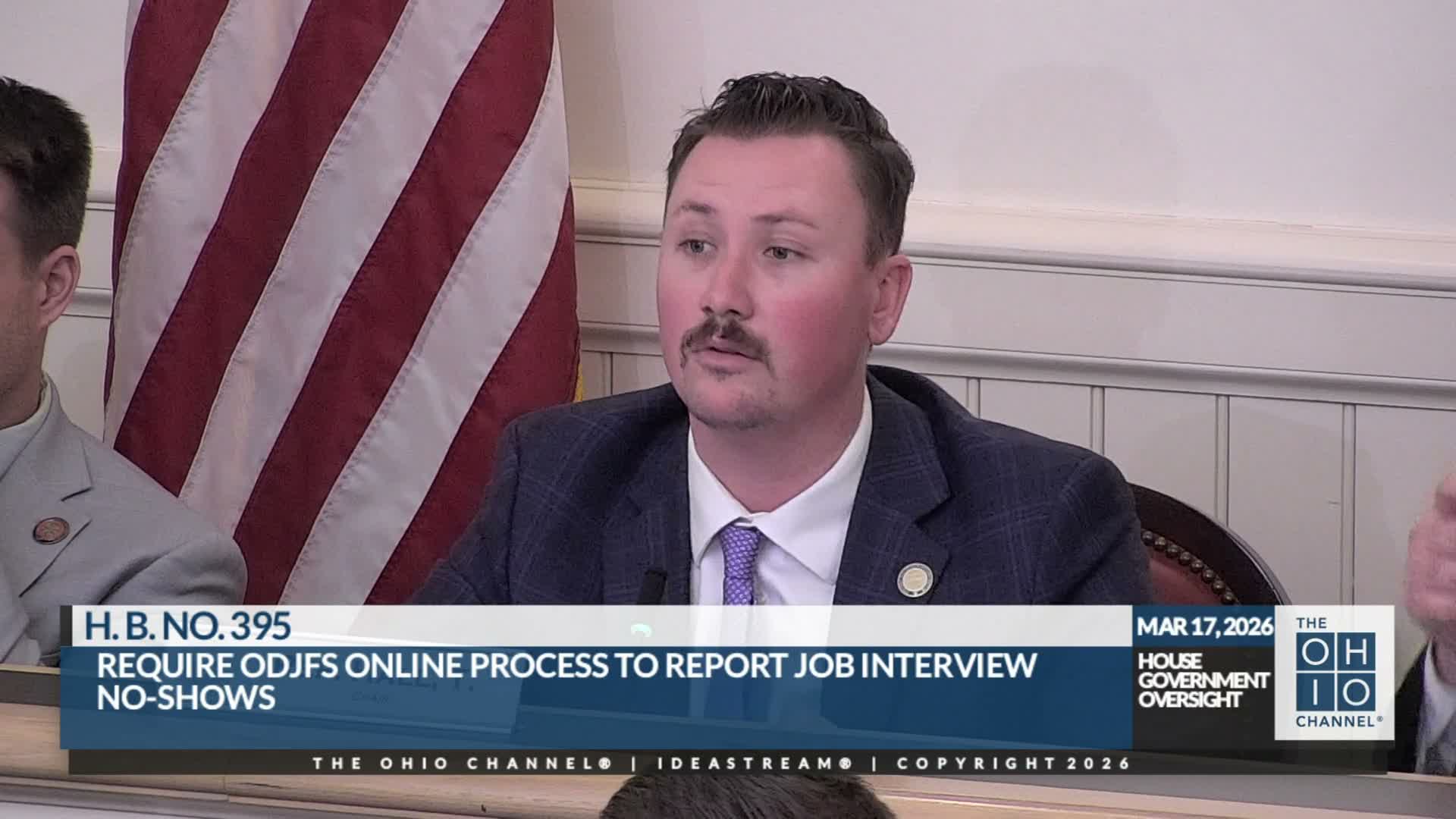
At a second hearing on House Bill 395, Ryan Harrell, who said he runs a landscaping business in Delaware, Ohio, testified that his company has about 10 open positions and repeatedly loses applicants who do not show up for interviews or job starts.
Harrell told the House Government Oversight Committee that these ‘‘no-shows’’ create ongoing costs: advertising and staff time to recruit, unfilled shifts that reduce capacity and profitability, and repeat occurrences by the same individuals. He said employers lack a mechanism to verify whether applicants are receiving unemployment benefits and that, in his view, other states have processes that track certain steps in unemployment systems that could reduce the problem.
Representative Gross, a joint sponsor on the bill, thanked Harrell and asked him to describe the financial and operational impact of no-shows; Harrell said the company pays to advertise and still frequently fails to fill positions. Representative Stems asked whether comparative data exists about unemployment recipients’ attendance compared with the general population; Harrell said he could not find authoritative data linking the groups and that drawing such a connection would be speculative.
Harrell said some local companies lay off crews seasonally and then rehire for snow removal or other periods, and that he had begun to notice a small set of repeat no-shows, which he characterized as a growing database of problem applicants. The committee closed the second hearing on House Bill 395 after thanking Harrell; no formal action on the bill was recorded at this meeting.
The testimony identified recruitment friction and employer concern as the primary issues presented by proponents; the hearing record contains no systematic data linking unemployment benefits to the no-show behavior.
Harrell told the House Government Oversight Committee that these ‘‘no-shows’’ create ongoing costs: advertising and staff time to recruit, unfilled shifts that reduce capacity and profitability, and repeat occurrences by the same individuals. He said employers lack a mechanism to verify whether applicants are receiving unemployment benefits and that, in his view, other states have processes that track certain steps in unemployment systems that could reduce the problem.
Representative Gross, a joint sponsor on the bill, thanked Harrell and asked him to describe the financial and operational impact of no-shows; Harrell said the company pays to advertise and still frequently fails to fill positions. Representative Stems asked whether comparative data exists about unemployment recipients’ attendance compared with the general population; Harrell said he could not find authoritative data linking the groups and that drawing such a connection would be speculative.
Harrell said some local companies lay off crews seasonally and then rehire for snow removal or other periods, and that he had begun to notice a small set of repeat no-shows, which he characterized as a growing database of problem applicants. The committee closed the second hearing on House Bill 395 after thanking Harrell; no formal action on the bill was recorded at this meeting.
The testimony identified recruitment friction and employer concern as the primary issues presented by proponents; the hearing record contains no systematic data linking unemployment benefits to the no-show behavior.
View the Full Meeting & All Its Details
This article offers just a summary. Unlock complete video, transcripts, and insights as a Founder Member.
✓
Watch full, unedited meeting videos
✓
Search every word spoken in unlimited transcripts
✓
AI summaries & real-time alerts (all government levels)
✓
Permanent access to expanding government content
30-day money-back guarantee
