Committee hears testimony on legalizing natural organic reduction as an option for disposition
March 24, 2026 | General Government, House of Representatives, Committees, Legislative, Ohio
This article was created by AI summarizing key points discussed. AI makes mistakes, so for full details and context, please refer to the video of the full meeting. Please report any errors so we can fix them. Report an error »
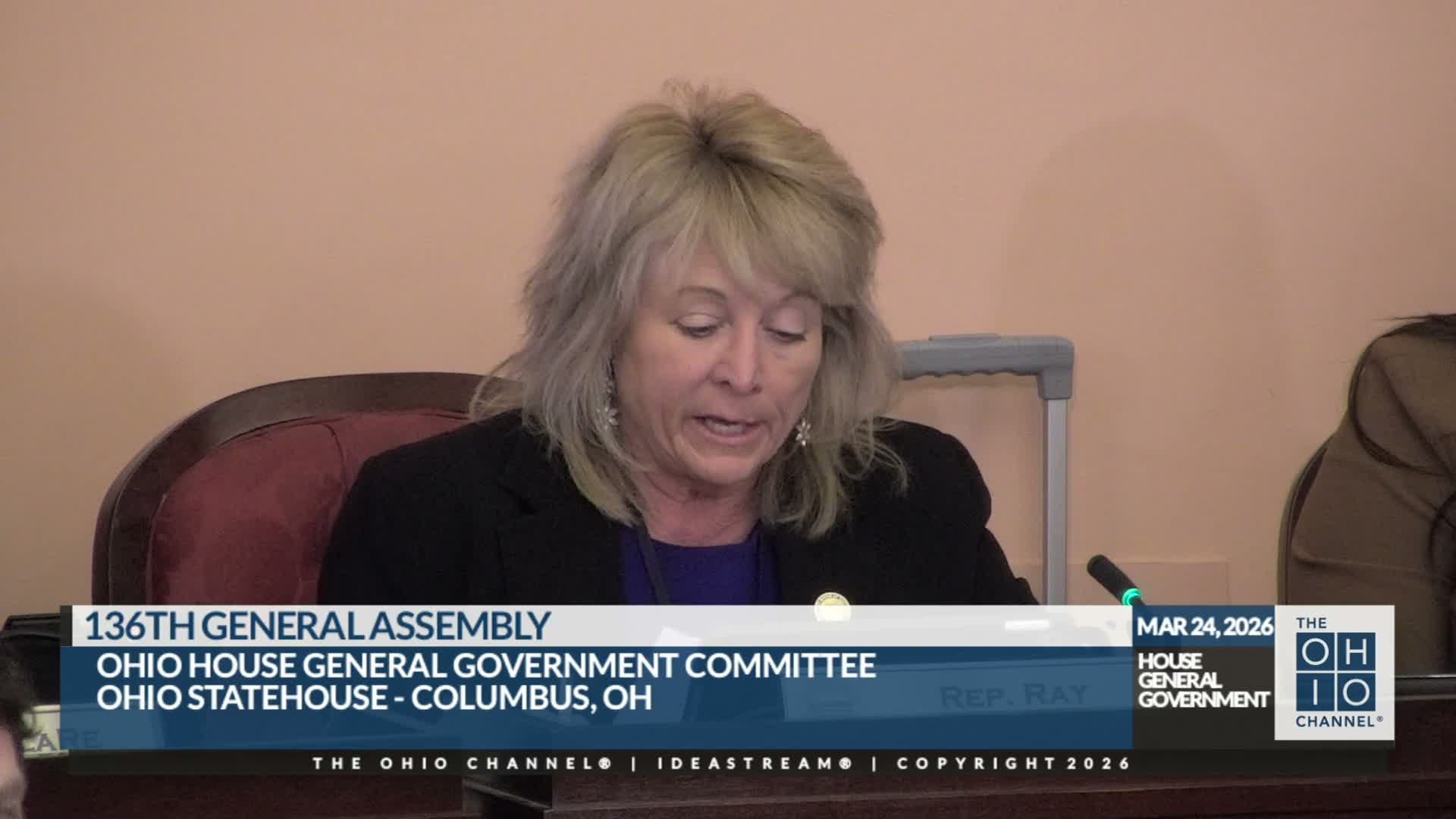
Proponents told the House General Government Committee that House Bill 591 would add natural organic reduction as a legally recognized disposition option and provide families an affordable and environmentally minded alternative to burial or cremation.
A sponsor said the bill "simply permits natural organic reduction as an alternative to burial and cremation services," and that the policy would align Ohio with other states that have adopted the process. Proponents described the product as a soil-like material families could use for memorial plantings or to restore land. One witness said the option could reduce costs compared with many traditional funerals and cited a general range of about $5,000 to $8,000 in some contexts.
Committee members pressed proponents on technical and regulatory issues, including the handling of persistent contaminants such as PFAS and what entity would set environmental and public-health standards. Proponents said the precise safeguards depend on the method used and that Department of Health, EPA and other agencies would be involved in setting and enforcing standards; they also noted that other states are at various stages of setting technical requirements.
Members also asked about zoning and permitting for facilities that conduct natural organic reduction. Sponsors responded that licensing would be specific to the process and that many standards would be implemented through regulatory agencies once the statutory authorization exists.
The hearing concluded with no committee vote; sponsors and proponents indicated they had consulted industry groups and planned follow-up on technical standards and licensing.
A sponsor said the bill "simply permits natural organic reduction as an alternative to burial and cremation services," and that the policy would align Ohio with other states that have adopted the process. Proponents described the product as a soil-like material families could use for memorial plantings or to restore land. One witness said the option could reduce costs compared with many traditional funerals and cited a general range of about $5,000 to $8,000 in some contexts.
Committee members pressed proponents on technical and regulatory issues, including the handling of persistent contaminants such as PFAS and what entity would set environmental and public-health standards. Proponents said the precise safeguards depend on the method used and that Department of Health, EPA and other agencies would be involved in setting and enforcing standards; they also noted that other states are at various stages of setting technical requirements.
Members also asked about zoning and permitting for facilities that conduct natural organic reduction. Sponsors responded that licensing would be specific to the process and that many standards would be implemented through regulatory agencies once the statutory authorization exists.
The hearing concluded with no committee vote; sponsors and proponents indicated they had consulted industry groups and planned follow-up on technical standards and licensing.
Don't Miss a Word: See the Full Meeting!
Go beyond summaries. Unlock every video, transcript, and key insight with a Founder Membership.
✓
Get instant access to full meeting videos
✓
Search and clip any phrase from complete transcripts
✓
Receive AI-powered summaries & custom alerts
✓
Enjoy lifetime, unrestricted access to government data
30-day money-back guarantee
