Witnesses urge the committee to require photo ID for mail absentee ballots and to harden online registration
March 24, 2026 | General Government, House of Representatives, Committees, Legislative, Ohio
This article was created by AI summarizing key points discussed. AI makes mistakes, so for full details and context, please refer to the video of the full meeting. Please report any errors so we can fix them. Report an error »
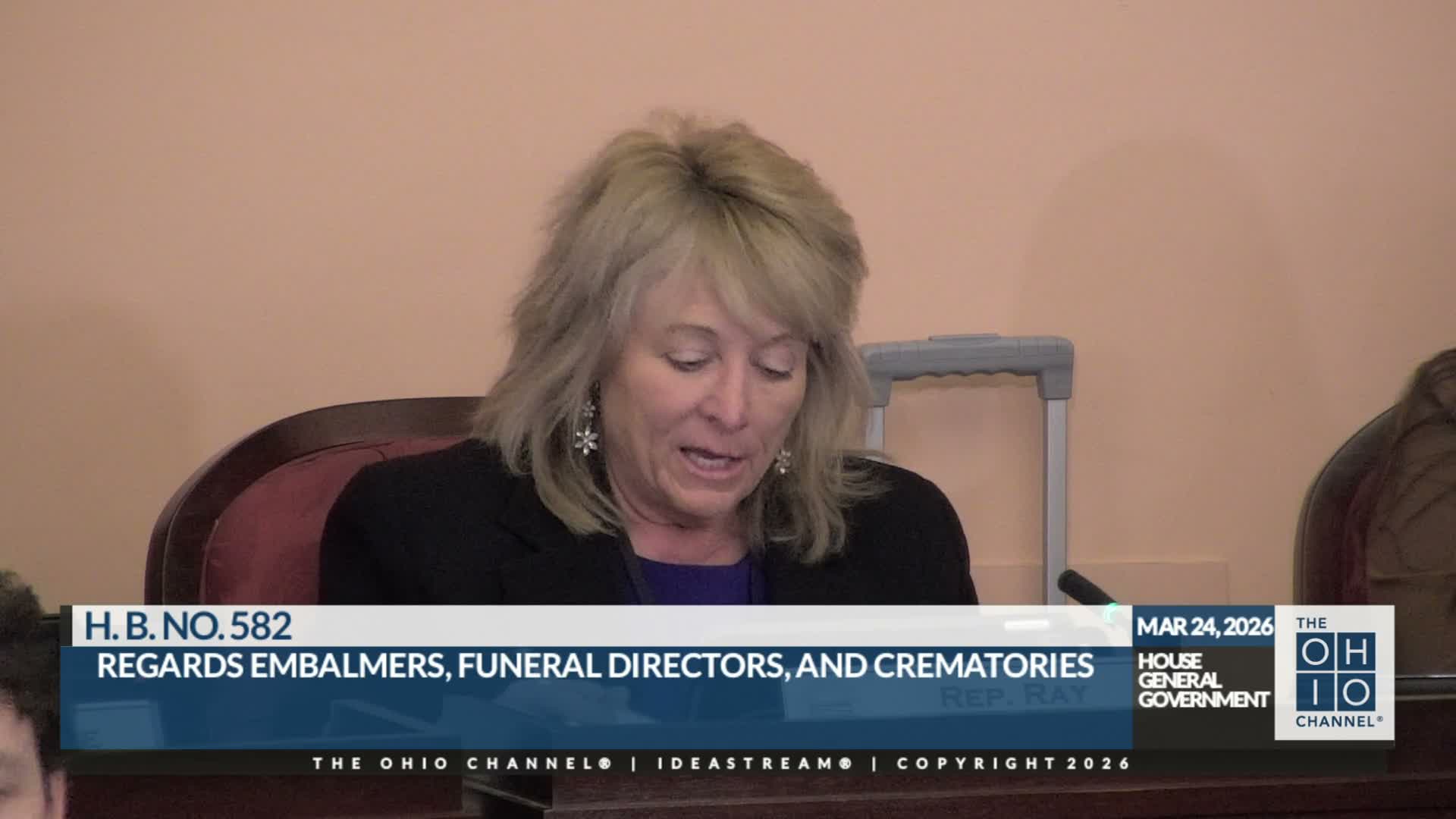
Supporters of House Bill 577 told the House General Government Committee the bill would close what they described as a mail-absentee ID loophole by requiring a copy of valid, state-issued photo identification with returned absentee ballots and by strengthening online registration through multi-factor authentication and a searchable voter-record portal.
Multiple proponent witnesses described problems they said exist in Ohio’s registration and absentee procedures. One witness said the state’s registration database contained "over 100,000 voter registrations belonging to individuals whose identities are not verified," and urged requiring an ID copy on absentee returns as an "equal treatment" step aligning mail-in ballots with in-person ID checks. Another witness, who identified as a retired intelligence officer, argued the online registration portal lacks modern authentication and that requiring a copy of a photo ID would deter third-party fraud and fraudulent registrations.
Witnesses and sponsors described several accommodations included in the bill: free photocopies of photo IDs at certain state agencies, a homebound ID program and religious exemptions for voters who object to being photographed. Proponents said boards of elections and the Bureau of Motor Vehicles would play roles in providing copy and ID services and that agencies would coordinate to minimize burdens.
Committee members pressed witnesses on accessibility and potential costs. Several members asked how the bill would avoid functioning as a poll tax by adding direct or indirect costs (postage, travel to locations that make copies) and whether boards of elections have capacity to handle extra documentation securely. Witnesses said agencies already provide some free options, that a bipartisan team can visit homebound voters and that the bill includes measures intended to preserve access; they acknowledged practical challenges for some voters and that provisional ballots and cure processes exist as safety nets.
The committee took no vote at the hearing; testimony generated extended exchanges about fraud risks, audit rates, and tradeoffs between ease of voting and identity verification.
Multiple proponent witnesses described problems they said exist in Ohio’s registration and absentee procedures. One witness said the state’s registration database contained "over 100,000 voter registrations belonging to individuals whose identities are not verified," and urged requiring an ID copy on absentee returns as an "equal treatment" step aligning mail-in ballots with in-person ID checks. Another witness, who identified as a retired intelligence officer, argued the online registration portal lacks modern authentication and that requiring a copy of a photo ID would deter third-party fraud and fraudulent registrations.
Witnesses and sponsors described several accommodations included in the bill: free photocopies of photo IDs at certain state agencies, a homebound ID program and religious exemptions for voters who object to being photographed. Proponents said boards of elections and the Bureau of Motor Vehicles would play roles in providing copy and ID services and that agencies would coordinate to minimize burdens.
Committee members pressed witnesses on accessibility and potential costs. Several members asked how the bill would avoid functioning as a poll tax by adding direct or indirect costs (postage, travel to locations that make copies) and whether boards of elections have capacity to handle extra documentation securely. Witnesses said agencies already provide some free options, that a bipartisan team can visit homebound voters and that the bill includes measures intended to preserve access; they acknowledged practical challenges for some voters and that provisional ballots and cure processes exist as safety nets.
The committee took no vote at the hearing; testimony generated extended exchanges about fraud risks, audit rates, and tradeoffs between ease of voting and identity verification.
View the Full Meeting & All Its Details
This article offers just a summary. Unlock complete video, transcripts, and insights as a Founder Member.
✓
Watch full, unedited meeting videos
✓
Search every word spoken in unlimited transcripts
✓
AI summaries & real-time alerts (all government levels)
✓
Permanent access to expanding government content
30-day money-back guarantee
