Katy ISD projects net reduction of 106 positions amid enrollment decline and funding shortfalls
March 23, 2026 | KATY ISD, School Districts, Texas
This article was created by AI summarizing key points discussed. AI makes mistakes, so for full details and context, please refer to the video of the full meeting. Please report any errors so we can fix them. Report an error »
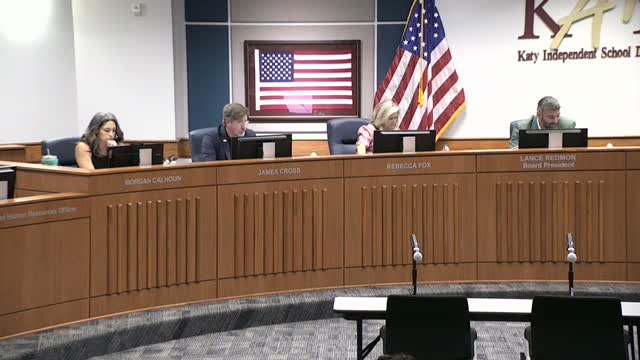
Chris Smith, Katy ISD's chief financial officer, opened the budget portion of the March 23 work-study by outlining the district's fiscal constraints: flat or declining enrollment, static state funding formulas and rising costs for salaries, benefits and utilities. Smith said the district is about 1,800 students below what was budgeted and expects to budget for roughly 295 fewer students next year. He noted the state's basic allotment figures and called attention to a drop in the fast-growth allotment that reduced expected state revenue.
Smith told trustees that the district recently filed a successful property-value audit and received a March 13 letter about homestead-exemption handling that could yield roughly $10 million in the current budget, which would reduce a projected $29 million deficit to about $19 million, though the district would still face a shortfall. He also flagged that the district is spending roughly $226,000–$238,000 per day to pay health claims.
Bridal Shuss, chief HR officer, presented the staffing approach that accompanies the budget. He said the district is implementing an extended timeline for excess-enrollment balancing (through mid-May) and expects a net reduction of 106 positions next year; staff emphasized that the district intends to realize reductions primarily through attrition, unfilled vacancies and internal reassignments. "All of our current employees that will be with the district for the 26–27 school year will have a position with Katy ISD," Shuss said, adding that principals and HR will work to minimize disruption.
Trustees expressed concern about the impact on classroom services and specialists (for example, elementary music and other 'specials') and asked for more granular staffing and program-impact information. A trustee read a letter from elementary music teachers asking the board to protect elementary music staffing and instruction; administration said no changes had been made to fine-arts staffing standards at this point. Trustees also discussed possible alternatives and the need for continued underspending discipline, vendor reviews and focus groups to understand frontline needs.
Administrators did not present final personnel actions at the meeting; they asked the board for direction on priorities and said they would return with revised budget amendments and staffing details for board consideration.
Smith told trustees that the district recently filed a successful property-value audit and received a March 13 letter about homestead-exemption handling that could yield roughly $10 million in the current budget, which would reduce a projected $29 million deficit to about $19 million, though the district would still face a shortfall. He also flagged that the district is spending roughly $226,000–$238,000 per day to pay health claims.
Bridal Shuss, chief HR officer, presented the staffing approach that accompanies the budget. He said the district is implementing an extended timeline for excess-enrollment balancing (through mid-May) and expects a net reduction of 106 positions next year; staff emphasized that the district intends to realize reductions primarily through attrition, unfilled vacancies and internal reassignments. "All of our current employees that will be with the district for the 26–27 school year will have a position with Katy ISD," Shuss said, adding that principals and HR will work to minimize disruption.
Trustees expressed concern about the impact on classroom services and specialists (for example, elementary music and other 'specials') and asked for more granular staffing and program-impact information. A trustee read a letter from elementary music teachers asking the board to protect elementary music staffing and instruction; administration said no changes had been made to fine-arts staffing standards at this point. Trustees also discussed possible alternatives and the need for continued underspending discipline, vendor reviews and focus groups to understand frontline needs.
Administrators did not present final personnel actions at the meeting; they asked the board for direction on priorities and said they would return with revised budget amendments and staffing details for board consideration.
View the Full Meeting & All Its Details
This article offers just a summary. Unlock complete video, transcripts, and insights as a Founder Member.
✓
Watch full, unedited meeting videos
✓
Search every word spoken in unlimited transcripts
✓
AI summaries & real-time alerts (all government levels)
✓
Permanent access to expanding government content
30-day money-back guarantee
