Doctors, pharmacists and social workers urge restriction on insurer-mandated 'white bagging'
March 17, 2026 | Insurance, House of Representatives, Committees, Legislative, Ohio
This article was created by AI summarizing key points discussed. AI makes mistakes, so for full details and context, please refer to the video of the full meeting. Please report any errors so we can fix them. Report an error »
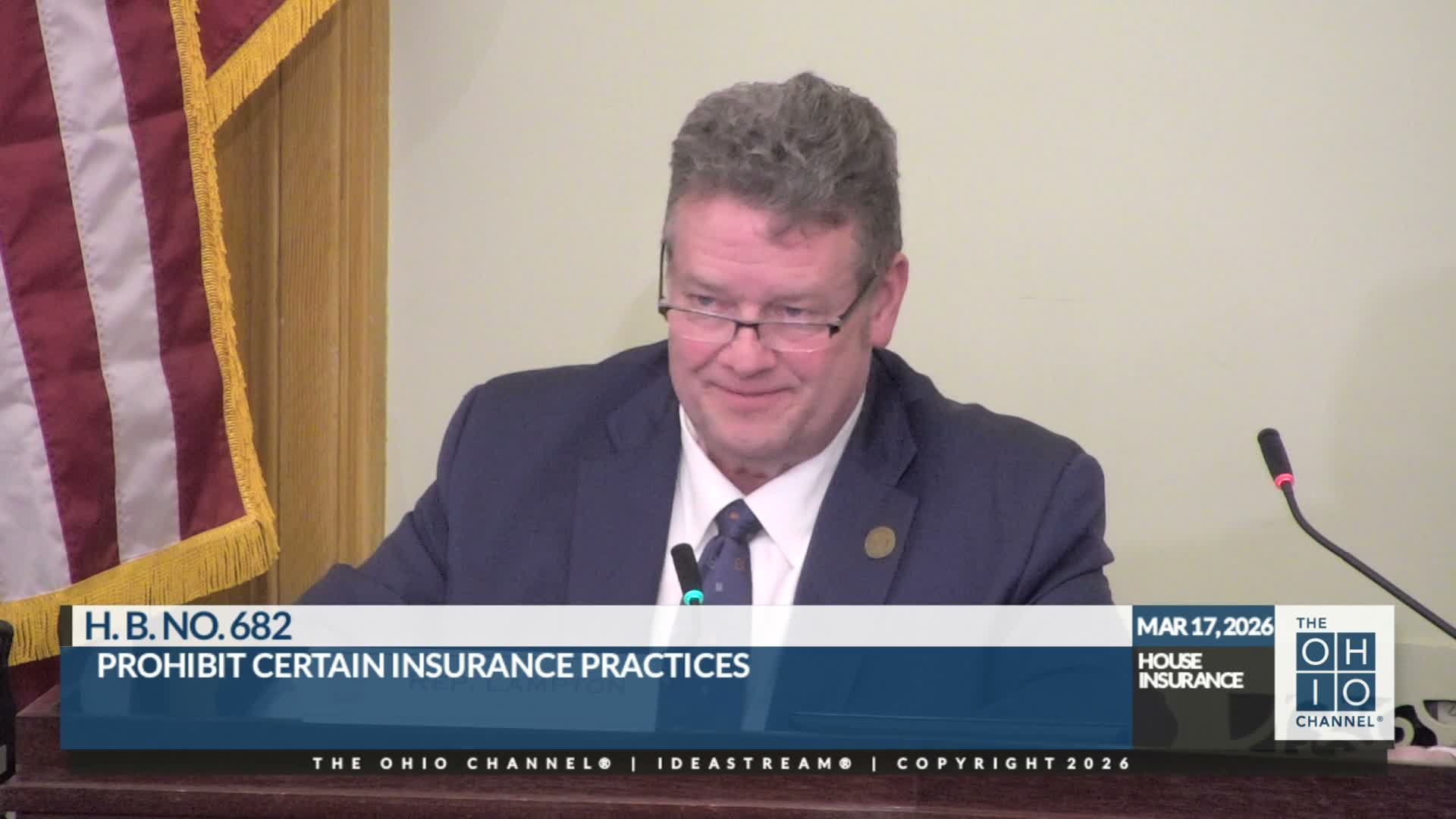
Physicians, oncology pharmacists and social workers urged the House Insurance Committee to support House Bill 682, which would prohibit insurer- or PBM-mandated "white bagging" for physician-administered medications.
Dr. Randy Drosik, a hematologist-oncologist, said white bagging inserts extra layers into the drug supply chain, increases the risk of error and can force patients to return for treatment if a pre-shipped medicine no longer matches their needs. "I can take away an entire week of your life in six months quite easily," Dr. Drosik said, describing that roughly 25 percent of patients may need dose adjustments after medications are ordered in advance. He also said some infused drugs have narrow federal reimbursement margins (about 6%) and that wasted pre-shipped medication costs would likely be borne by insurers and could affect premiums.
Marla Blazer, a board-certified oncology pharmacist and executive director of clinical strategy for an independent practice in Columbus, told the committee she found about $250,000 of white-bagged medications in an inventory review and argued white bagging undermines chain-of-custody, temperature controls and integrated pharmacy oversight. "When medications are procured through the practice, they are stored, handled, verified, and prepped according to strict safety and quality standards," Blazer told legislators; she added that white bagging can fragment care and make timely dose modifications impractical.
Dana Zager, an oncology social worker, described the emotional and logistical toll on patients when treatments are delayed or rescheduled because of shipping problems: patients miss transportation, lose work time and sometimes do not return for rescheduled therapy, she said.
Committee members asked witnesses technical and cost questions, including whether payers' procurement could lower costs for patients in the short term and how often pre-shipped drugs become unusable. Witnesses said payers may claim lower acquisition costs, but independent practices provide patient estimates, fundraising and co-pay assistance and warned that long-term effects could include consolidation of independent practices and higher overall costs.
The committee recorded additional written proponent testimony from Worcester Community Hospital Health System, the Healthcare Distribution Alliance and the Ohio State Medical Association. The hearing on House Bill 682 concluded with proponent testimony and committee questions recorded in the transcript.
Dr. Randy Drosik, a hematologist-oncologist, said white bagging inserts extra layers into the drug supply chain, increases the risk of error and can force patients to return for treatment if a pre-shipped medicine no longer matches their needs. "I can take away an entire week of your life in six months quite easily," Dr. Drosik said, describing that roughly 25 percent of patients may need dose adjustments after medications are ordered in advance. He also said some infused drugs have narrow federal reimbursement margins (about 6%) and that wasted pre-shipped medication costs would likely be borne by insurers and could affect premiums.
Marla Blazer, a board-certified oncology pharmacist and executive director of clinical strategy for an independent practice in Columbus, told the committee she found about $250,000 of white-bagged medications in an inventory review and argued white bagging undermines chain-of-custody, temperature controls and integrated pharmacy oversight. "When medications are procured through the practice, they are stored, handled, verified, and prepped according to strict safety and quality standards," Blazer told legislators; she added that white bagging can fragment care and make timely dose modifications impractical.
Dana Zager, an oncology social worker, described the emotional and logistical toll on patients when treatments are delayed or rescheduled because of shipping problems: patients miss transportation, lose work time and sometimes do not return for rescheduled therapy, she said.
Committee members asked witnesses technical and cost questions, including whether payers' procurement could lower costs for patients in the short term and how often pre-shipped drugs become unusable. Witnesses said payers may claim lower acquisition costs, but independent practices provide patient estimates, fundraising and co-pay assistance and warned that long-term effects could include consolidation of independent practices and higher overall costs.
The committee recorded additional written proponent testimony from Worcester Community Hospital Health System, the Healthcare Distribution Alliance and the Ohio State Medical Association. The hearing on House Bill 682 concluded with proponent testimony and committee questions recorded in the transcript.
View the Full Meeting & All Its Details
This article offers just a summary. Unlock complete video, transcripts, and insights as a Founder Member.
✓
Watch full, unedited meeting videos
✓
Search every word spoken in unlimited transcripts
✓
AI summaries & real-time alerts (all government levels)
✓
Permanent access to expanding government content
30-day money-back guarantee
