Lawmaker proposes 48-hour deadline for liquor and cigarette license renewals
March 18, 2026 | Commerce and Labor, House of Representatives, Committees, Legislative, Ohio
This article was created by AI summarizing key points discussed. AI makes mistakes, so for full details and context, please refer to the video of the full meeting. Please report any errors so we can fix them. Report an error »
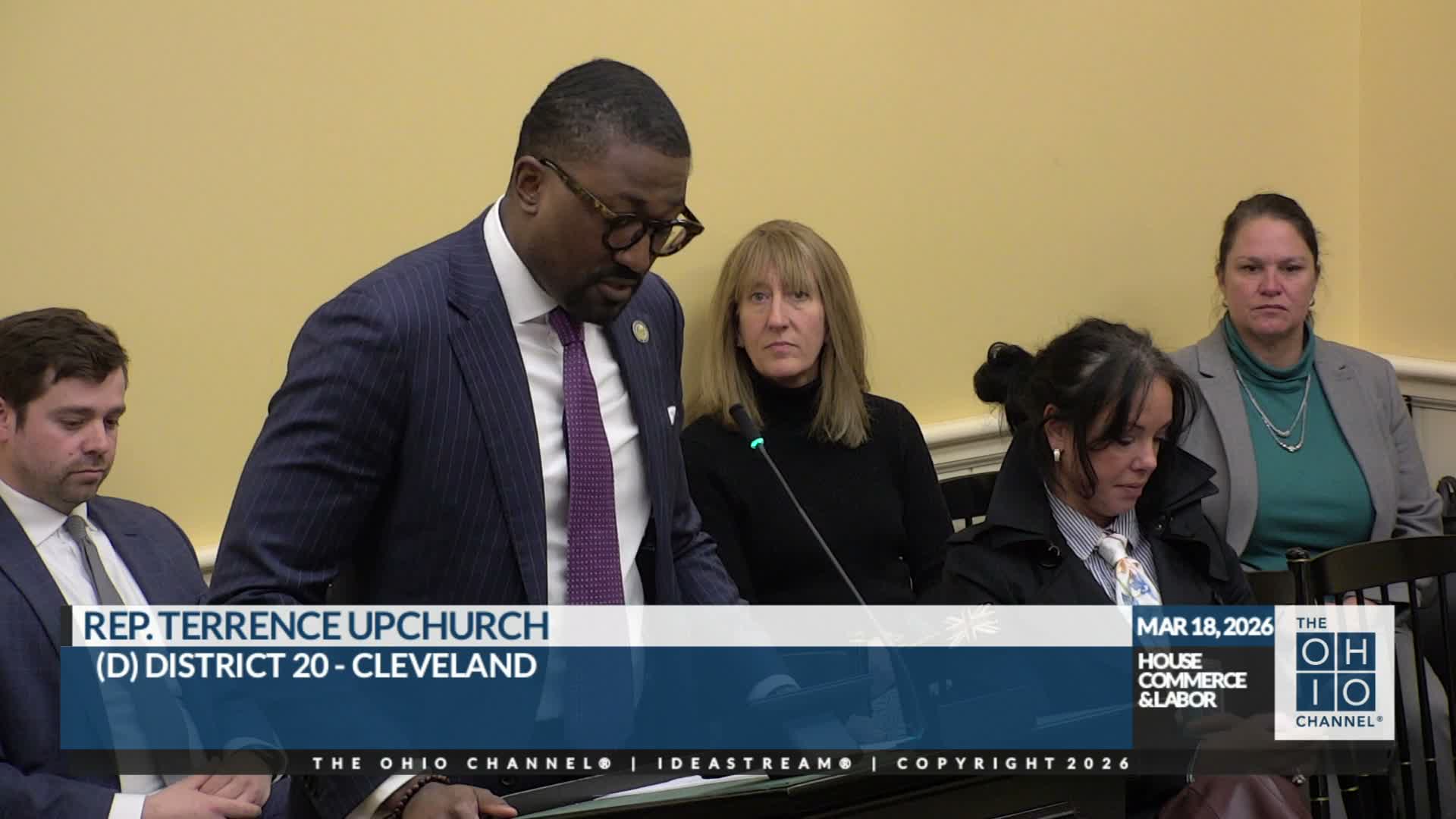
A lawmaker told the House Commerce and Labor Committee that a bill requiring the Department of Liquor Control and local authorities to approve renewal applications for liquor and cigarette licenses within 48 hours would prevent small businesses from losing revenue and staff during drawn-out renewals.
"This legislation will support small businesses by requiring the Department of Liquor Control to renew liquor licenses within 48 hours after a renewal application is filed," the sponsor said, arguing the change would prevent downtime for establishments that rely heavily on liquor sales.
The sponsor said the 48-hour timeframe grew out of conversations with business owners and stakeholders in the sponsor’s district but acknowledged they had not yet spoken to the Department of Liquor Control. "I I have not had any conversations with liquor control," the sponsor said, adding they believe the agency "is more than capable of processing these applications in 48 working hours." The sponsor said they would consult agencies if the committee requested it.
Committee members pressed the sponsor for economic data. Representative White asked whether the sponsor could estimate how much revenue communities lose when businesses cannot sell liquor during renewal delays. The sponsor said they could not provide a specific dollar amount but described instances where liquor sales make up 45 to 50 percent of a small bar or restaurant’s revenue and recounted a case in which a business faced a three-month renewal delay, temporarily closed and laid off staff before later obtaining approval.
Representative Hoops asked whether county auditors — who handle some cigarette licensing matters — had been consulted; the sponsor said they had spoken with some county stakeholders and had not encountered significant pushback.
The chair suggested applicants bear responsibility to apply before a license expires and proposed allowing reasonable lead time for renewals. The sponsor said they were open to committee amendments to refine the bill’s timing and conditions.
The hearing did not include a formal vote on the proposal. The sponsor concluded testimony and the committee moved on to other business.
The article is based on committee testimony and questions recorded in the committee transcript; agency views from the Department of Liquor Control were not on the record and the sponsor said consultations had not yet occurred.
"This legislation will support small businesses by requiring the Department of Liquor Control to renew liquor licenses within 48 hours after a renewal application is filed," the sponsor said, arguing the change would prevent downtime for establishments that rely heavily on liquor sales.
The sponsor said the 48-hour timeframe grew out of conversations with business owners and stakeholders in the sponsor’s district but acknowledged they had not yet spoken to the Department of Liquor Control. "I I have not had any conversations with liquor control," the sponsor said, adding they believe the agency "is more than capable of processing these applications in 48 working hours." The sponsor said they would consult agencies if the committee requested it.
Committee members pressed the sponsor for economic data. Representative White asked whether the sponsor could estimate how much revenue communities lose when businesses cannot sell liquor during renewal delays. The sponsor said they could not provide a specific dollar amount but described instances where liquor sales make up 45 to 50 percent of a small bar or restaurant’s revenue and recounted a case in which a business faced a three-month renewal delay, temporarily closed and laid off staff before later obtaining approval.
Representative Hoops asked whether county auditors — who handle some cigarette licensing matters — had been consulted; the sponsor said they had spoken with some county stakeholders and had not encountered significant pushback.
The chair suggested applicants bear responsibility to apply before a license expires and proposed allowing reasonable lead time for renewals. The sponsor said they were open to committee amendments to refine the bill’s timing and conditions.
The hearing did not include a formal vote on the proposal. The sponsor concluded testimony and the committee moved on to other business.
The article is based on committee testimony and questions recorded in the committee transcript; agency views from the Department of Liquor Control were not on the record and the sponsor said consultations had not yet occurred.
View the Full Meeting & All Its Details
This article offers just a summary. Unlock complete video, transcripts, and insights as a Founder Member.
✓
Watch full, unedited meeting videos
✓
Search every word spoken in unlimited transcripts
✓
AI summaries & real-time alerts (all government levels)
✓
Permanent access to expanding government content
30-day money-back guarantee
