House panel hears ride‑share liability changes aimed at limiting 'over‑naming' in lawsuits
March 17, 2026 | Transportation, House of Representatives, Committees, Legislative, Ohio
This article was created by AI summarizing key points discussed. AI makes mistakes, so for full details and context, please refer to the video of the full meeting. Please report any errors so we can fix them. Report an error »
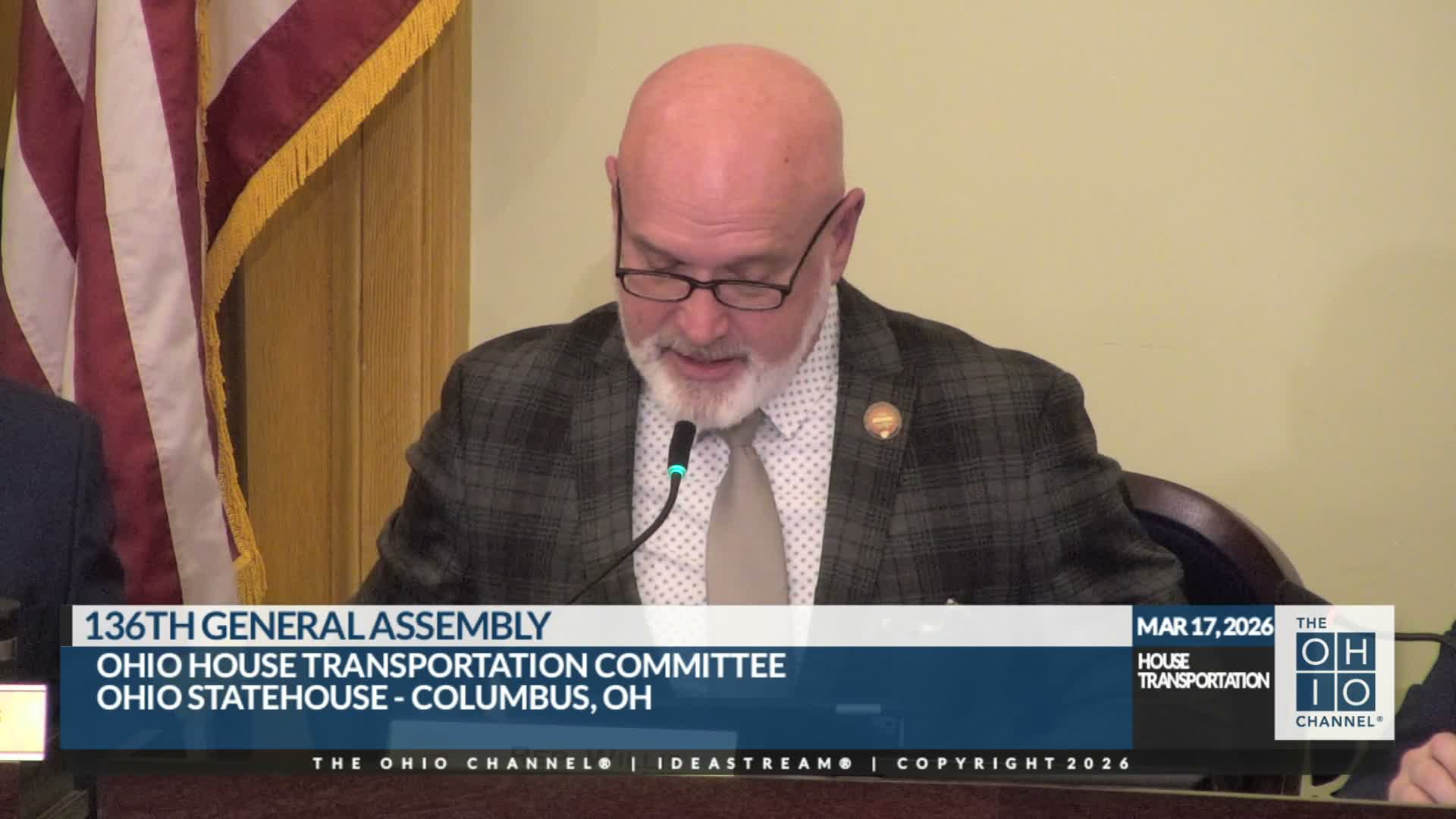
Representatives heard extended testimony on House Bill 604, which would update Ohio statutes for transportation network companies by clarifying that digital ride‑share applications are not "products" under Ohio product‑liability law and by limiting vicarious liability for TNCs when drivers operate as independent contractors.
Brad Veil, testifying for Uber, said HB 604 would reduce litigation costs and discourage improper counts that name the platform in auto‑accident lawsuits. Veil argued the statute already requires TNCs to maintain $1,000,000 in third‑party liability coverage and said the bill would not strip victims of recovery against a responsible party.
Ranking Member Grimm pressed the witness on a recent Arizona case in which a court ordered a company to pay a large award in a sexual‑assault case involving a driver; Grimm asked whether HB 604 would affect a victim’s ability to bring suit. Veil replied the bill would not change Ohio criminal law or liability for a TNC’s own misconduct and that the statute would not shield TNCs from liability for their actions or failures to act (for example, failing to conduct required background checks).
Other members asked about fingerprint background checks, impacts on workers’‑comp coverage for employees sent on rides, and whether limiting litigation will materially lower fares or raise driver pay. Kevin Schimp, speaking for the Ohio Chamber of Commerce, argued the bill brings predictability and aligns Ohio with other states, while opponents (written testimony from Lyft and others) are noted.
Committee members asked for data in written testimony about how often TNCs are named with no impact on available insurance and how changes would interact with existing tort doctrines.
The committee recorded HB 604 as a second hearing and left the record open for additional written testimony.
Brad Veil, testifying for Uber, said HB 604 would reduce litigation costs and discourage improper counts that name the platform in auto‑accident lawsuits. Veil argued the statute already requires TNCs to maintain $1,000,000 in third‑party liability coverage and said the bill would not strip victims of recovery against a responsible party.
Ranking Member Grimm pressed the witness on a recent Arizona case in which a court ordered a company to pay a large award in a sexual‑assault case involving a driver; Grimm asked whether HB 604 would affect a victim’s ability to bring suit. Veil replied the bill would not change Ohio criminal law or liability for a TNC’s own misconduct and that the statute would not shield TNCs from liability for their actions or failures to act (for example, failing to conduct required background checks).
Other members asked about fingerprint background checks, impacts on workers’‑comp coverage for employees sent on rides, and whether limiting litigation will materially lower fares or raise driver pay. Kevin Schimp, speaking for the Ohio Chamber of Commerce, argued the bill brings predictability and aligns Ohio with other states, while opponents (written testimony from Lyft and others) are noted.
Committee members asked for data in written testimony about how often TNCs are named with no impact on available insurance and how changes would interact with existing tort doctrines.
The committee recorded HB 604 as a second hearing and left the record open for additional written testimony.
Don't Miss a Word: See the Full Meeting!
Go beyond summaries. Unlock every video, transcript, and key insight with a Founder Membership.
✓
Get instant access to full meeting videos
✓
Search and clip any phrase from complete transcripts
✓
Receive AI-powered summaries & custom alerts
✓
Enjoy lifetime, unrestricted access to government data
30-day money-back guarantee
