Fathom director Lauren Wilson urges voluntary independent verification for AI under HB 628
March 11, 2026 | Technology and Innovation, House of Representatives, Committees, Legislative, Ohio
This article was created by AI summarizing key points discussed. AI makes mistakes, so for full details and context, please refer to the video of the full meeting. Please report any errors so we can fix them. Report an error »
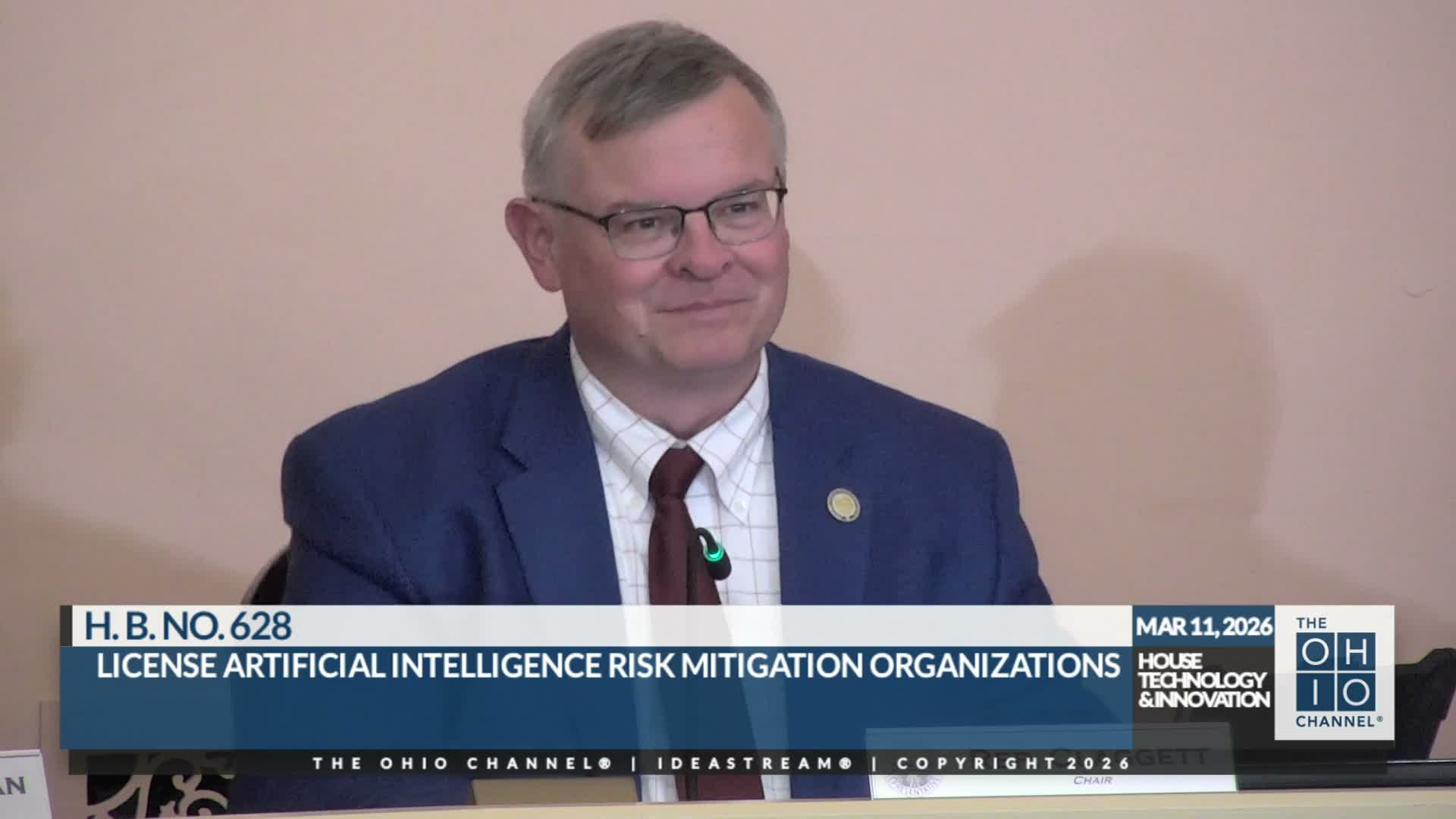
Lauren Wilson, senior director at the nonprofit Fathom, told the House Technology and Innovation Committee that House Bill 628 would create a voluntary framework for independent verification organizations, or IVOs, to evaluate state‑licensed AI systems and provide market incentives for higher standards of care.
"AI will be the most transformational disruptive technology in generations," Wilson said, arguing the state should combine independent technical verification with incentives to protect consumers while supporting innovation. She described the IVO model as a ‘‘green check’' — a signal that a product has met a heightened standard and may receive certain legal presumptions in court.
Wilson told committee members the bill proposes two central elements: a framework allowing independent, technically qualified assessments of AI systems licensed by the state and meaningful incentives — including legal protections, presumptions of compliance, and opportunities to cure — to encourage voluntary participation. She said IVOs are intended to be market‑driven and outcomes‑focused, rather than prescriptive, checkbox regulation.
During questioning, the chair asked whether the IVO approach is the only solution or one of many. Wilson said it is one of several tools and is especially helpful where systems could cause physical harm — for example in child safety contexts, certain health‑care applications or construction equipment — because third‑party verification can demonstrate mitigations that reduce risk.
On adoption, Wilson told the committee that business‑to‑business use cases are likely early adopters: public school systems and health‑care purchasers may prefer vendors that carry an IVO verification mark when contracting for services. She also pointed to a draft bill provision creating a rebuttable presumption in court for developers who complete the IVO process.
Wilson compared the proposed IVO model to the Underwriters Laboratories approach for product safety, saying government and buyers often rely on respected private technical verifiers. She told the committee she would provide a 2½‑minute explainer video to staff after the hearing.
The committee heard four written testimonies on HB 628; no vote or formal action on the bill occurred at the hearing. The committee concluded the bill’s second hearing after the witness finished her testimony.
"AI will be the most transformational disruptive technology in generations," Wilson said, arguing the state should combine independent technical verification with incentives to protect consumers while supporting innovation. She described the IVO model as a ‘‘green check’' — a signal that a product has met a heightened standard and may receive certain legal presumptions in court.
Wilson told committee members the bill proposes two central elements: a framework allowing independent, technically qualified assessments of AI systems licensed by the state and meaningful incentives — including legal protections, presumptions of compliance, and opportunities to cure — to encourage voluntary participation. She said IVOs are intended to be market‑driven and outcomes‑focused, rather than prescriptive, checkbox regulation.
During questioning, the chair asked whether the IVO approach is the only solution or one of many. Wilson said it is one of several tools and is especially helpful where systems could cause physical harm — for example in child safety contexts, certain health‑care applications or construction equipment — because third‑party verification can demonstrate mitigations that reduce risk.
On adoption, Wilson told the committee that business‑to‑business use cases are likely early adopters: public school systems and health‑care purchasers may prefer vendors that carry an IVO verification mark when contracting for services. She also pointed to a draft bill provision creating a rebuttable presumption in court for developers who complete the IVO process.
Wilson compared the proposed IVO model to the Underwriters Laboratories approach for product safety, saying government and buyers often rely on respected private technical verifiers. She told the committee she would provide a 2½‑minute explainer video to staff after the hearing.
The committee heard four written testimonies on HB 628; no vote or formal action on the bill occurred at the hearing. The committee concluded the bill’s second hearing after the witness finished her testimony.
Don't Miss a Word: See the Full Meeting!
Go beyond summaries. Unlock every video, transcript, and key insight with a Founder Membership.
✓
Get instant access to full meeting videos
✓
Search and clip any phrase from complete transcripts
✓
Receive AI-powered summaries & custom alerts
✓
Enjoy lifetime, unrestricted access to government data
30-day money-back guarantee
