Sponsors unveil Taxpayer Bill of Rights to speed appeals, but members warn BTA staffing could limit impact
March 11, 2026 | Ways and Means, House of Representatives, Committees, Legislative, Ohio
This article was created by AI summarizing key points discussed. AI makes mistakes, so for full details and context, please refer to the video of the full meeting. Please report any errors so we can fix them. Report an error »
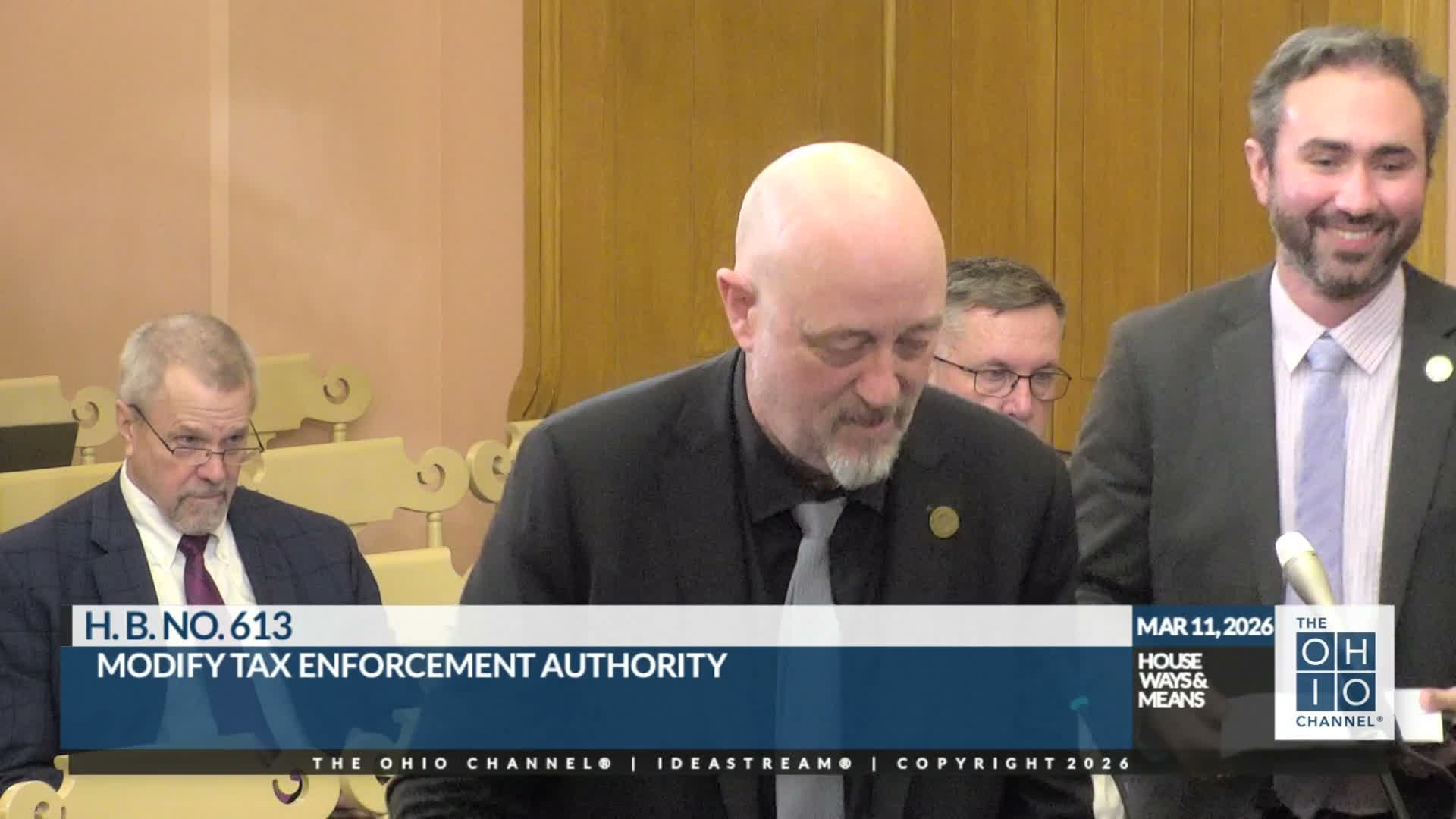
Representatives Klick and Dave Thomas presented House Bill 613, dubbed the "Taxpayer Bill of Rights," at the Ohio House Ways and Means Committee. The sponsors said the measure aims to speed tax appeals, increase transparency and reduce costs for taxpayers by imposing procedural deadlines and improving access to resolution staff.
Klick outlined the bill’s key provisions: the tax commissioner must appoint at least one problem‑resolution officer with contact information listed publicly; interest must stop accruing after one year on unresolved matters; the commissioner should grant hearings within 180 days; taxpayers could request a proposed final determination and would have 30 days to contest it before it becomes final; and the Board of Tax Appeals (BTA) should render a decision within one year, with the deadline extendable by mutual consent.
"Interest must stop accruing after one year," Klick said during testimony, underscoring sponsors’ goal of limiting prolonged financial burdens on taxpayers while appeals proceed. Co‑sponsor Dave Thomas said the bill is aimed as much at individuals as businesses and that establishing clear timelines and annual reporting would reduce uncertainty for taxpayers.
Committee Members raised practical concerns. Ranking Member Troy noted the BTA and Department of Taxation have reported staffing shortages: "you used to have 1,400 employees, now you're down to 850," he said, arguing the committee should not impose firm timelines without providing resources. Troy said he could not support the bill unless appropriation was available to help the BTA meet new deadlines. Sponsors replied they had discussed the bill with the tax commissioner and the BTA and are willing to invite agency officials to testify about staffing needs and possible implementation challenges.
Members also discussed the complexity of remaining appeals — many are technically intricate and require experienced tax attorneys, which takes time to recruit and train. Sponsors pointed to other legislative efforts intended to reduce BTA caseload and said they would work with the agencies to refine the bill and identify resource needs.
The committee closed sponsor testimony without a vote and requested agency testimony and additional information on staffing, caseload complexity and potential appropriation needs before further action.
Next steps: sponsors will invite the Department of Taxation and the Board of Tax Appeals to provide detailed testimony about staffing, training and timing implications; the committee may consider technical amendments to align timelines with agency capacity.
Klick outlined the bill’s key provisions: the tax commissioner must appoint at least one problem‑resolution officer with contact information listed publicly; interest must stop accruing after one year on unresolved matters; the commissioner should grant hearings within 180 days; taxpayers could request a proposed final determination and would have 30 days to contest it before it becomes final; and the Board of Tax Appeals (BTA) should render a decision within one year, with the deadline extendable by mutual consent.
"Interest must stop accruing after one year," Klick said during testimony, underscoring sponsors’ goal of limiting prolonged financial burdens on taxpayers while appeals proceed. Co‑sponsor Dave Thomas said the bill is aimed as much at individuals as businesses and that establishing clear timelines and annual reporting would reduce uncertainty for taxpayers.
Committee Members raised practical concerns. Ranking Member Troy noted the BTA and Department of Taxation have reported staffing shortages: "you used to have 1,400 employees, now you're down to 850," he said, arguing the committee should not impose firm timelines without providing resources. Troy said he could not support the bill unless appropriation was available to help the BTA meet new deadlines. Sponsors replied they had discussed the bill with the tax commissioner and the BTA and are willing to invite agency officials to testify about staffing needs and possible implementation challenges.
Members also discussed the complexity of remaining appeals — many are technically intricate and require experienced tax attorneys, which takes time to recruit and train. Sponsors pointed to other legislative efforts intended to reduce BTA caseload and said they would work with the agencies to refine the bill and identify resource needs.
The committee closed sponsor testimony without a vote and requested agency testimony and additional information on staffing, caseload complexity and potential appropriation needs before further action.
Next steps: sponsors will invite the Department of Taxation and the Board of Tax Appeals to provide detailed testimony about staffing, training and timing implications; the committee may consider technical amendments to align timelines with agency capacity.
Don't Miss a Word: See the Full Meeting!
Go beyond summaries. Unlock every video, transcript, and key insight with a Founder Membership.
✓
Get instant access to full meeting videos
✓
Search and clip any phrase from complete transcripts
✓
Receive AI-powered summaries & custom alerts
✓
Enjoy lifetime, unrestricted access to government data
30-day money-back guarantee
